Overview
Congresswoman Anna Paulina Luna, a Republican from Florida who chairs the House Oversight Committee’s Task Force on the Declassification of Federal Secrets, says she has personally viewed UAP (unidentified anomalous phenomena) footage that “defies known technology.” Luna, a former Air Force airfield manager, told the Keeping It Real podcast in March 2026 that her committee has been shown a series of recordings that cannot be explained by conventional aeronautical or weapons systems. She added that, once an official declassification order is signed, she will hold a press conference to release the material and “let everyone decide what to make of it.”
The Missile‑And‑Orb Incident
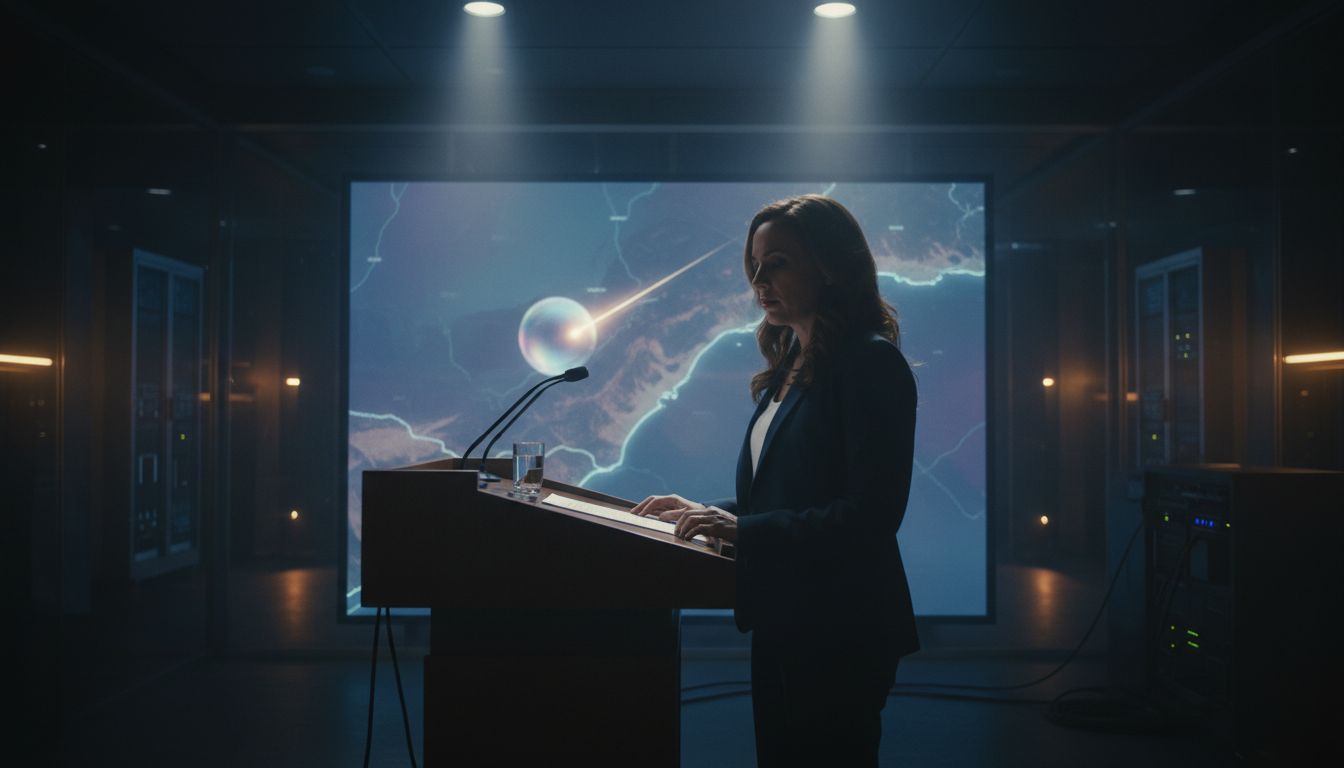
The most striking clip, presented at a September 9 2025 House hearing on UAP transparency, shows an MQ‑9 Reaper drone tracking an illuminated orb over the Gulf of Aden near Yemen on October 30 2024. According to Rep. Eric Burlison’s testimony, a second MQ‑9 launched an AGM‑114 Hellfire missile at the object. The missile made contact, then appeared to bounce off the orb, which continued its trajectory unimpeded. The footage, captured by the drone’s infrared camera, has never been released to the public. Analysts on the hearing described the event as “outside the envelope of any known aerospace or weapons behavior.”
Legislative Context and AARO Criticism
Luna’s task force was created in early 2025 in response to President Trump’s executive order mandating the declassification of a wide range of historic records, from the Kennedy assassinations to COVID‑19 origins. While the mandate is broad, Luna has focused her efforts on UAP files, arguing that transparency is essential to restoring public trust. In a recent statement, she called the Pentagon’s All‑Domain Anomaly Resolution Office (AARO) “ineffective” and urged Congress to consider its closure, citing a lack of actionable intelligence and repeated delays in releasing relevant data.
Inter‑Dimensional Interpretation
During the same hearing, Luna suggested that the phenomena may be “inter‑dimensional entities,” a hypothesis she says aligns with briefings she received from senior officials in the Office of the Director of National Intelligence, the FBI, and the White House. She emphasized that the government’s role is to provide the raw footage, not to prescribe an interpretation, noting, “They’ll release it, but they won’t tell you what to make of it.” This stance reflects a broader shift among some lawmakers toward allowing independent scientific and civilian analysis of the material.
Next Steps and Public Expectation
Luna has confirmed that her office is in direct contact with the agencies coordinating the upcoming release, and that a formal declassification directive is expected within weeks. If the press conference proceeds as announced, the government will likely publish the Yemen orb video on a newly created .gov domain dedicated to UAP documentation, a move intended to centralize and authenticate future disclosures. Observers caution that, while the release may satisfy longstanding public curiosity, the lack of an official explanatory framework could spur a wave of speculation and demand for independent investigation.
Implications for Policy and Research
The impending disclosure could reshape congressional oversight of defense and intelligence agencies, prompting renewed calls for a dedicated UAP research authority with statutory authority and funding. Experts in aerospace engineering and physics have already signaled interest in reviewing the missile‑bounce footage, noting that “if the data hold up under peer review, it would represent a paradigm shift in our understanding of material interactions at high velocities.” As the declassification process unfolds, Luna’s promise to make the evidence public may set a new precedent for openness in matters traditionally shrouded in secrecy.


