Overview
The paranormal research collective known as Project Fear returned to Brush Mountain State Penitentiary in Petros, Tennessee, for an overnight investigation that was uploaded to YouTube on January 30, 2026. The team, which originally documented the prison during the first season of the television series Destination Fear, aimed to record any anomalous activity using a suite of standard ghost‑hunting equipment. The investigation focused on areas historically associated with high inmate turnover and documented deaths, with particular attention to any phenomena that might affect the team’s female investigators.
Participants and Roles
The core investigation team consisted of Dakota Laden (host and lead investigator), Chelsea Laden, Tanner Wiseman, and Alex Schroeder, all experienced members of the Project Fear crew. Two contest winners from the group’s “Fear Club” joined the night’s shift: Olivia, a Northern Virginia resident who participated in the primary isolation challenges, and Connor, who assisted during split‑team sessions later in the evening. Each participant was equipped with handheld audio recorders, infrared cameras, and electronic voice‑phenomenon (EVP) devices such as the Ovilus word‑database unit.
Historical Context of Brush Mountain
Built in 1896 as a coal‑mine labor camp, Brush Mountain evolved into a maximum‑security prison often dubbed the “Alcatraz of the South.” Among its most infamous inmates was James Earl Ray, convicted of assassinating Dr. Martin Luther King Jr.; Ray escaped in 1977 with six other prisoners but was recaptured after 54 hours. Over its operational span the facility recorded an estimated 10,000 deaths from overcrowding, disease, and violence. The prison ceased operations in 2009, and its cells have since been used for tours and paranormal research.
Key Paranormal Claims and Evidence
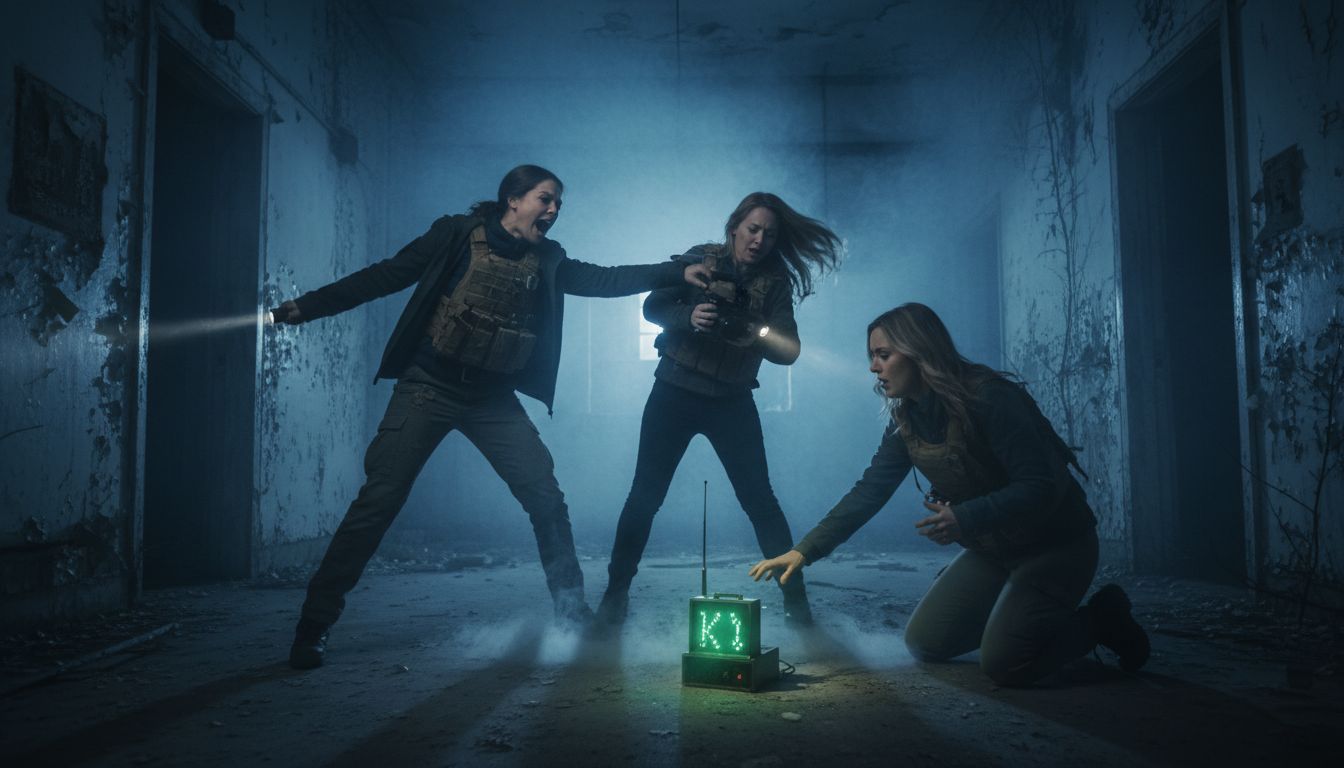
Investigators concentrated on several high‑activity zones. In Cell Block A, while questioning the Ovilus about Ray’s crime, the device emitted the word “Shot.” Subsequent prompts produced suggestive terms such as “Lick” and “Tug” when female investigators were present, prompting the team to describe the interaction as “aggressive and perverted.” In the gym, temperature drops coincided with Ovilus outputs like “Mommy,” “Squeeze,” and “Kiss.” The hospital/auditorium area yielded a loud, unexplained “bang” on a door and a recurring sensation of chest tightness reported by Alex Schroeder, echoing a similar feeling from a prior visit. Finally, during a solo isolation in “The Hole” (a solitary‑confinement cell), Olivia experienced a sudden, resonant crash likened to a ceiling collapse and continuous ringing from a “Dead Bell” device, prompting her to terminate the session after roughly fifteen minutes.
Reactions and Conclusions
Project Fear’s post‑investigation debrief emphasized the prison’s reputation for “physically aggressive” phenomena, noting a discernible pattern of suggestive or hostile energy directed toward female participants. Dakota Laden praised the guest investigators, stating, “Olivia’s willingness to enter The Hole shows a level of bravery that matches our most seasoned members.” While the team refrained from definitive claims about the nature of the entities involved, they cataloged the recorded EVPs, temperature anomalies, and physical sensations as evidence for further analysis. The investigation adds to a growing body of documented activity at Brush Mountain, reinforcing its status among paranormal researchers as a location that consistently produces measurable, if still unexplained, disturbances.