Overview
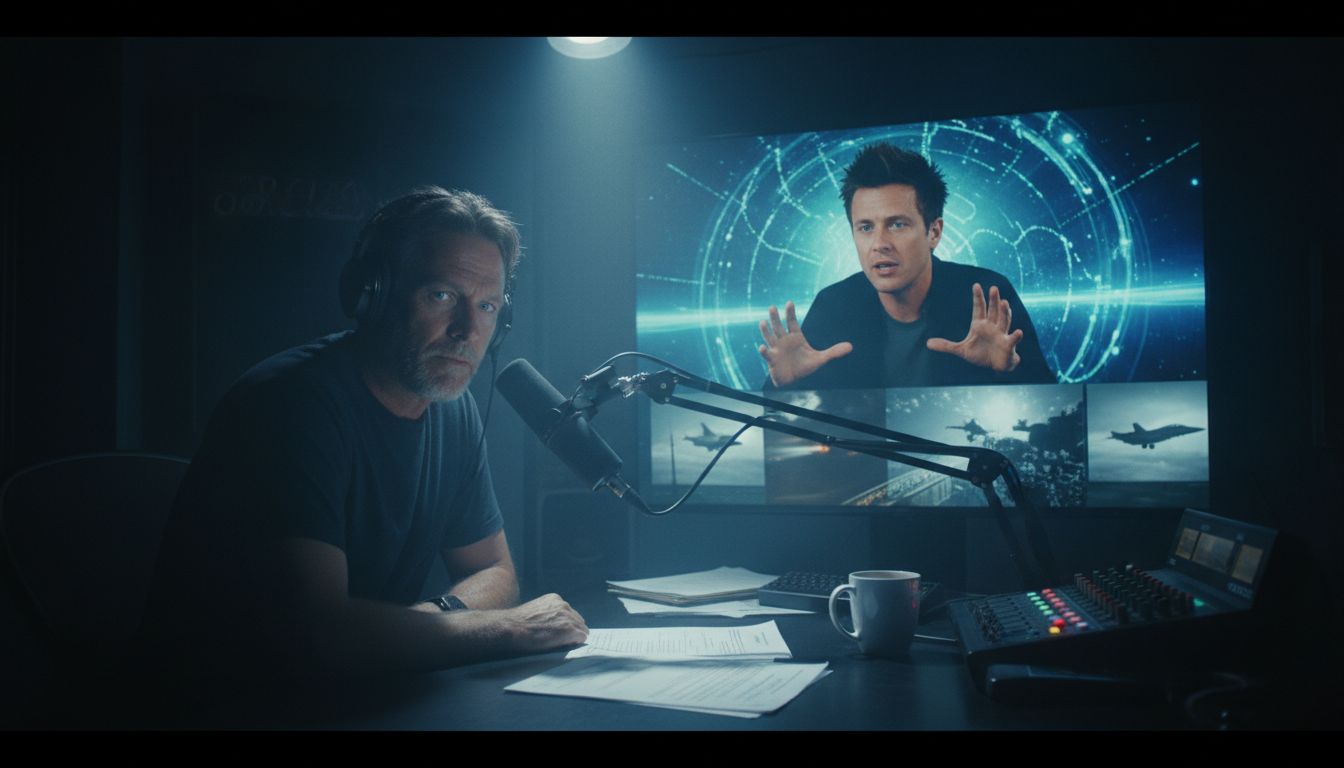
In a recent episode of the Psicoactivo podcast (episode 930), host Pavel Ibarra sat down with Ryan Dean, a self‑described UFO contactee and former semiconductor professional. Dean recounted two pivotal experiences: a three‑hour conversation with Blink‑182 frontman Tom DeLonge in 2012, and a detailed abduction claim from November 2000 in Hollywood, Florida. The interview, recorded for a YouTube audience, offers Dean’s perspective on how personal encounters have intersected with broader efforts to secure official disclosure of unidentified aerial phenomena (UAP). While the narrative contains extraordinary elements, the discussion also touches on concrete actions taken by DeLonge and the ongoing tension between civilian investigators and government agencies.
The 2012 Meeting with Tom DeLonge
Dean described meeting DeLonge at a Barnes & Noble in Encinitas, California, where the two men “talked for over three hours about UFO cases.” According to Dean, DeLonge disclosed that he intended to leverage family connections in military intelligence—specifically a father or uncle—to obtain classified information on UAP. Dean noted DeLonge’s awareness of potential manipulation by intelligence services, stating that the musician “knew the risk of being confused or used, but felt compelled to move forward.” This anecdote aligns with DeLonge’s public advocacy since the mid‑2010s, including the formation of the To The Stars Academy and the 2017 release of the Pentagon’s Advanced Aerospace Threat Identification Program (AATIP) documents. While the podcast provides no independent verification of the alleged familial ties, the claim illustrates the informal networks that have emerged around the disclosure movement.
The November 2000 Abduction
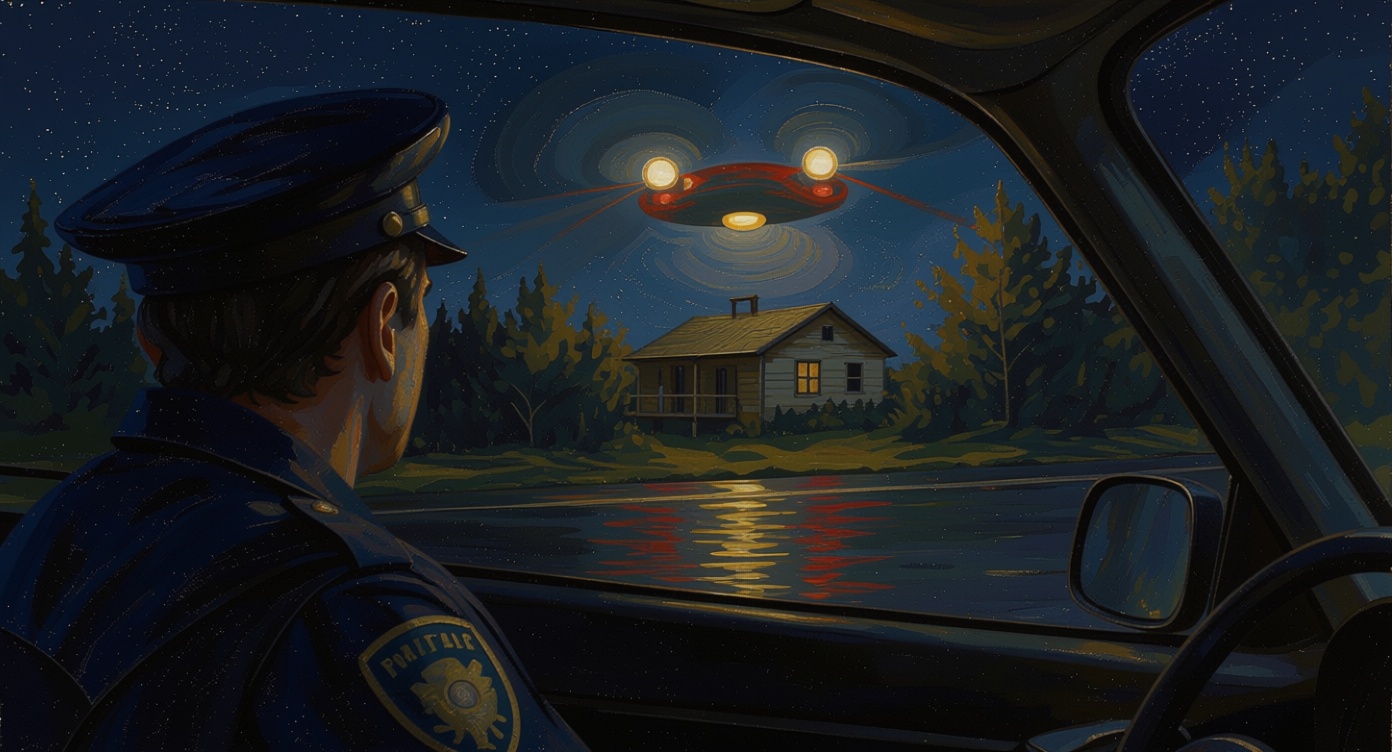
Dean’s central testimony concerns an alleged abduction on a night in November 2000. He said he awoke to a “morphing, metallic craft” hovering above his home in Hollywood, Florida, and subsequently experienced roughly four hours of missing time. Inside the craft, Dean reported encountering a “female Gray” standing 3½ to 4 feet tall, accompanied by three taller beings in cloaked garments who wielded “rods” that allegedly modulated his consciousness. He described a “Living Language of Light,” a glass terminal where he traced glowing blue sigils, which he compared to the Enochian language of 16th‑century occultist John Dee. Dean also claimed the interior space defied conventional geometry, appearing larger than the exterior—a phenomenon he attributed to higher‑dimensional or “Riemannian” architecture. Additional details, such as cages of panicked animals, were presented without corroborating evidence, placing the account firmly in the realm of personal experience rather than verifiable fact.
Government Interaction and Disclosure Concerns
Dean asserted that his UFO disclosures have drawn official attention. He recounted a 2009 incident at San Francisco International Airport where he was detained for three hours and instructed to cease discussing his experiences. He also mentioned being followed by unidentified individuals and experiencing a remote shutdown of his computer after opening a Gmail draft. While these claims are difficult to substantiate, they echo broader reports from other civilian investigators who allege surveillance or intimidation by government entities. Dean expressed skepticism toward the “managed” nature of recent disclosure efforts, warning that the narrative may be “sanitized” to render the phenomenon “absurd” in the public eye. He cited the case of Betty Andreasson, whose abduction story reportedly mirrors his own memory of the alien terminal, and referenced Dr. Michael Masters’ “future‑human” hypothesis, which posits that the entities could be descendants of humanity returning from an advanced timeline.
Broader Implications and Future Outlook
Concluding the interview, Dean emphasized that his experiences have reshaped his worldview, moving him away from a strictly materialistic, atheist paradigm