Overview
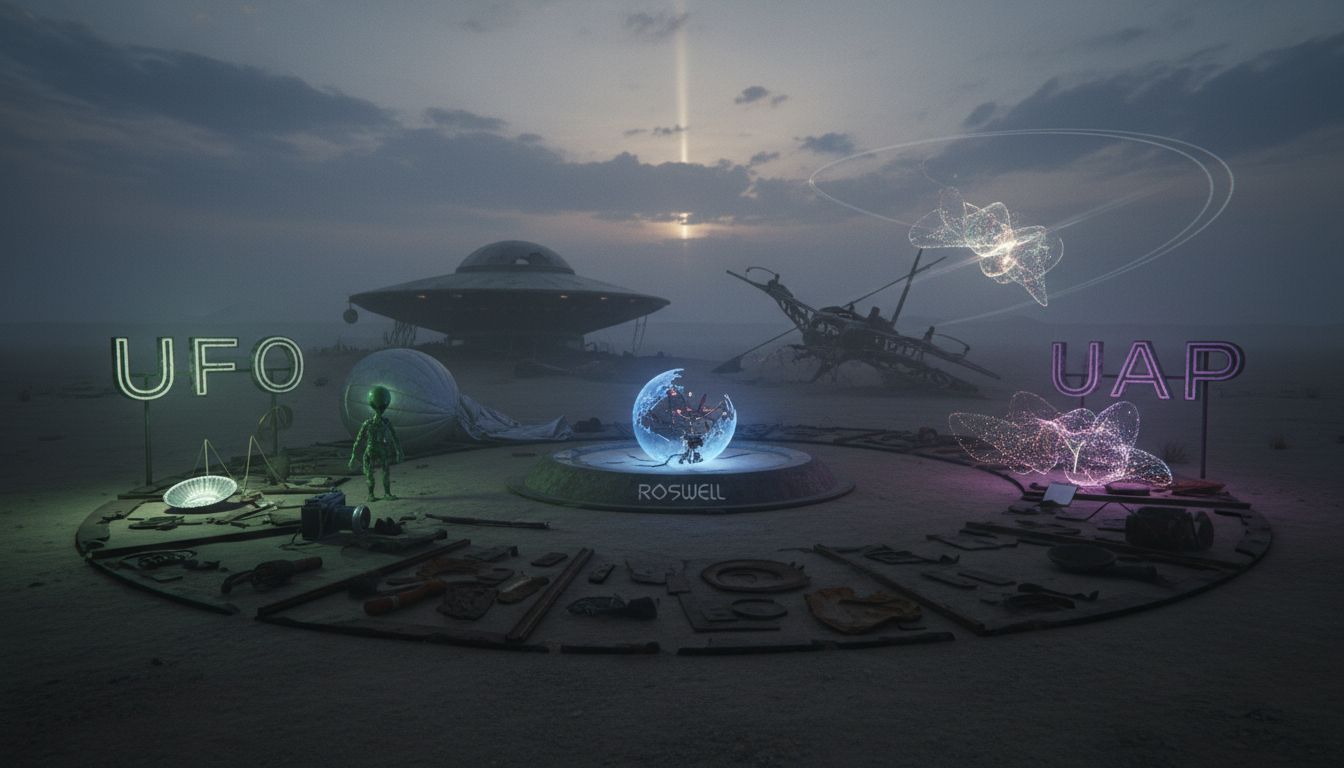
The new Space Economy’s latest feature, produced in partnership with the UAP News Center, surveys the ten most infamous UAP hoaxes ever recorded. While the term “UFO” still dominates popular imagination, the article deliberately uses UAP (Unidentified Anomalous Phenomena) to align with the language adopted by contemporary scientific and defense communities. The list is framed as a historical lens, showing how each fabrication mirrors the cultural anxieties of its era and how rigorous scientific review repeatedly dismantles the supposed evidence.
The Maury Island Incident – A Blueprint for Modern Myths
The series opens with the Maury Island Incident (1947), often eclipsed by Kenneth Arnold’s famous “flying saucers” sighting but arguably more influential in shaping UFO folklore. According to the original claim, Harold Dahl reported six massive, donut‑shaped objects hovering over his patrol boat, one of which allegedly ejected a stream of metallic debris that damaged the vessel and injured his son. Dahl asserted he captured photographs, yet investigators later reported the images were “fogged or ruined,” a detail that has fueled skepticism for decades. The episode also introduced the now‑iconic “Men in Black” figure—a mysterious, black‑clad emissary who allegedly warned Dahl to keep silent. Subsequent analyses by the U.S. Army Air Forces and later civilian researchers concluded the story was a fabricated narrative designed to attract media attention and, possibly, financial gain.
Other High‑Profile Hoaxes
While the article’s full list is behind a paywall, it references several other cases that have repeatedly resurfaced in public discourse:
- The 1950 “Great Falls” hoax, in which a local photographer staged a night‑time light display using aircraft navigation lamps, later exposed by a university physics department.
- The 1994 “Phoenix Lights” video, later identified as a combination of military flares and a misinterpreted advertising aircraft, with the original footage digitally altered to enhance the “mystery” effect.
- The 2007 “Mogul” (or “Tic‑Tac”) video, released by the Pentagon, which skeptics argue was a misidentified balloon or sensor glitch, a claim reinforced by independent radar analyses.
Each example follows a similar pattern: an eye‑catching visual claim, limited physical evidence, and eventual debunking through photometric testing, radar cross‑section analysis, or eyewitness cross‑verification.
Common Threads in Fabricated UAP Claims
The article’s “Key Takeaways” highlight three recurring motifs:
- Cultural Anxiety – During the Cold War, many hoaxes featured metallic, disc‑shaped craft, echoing fears of foreign technology. In the digital age, hoaxes increasingly exploit deep‑fake software, reflecting contemporary concerns about misinformation.
- Erosion of Physical Evidence – Photographs, video clips, and alleged debris consistently “fail under scientific scrutiny,” either because they are deliberately altered or because the materials cannot be reproduced in a lab.
- Motivation of Fabricators – Financial reward, personal fame, or a desire to “expose gullibility” are repeatedly cited by investigators as the primary drivers behind these deceptions.
These patterns underscore why the scientific community stresses transparent methodology and peer‑reviewed verification when evaluating any new UAP report.
Impact on Public Perception and Policy
Even as hoaxes are exposed, they leave a lasting imprint on public opinion. Polling data from the Pew Research Center (2024) shows that nearly 60 % of Americans still believe extraterrestrial life has visited Earth, a figure that has remained stable despite repeated debunkings. This persistence influences policy debates, prompting legislators to allocate funding for UAP research while simultaneously demanding stricter standards for evidence. The article notes that recent congressional hearings have cited past hoaxes as cautionary tales, urging agencies to distinguish genuine anomalies from manufactured spectacles before allocating resources.
Looking Forward
The New Space Economy piece serves as both a historical catalog and a reminder that rigorous scientific inquiry remains the antidote to sensationalism. By dissecting the narratives behind the ten most famous UAP hoaxes, the article equips readers with the context needed to evaluate future claims—whether they emerge from a backyard enthusiast’s drone footage or a classified military sensor. As the field evolves, the hope expressed by the UAP News Center is that transparency, reproducibility, and critical analysis will continue to separate genuine anomalous phenomena from the allure of well‑crafted hoaxes.


