Overview
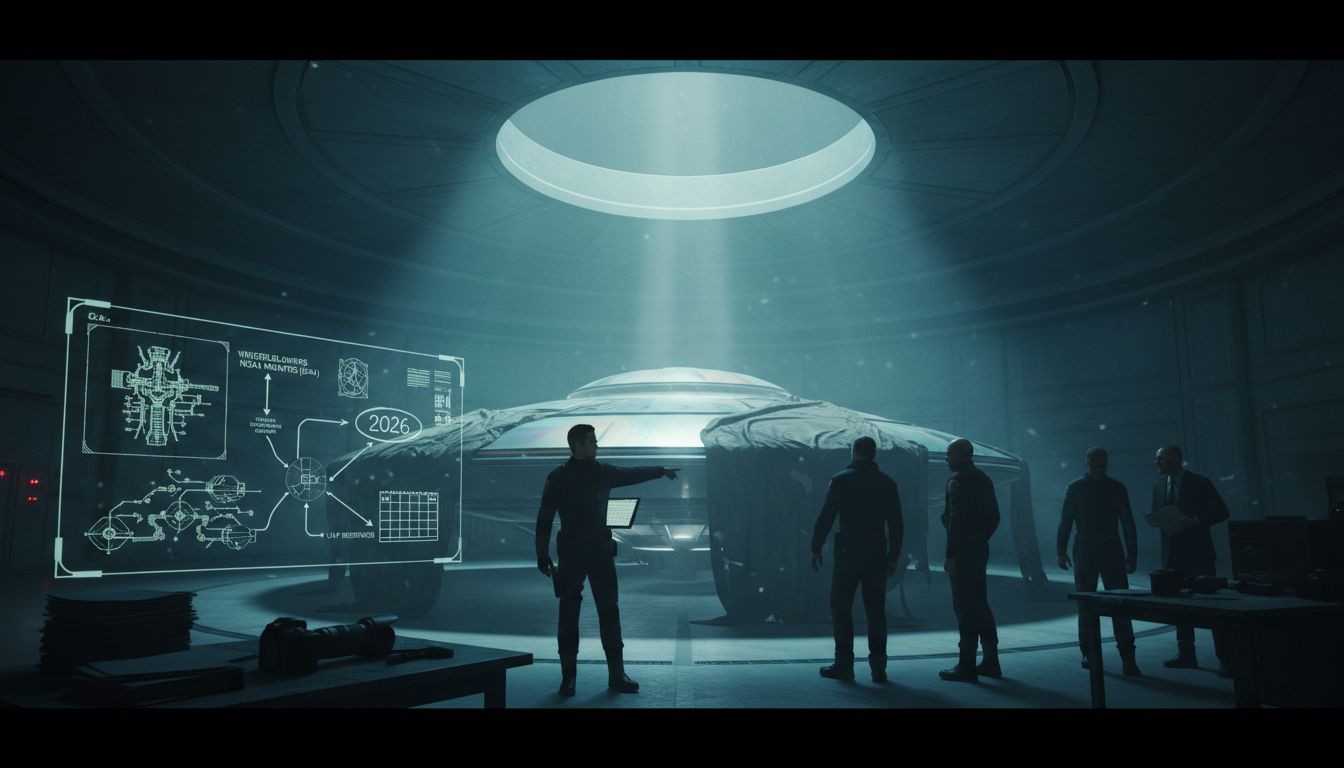
A group of senior UAP (Unidentified Aerial Phenomena) researchers told reporters that a convergence of whistle‑blower disclosures, legislative mandates and shifting public attitudes could force the United States government to release substantive information on extraterrestrial technology as early as 2026. The comments were made during a press briefing for the forthcoming documentary The Age of Disclosure, which compiles testimony from former military personnel, intelligence officers and aerospace engineers who claim to have witnessed or handled recovered craft and biological material of non‑human origin.
Whistle‑blower Activity
According to the experts, the past twelve months have seen an unprecedented surge in “whistle‑blower activity.” Former Department of Defense (DoD) analyst Dr. Linda R. Grant, who served on the UAP Task Force, said, “Since early 2025, I’ve been approached by at least four senior officers who are prepared to speak publicly about classified programs that involve recovered vehicles.” Similar statements were echoed by Retired Navy pilot Cmdr. James “Jim” Alvarez, who told the documentary’s producers that he was “ordered to delete flight logs that referenced anomalous objects” and is now willing to provide those records under oath. While none of the individuals have yet filed formal legal complaints, the sheer volume of contacts has prompted legal scholars to note that the National Defense Authorization Act (NDAA) of 2024 now requires the DoD to brief Congress on UAP incidents on a quarterly basis—a requirement that has been in place in various forms since 2004 but was only recently enforced with penalties for non‑compliance.
Legislative and Congressional Pressure
The NDAA provisions have created a new accountability framework. In a recent hearing, Sen. Maria Torres (D‑CA) asked the Pentagon to “provide a complete inventory of all recovered anomalous craft and any associated biological specimens,” warning that continued secrecy could erode public trust. The Senate Intelligence Committee’s report released in November 2025 documented over 400 UAP sightings by military pilots, with 27 cases classified as “high‑confidence” due to corroborating radar and infrared data. Although the report stopped short of labeling the phenomena as extraterrestrial, it acknowledged that “the data set is growing and warrants further scientific scrutiny.” This legislative backdrop, analysts say, is nudging the intelligence community toward a more transparent stance, especially as the 2026 mid‑term elections loom and bipartisan interest in the issue rises.
Documentary Claims and Cultural Shifts
The Age of Disclosure—directed by investigative filmmaker Ana Patel—features on‑camera interviews with individuals who allege that the government has stored intact alien craft at secret sites such as the infamous “Hangar 18” at Wright‑Paterson Air Force Base and a remote facility in Nevada’s “Area 51” complex. One interviewee, identified only as “Dr. K,” a former biomedical researcher, claims to have examined “biological samples that exhibit non‑Earth‑based DNA signatures.” Patel’s team says they have obtained de‑classified excerpts of a 2019 Pentagon memorandum that references “material analysis of unknown origin.”
Cultural acceptance of the UFO topic has also shifted markedly. Polls conducted by the Pew Research Center in early 2026 show that 68 % of Americans now believe that the government is withholding information about extraterrestrial life, up from 45 % a decade ago. Popular media, from streaming series to mainstream news segments, regularly feature UAP experts, normalizing the conversation and reducing the stigma that once discouraged insiders from speaking out.
Outlook for 2026 Disclosure
While the experts interviewed are confident that the “evidence is aligning” for a major disclosure in 2026, they caution that the process will likely be incremental. Dr. Grant warned, “We may first see a redacted briefing to select congressional committees, followed by a public release of de‑classified footage and scientific analyses.” Skeptics, including physicist Dr. Alan Meyer of the University of Colorado, argue that “without independent verification of the alleged materials, any disclosure could be dismissed as conjecture.”
Nevertheless, the combination of whistle‑blower testimonies, enforced NDAA briefings, and heightened public demand creates a pressure cooker that makes a substantive, government‑led announcement increasingly probable. Whether the forthcoming disclosures will confirm extraterrestrial origins or simply reclassify the phenomena as advanced terrestrial technology remains to be seen, but the trajectory suggests that 2026 could mark a pivotal moment in the United States’ handling of the UAP enigma.