Overview
The former Tranquille Sanatorium, situated near Kamloops in British Columbia’s Tk’emlúps region, has long been cited as one of Canada’s most haunted locations. The site, which operated as a tuberculosis hospital from 1907 and later as a mental‑health facility, was abandoned in the late 20th century. Since then, a steady stream of visitors—including urban explorers, paranormal investigators, and local historians—have reported unexplained sightings and auditory phenomena that contribute to the property’s eerie reputation.
Historical Background
Constructed in 1907 under the name King Edward VII Sanatorium, the facility was intended to combat the “white plague” that claimed thousands of lives across North America. By 1910 the campus accommodated roughly 50 patients, four nurses, and a dozen attendants; by 1932 it had expanded into a self‑sustaining community of more than 600 patients and staff. The complex featured a farm, gardens, a gymnasium, a fire department, an auditorium, a cafeteria, and even a school for handicapped children known as “Stsmemelt Village.” In the 1950s the sanatorium’s focus shifted to mental‑health care, and it remained operational until the early 1990s, when the provincial government closed the site due to declining enrollment and the high cost of maintaining the aging infrastructure.
Reported Paranormal Activity
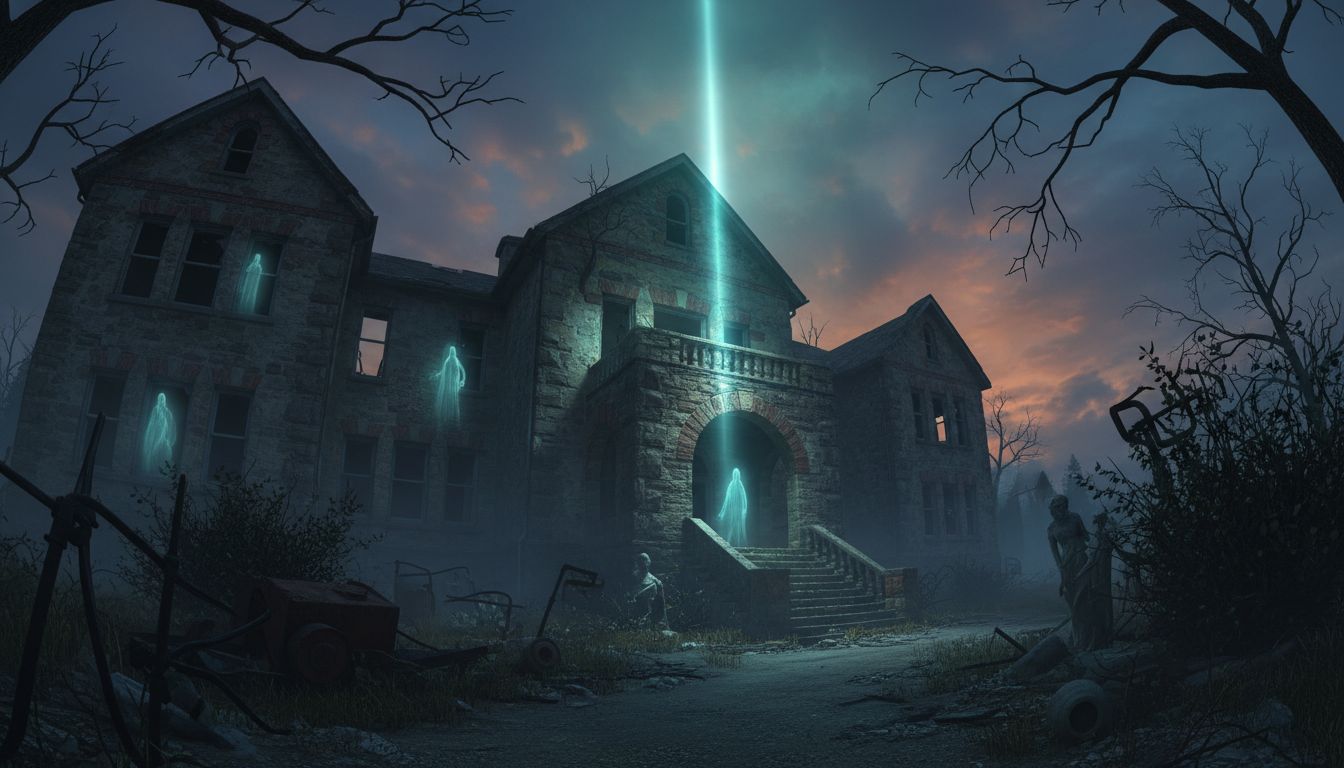
Since the closure, the abandoned buildings have become a magnet for those seeking “ghostly” experiences. According to a January 7, 2026 article on the Moon Mausoleum blog, visitors frequently describe seeing translucent figures wandering the corridors and hearing “warning whispers” that seem to emanate from empty rooms. One documented account recounts a night‑time exploration in which a guide heard a faint, repetitive phrase—“Don’t go further”—while standing in the former nurses’ quarters. Another visitor reported a sudden drop in temperature and the sensation of being brushed by an unseen presence near the old laundry facility. While these anecdotes lack scientific verification, they have helped cement Tranquille’s reputation as a haunted landmark in Canadian folklore.
Expert and Community Perspectives
Local historians caution against conflating documented history with folklore. Dr. Emily Rogers, a professor of Canadian medical history at the University of British Columbia, notes that “the tragic experiences of TB patients and later mental‑health residents are real, and the site’s decay naturally fuels stories of lingering spirits.” Similarly, the Kamloops Heritage Society emphasizes the need for respectful preservation, urging that any investigations be conducted with proper safety measures and respect for the property’s cultural significance. Paranormal researcher Michael Chen, who has led several investigations at Tranquille, acknowledges the lack of empirical evidence but argues that the consistent nature of eyewitness reports warrants further, controlled study.
Preservation and Future Access
The Tranquille site is currently owned by the provincial government and is not open to the public without permission. In recent years, limited guided tours have been offered in partnership with heritage organizations, allowing visitors to view the historic structures while minimizing safety risks. Conservationists argue that preserving the remaining buildings could provide valuable insight into early 20th‑century public health architecture, while also offering a controlled environment for any future scientific inquiry into reported phenomena. As discussions continue about the balance between heritage preservation and public curiosity, the legacy of Tranquille Sanatorium remains a poignant reminder of Canada’s medical past—and the stories—both documented and whispered—that still linger within its walls.