The online UFO community received a rare, detailed account this week from a self‑identified witness known only as “Michael,” who claims to have briefed both the Senate Select Committee on Intelligence (SSCI) and the Department of Defense’s All‑Domain Anomaly Resolution Office (AARO) about a series of close‑range Unidentified Aerial Phenomena (UAP) encounters. In a lengthy Reddit post, Michael described what he called “technosignatures” – observable effects that suggest advanced, non‑human technology – and recounted multiple briefings that he says were taken seriously by senior officials. While the post has sparked vigorous discussion among enthusiasts, it also underscores the growing willingness of U.S. authorities to engage directly with civilian witnesses.
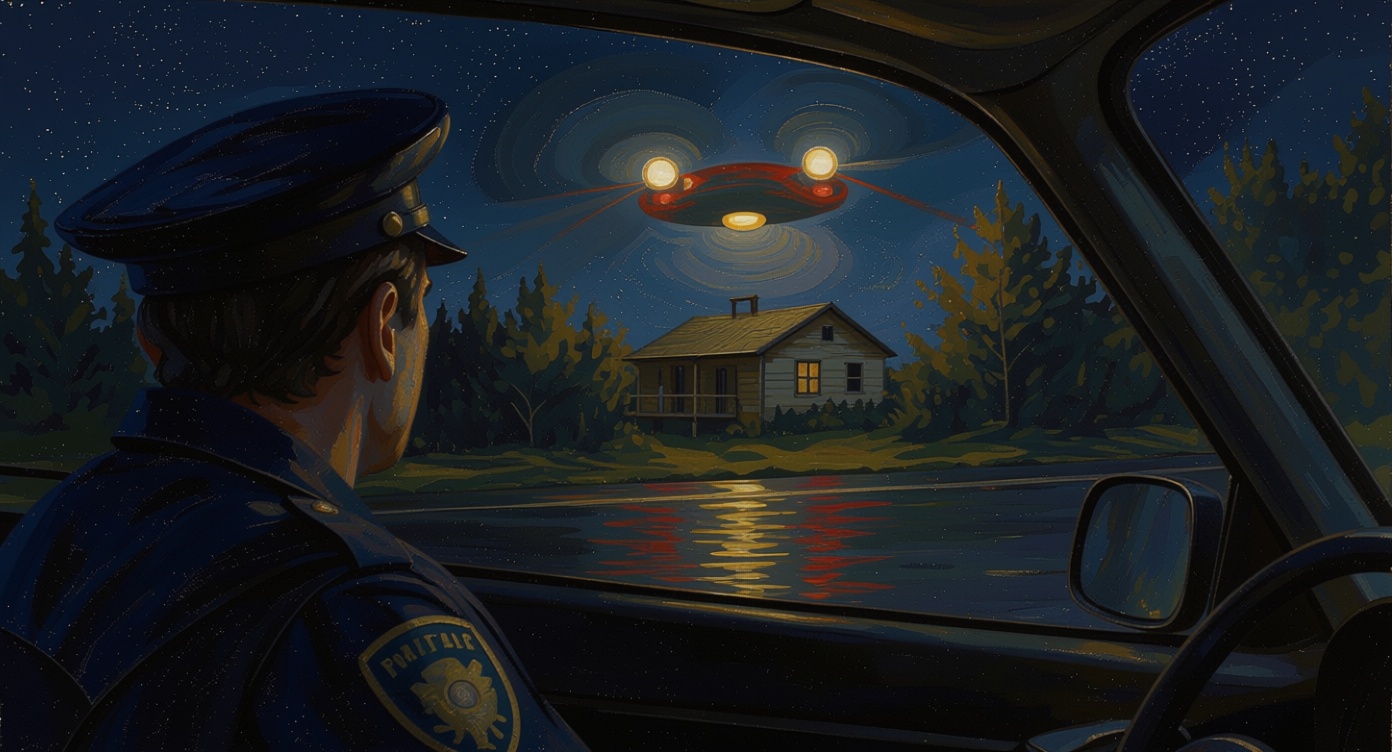
According to Michael’s account, the first encounter occurred in the early 2020s while he was conducting routine aerial photography in a remote desert region. He described a disc‑shaped object hovering at a distance of roughly 150 meters, emitting a series of rapid, pulsating lights that appeared to synchronize with an invisible field of electromagnetic interference. “My instruments went haywire, GPS drifted, and the camera lenses fogged up for a few seconds before clearing,” he wrote. Michael said he documented the event with a high‑resolution video and a series of spectrographic readings that, in his view, indicated an energy source unlike any known aircraft. He later submitted the material to a private research group, which forwarded it to a congressional staffer involved with the SSCI’s UAP subcommittee.
The Reddit post claims that Michael was subsequently invited to testify before a closed‑door session of the SSCI in Washington, D.C., where he presented the video, sensor data, and a written narrative of his observations. He quoted a senior committee staffer who told him, “We need credible, repeatable data, and your submission meets that threshold for further analysis.” Michael also said he was later debriefed by AARO officials, who asked detailed questions about the object's flight characteristics, the observed electromagnetic anomalies, and any potential biological effects on nearby wildlife. He noted that AARO representatives emphasized the need for “technosignature” data to differentiate between advanced foreign platforms and truly non‑human phenomena.
Community members on the r/UFOs subreddit responded with a mix of skepticism and cautious optimism. Several commenters pointed out that the Senate’s 2022 public report on UAPs highlighted the importance of “sensor‑based evidence” and that the establishment of AARO in 2022 was intended to centralize data collection across all domains—air, sea, and space. Others warned that without independent verification of Michael’s video and sensor logs, the claims remain anecdotal. A recurring theme in the discussion was the potential impact such a briefing could have on the broader push for transparency. “If a civilian witness can get a seat at the table, it may signal a shift toward more open disclosure,” one user wrote, citing recent congressional hearings where former military pilots described similar encounters.
Experts outside the UFO community note that the procedural details Michael describes align with known government protocols for handling classified or sensitive information. Dr. James O’Leary, a former intelligence analyst now specializing in aerospace security, said, “The SSCI does have a mechanism for receiving civilian submissions, especially when they involve potential national security implications. AARO’s mandate includes evaluating anomalous data across all sensor platforms, so a debrief like the one Michael describes is plausible, though it would be heavily compartmentalized.” He added that the term “technosignature,” borrowed from the search for extraterrestrial intelligence (SETI), is increasingly being used in UAP discourse to denote observable evidence of advanced technology, regardless of its origin.
While Michael’s Reddit post provides a vivid, first‑person narrative, the broader significance lies in the apparent willingness of U.S. authorities to engage directly with civilian witnesses and to consider non‑conventional data sources. The episode reflects a gradual institutional shift that began with the 2020 establishment of the UAP Task Force and has since evolved into the more permanent AARO framework. Whether Michael’s observations will ultimately be corroborated by independent analysis remains to be seen, but the episode adds another layer to the ongoing conversation about how, and to what extent, the government will disclose information about unexplained aerial phenomena.