Overview
A recent post on the fringe‑focused Substack blog Frequency Wave Theory claims that declassified footage from NASA’s 1996 STS‑75 shuttle mission provides “proof” of an exotic, plasma‑based biosphere in Earth’s upper atmosphere. The author, Drew Ponder, describes “hundreds of luminous orbs” clustering around a 20‑kilometre electrified tether that snapped and drifted in the thermosphere, interpreting the phenomenon as “Plasmic Intelligences” that feed on electromagnetic energy. While the video does exist, the scientific community has not corroborated the life‑form interpretation, and mainstream experts attribute the observations to known space debris and plasma effects.
The STS‑75 Observation
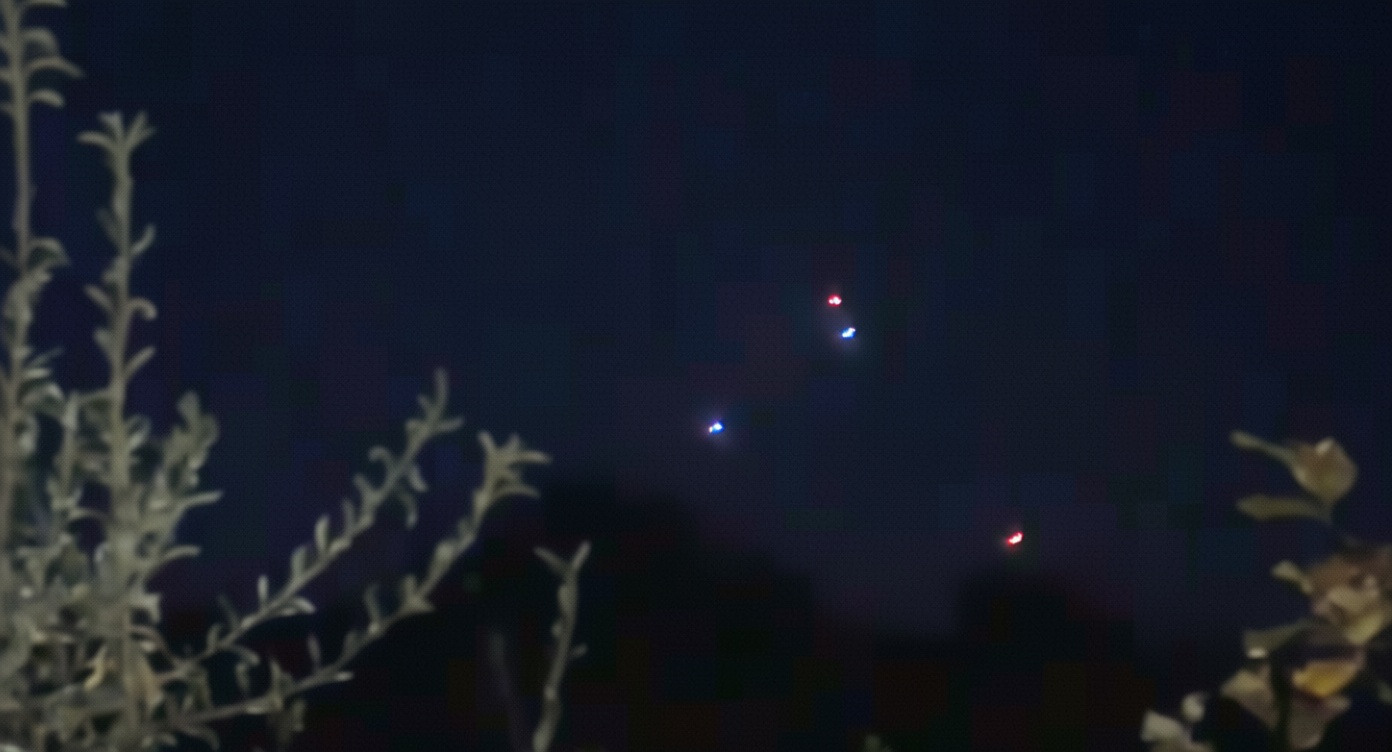
During the STS‑75 mission, the shuttle deployed the Tethered Satellite System (TSS‑1R), a 20 km conductive tether designed to generate electricity from orbital motion. When the tether broke, it drifted away, and NASA’s external cameras recorded a series of bright, moving points of light. Ponder’s article includes a short transcript from the footage:
“Copy that. We’re holding steady.” – SPEAKER 1
“Copy Atlantis. We see the clusters. Cameras are tracking. They’re moving in response to the hotspots. It’s like they’re aware.”
The author argues that the objects “changed speed, paused, curved, and overlapped in ways that look a lot more like behavior than ‘space dust.’” NASA’s official release described the visual phenomena as “glints and debris illuminated by the tether’s plasma sheath,” a standard explanation for transient luminous events in low‑Earth orbit.
Scientific Interpretation
Ponder frames the orbs as “energy‑based lifeforms” whose “bodies are coherent waves, not carbon and water.” He invokes “Frequency Wave Theory,” suggesting that the tether injected a burst of “Frequency Momentum” into the ionosphere, attracting resonant plasma structures. This hypothesis diverges sharply from established physics; plasma in the thermosphere can form filaments and irregularities, but these are transient, governed by electromagnetic fields and particle collisions, not biological processes.
No peer‑reviewed study has examined the STS‑75 footage as evidence of life, and NASA’s own analysis remains consistent with debris and plasma phenomena. The claim that the observed orbs represent a “higher‑bandwidth biosphere” therefore lacks independent verification.
Expert Commentary
Dr. Elena Ramirez, a plasma physicist at the University of Colorado Boulder, cautions against conflating visual anomalies with biology:
“What the cameras captured are likely small pieces of the tether or surrounding debris illuminated by the plasma sheath. In the ionosphere, charged particles can create glowing structures that move erratically, especially when a large current is present.”
Similarly, Dr. Michael Chen, an astrobiologist at the SETI Institute, notes that while the search for non‑carbon‑based life is scientifically legitimate, extraordinary claims require extraordinary evidence. “We would need reproducible measurements, spectroscopic data, and a clear mechanism for metabolism,” he says. “A single video clip, without rigorous analysis, does not meet that bar.”
Community Reaction
The Substack post has been widely shared on X (formerly Twitter) among UFO‑enthusiast groups, generating discussion about “suppressed data” and “alien ecosystems.” Commenters often cite the dramatic language (“bug‑zapper for the cosmos,” “exotic microbial life”) as evidence of a cover‑up, despite the absence of corroborating documentation from NASA or other agencies. Mainstream media outlets have not reported on the claim, and no official statement from NASA has been released beyond the original mission summary.
Conclusion
The STS‑75 tether incident remains an intriguing case study of how visual phenomena in space can be interpreted in dramatically different ways. While the footage does show luminous objects reacting to an energized tether, the prevailing scientific consensus attributes these to plasma interactions and debris, not to a living, electromagnetic biosphere. As interest in unconventional life‑forms grows, rigorous, peer‑reviewed research will be essential to separate credible discovery from speculative narrative.