Overview
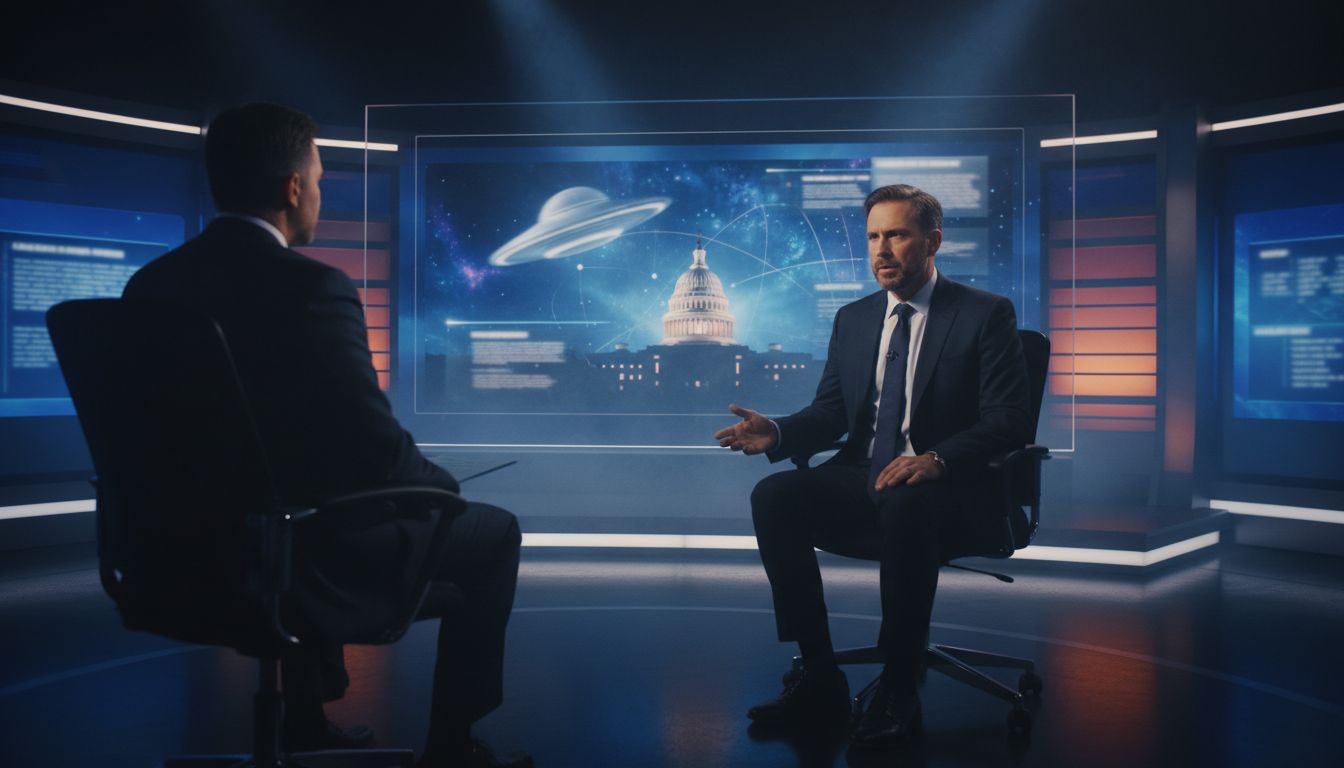
In a recent interview on Fox News, investigative journalist Jeremy Corbell—co‑host of the WEAPONIZED podcast—was pressed by anchor Peter Doocy on the growing controversy surrounding unidentified anomalous phenomena (UAP). Corbell argued that the United States faces a potential national‑security threat from advanced aerial craft that have repeatedly appeared in declassified military footage. He emphasized that the issue is no longer confined to fringe speculation; it has entered the halls of Congress, where lawmakers are demanding full disclosure of all UAP-related material held by the government.
Congressional Pressure for Transparency
The House and Senate intelligence committees have recently issued a joint request for the release of 46 classified UAP videos that have been in the Pentagon’s possession for years. Lawmakers contend that withholding these recordings hampers oversight and prevents a comprehensive assessment of any possible foreign—or non‑human—technology. “Congress is asking the same question the American public has been asking for decades: What are we looking at, and why are we being kept in the dark?” Corbell said during the interview. The push for transparency aligns with the broader legislative effort that followed the 2023 Office of the Director of National Intelligence (ODNI) report, which acknowledged the existence of unexplained aerial incidents.
Declassified Footage and Recent Revelations
Corbell highlighted several declassified clips, most notably a 2021 video captured over Syria that shows an object executing rapid acceleration and abrupt direction changes that defy conventional aeronautical capabilities. He noted that the footage, released by the Department of Defense’s Advanced Aerospace Threat Identification Program (AATIP) and later by the All‑Domain Anomaly Resolution Office (AARO), is consistent with other sightings recorded by Navy pilots and radar operators. “These are not camera tricks or visual artifacts; they are real, sensor‑validated events,” Corbell asserted, citing the Department of Defense’s own statements that the objects were “unidentified” and required further analysis.
National‑Security Implications
The conversation also touched on the potential threat to U.S. airspace and the broader strategic implications. While the Pentagon has not formally linked any UAP to hostile intent, the sheer performance envelope exhibited in the released videos raises questions about technological parity with adversaries. Former President Barack Obama and President Donald Trump have each made ambiguous remarks—Obama noting the “need for more data,” and Trump suggesting that “something is out there” that the government may be reluctant to discuss. Corbell warned that continued secrecy could undermine public trust and impede the development of counter‑UAP strategies, urging the intelligence community to treat the phenomenon with the same rigor applied to other emerging threats.
Next Steps and Outlook
As congressional hearings loom, officials from the Office of the Secretary of Defense and the National Reconnaissance Office are expected to testify on the status of UAP investigations. The upcoming disclosures may pave the way for a formal inter‑agency task force to assess the technology, origins, and potential risks of the observed phenomena. Corbell concluded that “the truth about UAPs is a matter of national security, not sensationalism,” and called for a bipartisan effort to bring all relevant data into the public domain. Whether the forthcoming releases will satisfy lawmakers’ demands—or simply deepen the mystery—remains to be seen, but the momentum for transparency appears stronger than ever.


