Overview
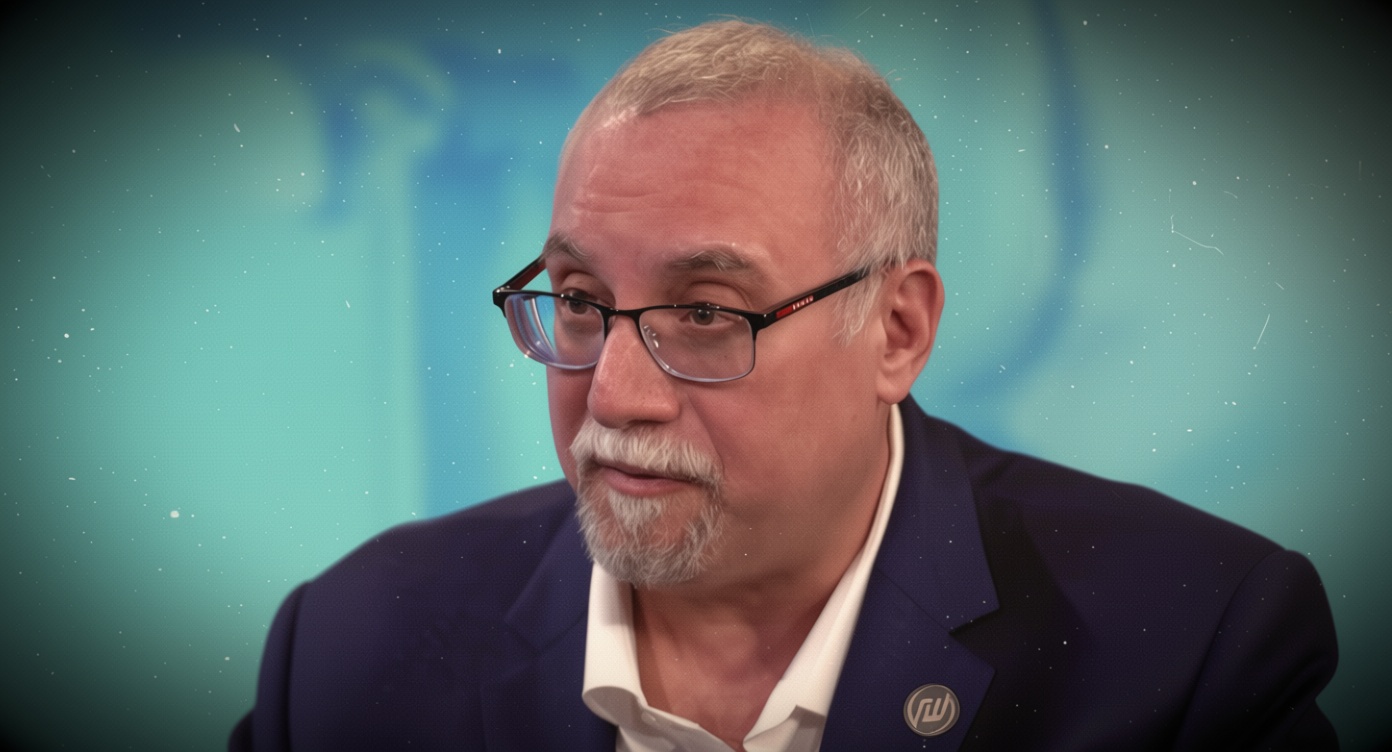
A former NASA official is drawing fresh attention to one of the most persistent criticisms in the long-running UFO debate: that major scientific and government institutions helped keep unexplained aerial sightings on the margins for decades. Michael Gold, who previously served in a senior NASA role, argued that the agency was not merely slow to engage with the subject of UFOs — now more commonly referred to as unidentified anomalous phenomena, or UAPs — but also helped prolong the stigma surrounding it. His comments arrive as public interest in UAPs continues to grow and as lawmakers, defense officials and scientists face renewed pressure to take the issue more seriously.
Gold’s remarks underscore a central tension in the modern UAP conversation. On one side are critics who say the subject was long dismissed too casually, discouraging pilots, military personnel and civilians from reporting strange encounters. On the other are skeptics who caution against allowing curiosity to outrun evidence. Gold’s criticism of NASA suggests that even agencies associated with scientific rigor may have contributed to a culture in which UAP reports were treated as inherently unserious rather than investigated systematically.
Why the remarks matter
The accusation is notable because NASA has, in recent years, attempted to reframe its position on UAPs. The agency has publicly acknowledged that unexplained sightings deserve structured study, and it has supported efforts to gather better data and reduce the number of unidentified cases. Still, Gold’s comments suggest that institutional history continues to complicate those efforts. If a former senior official believes NASA itself helped reinforce the idea that UAPs were taboo, that claim could resonate with researchers and observers who argue that stigma remains one of the biggest obstacles to progress.
That stigma has had practical consequences. Military aviators have said that fear of ridicule can discourage reporting, leaving critical information unshared or underdocumented. Scientists have similarly noted that a field viewed as speculative may struggle to attract funding, standardized methodology or serious academic attention. Gold’s criticism highlights how deeply social and professional pressures can shape whether anomalous events are studied or dismissed.
Broader debate over UAP transparency
The debate over UAPs has expanded well beyond aerospace circles. Congress has held hearings, defense officials have faced questions about incident reporting, and federal agencies have been pushed to improve transparency. The issue now sits at the intersection of national security, aviation safety and scientific inquiry. Gold’s comments add a new layer to that conversation by suggesting that the problem is not simply a lack of data, but a legacy of institutional skepticism that may have shaped how data was collected in the first place.
At the same time, the renewed focus on UAPs does not mean conclusions are close at hand. Many sightings ultimately prove to have ordinary explanations, while others remain unresolved due to incomplete information. That distinction is important: the push for greater openness is not an endorsement of extraordinary claims, but a call for better reporting, better sensors and more disciplined analysis. In that sense, Gold’s critique may reflect less a confrontation over what UAPs are than over how seriously they should have been examined all along.
Looking ahead
As the UAP discussion continues, the question of stigma may prove as important as the search for answers. If agencies such as NASA want to help resolve unexplained sightings, advocates say they will need to do more than collect data — they will need to help normalize the act of reporting it. Gold’s comments suggest that changing the language from “UFO” to UAP is only part of the effort. The larger challenge is changing the culture around the phenomenon so that uncertainty is treated as a problem to investigate, not a reason to look away.