Overview
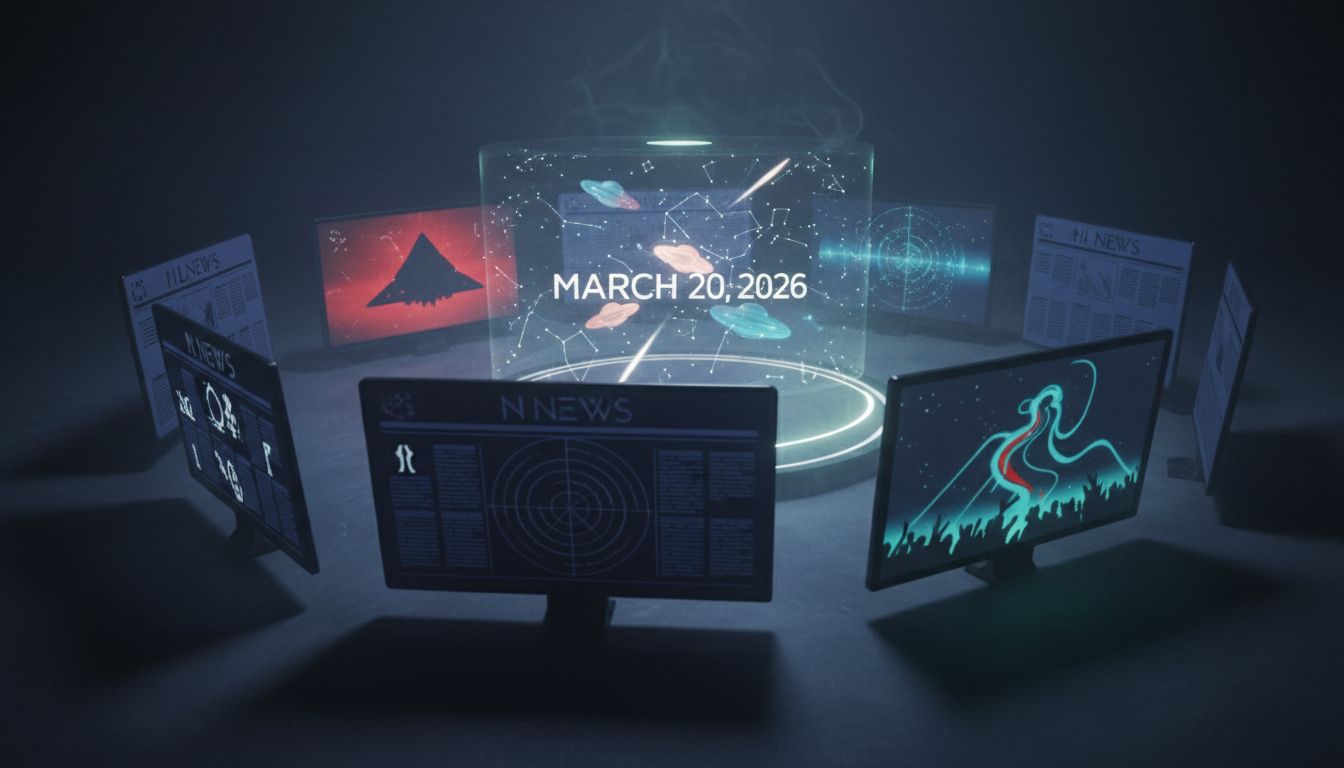
The latest round of UFO‑related headlines released on March 20, 2026 reflects a growing mix of official activity, community documentation, and cultural production. From a stalled government website to a record‑breaking catalog of Canadian sightings, the stories illustrate how the phenomenon is moving from fringe curiosity toward a more structured, if still uneven, public discourse. The newsletter UFO? UAP? WTF? notes that its accompanying podcast will be on hiatus for the year, underscoring a shift toward written updates as the primary conduit for enthusiasts and researchers.
Government and Official Responses
The White House’s recent “Stay tuned” comment on the Alien.gov domain has reignited speculation about the federal government’s transparency on unidentified aerial phenomena. As of March 19, the URLs Alien.gov and Aliens.gov redirect users to placeholder pages rather than a functional portal, prompting coverage by USA TODAY. While officials have not detailed the site’s intended content, the brief statement suggests a forthcoming announcement, possibly linked to the Department of Homeland Security’s ongoing review of UAP data. The cautious phrasing reflects a broader pattern of incremental disclosures rather than sweeping releases.
Community Documentation
In Canada, a citizen‑science effort led by a South Cariboo resident has compiled 1,052 UFO sightings for 2025, according to Nelson Star reporter Patrick Davies. The database, assembled with assistance from Ufology Research, shows that only 3.42 % of reports remain unexplained after conventional analysis. This high resolution rate underscores the value of systematic data collection and highlights the role of local volunteers in filtering noise from potentially significant cases. The project’s success may encourage other regions to adopt similar methodologies, strengthening the overall quality of UAP reporting.
Cultural and Media Initiatives
The creative side of the UFO community remains vibrant. The Northwest Flying Saucer Film Fest announced its fourth annual call for entries, inviting independent filmmakers to submit low‑budget or experimental works through FilmFreeway. Meanwhile, veteran comic creators Mark Russell and Russ Braun are launching The Forgotten Divine, a satirical UFO‑cult comic on Kickstarter, as reported by Bleeding Cool. Both initiatives demonstrate how the UFO narrative continues to inspire artistic expression, providing platforms that blend entertainment with speculative commentary on the phenomenon.
Law‑Enforcement and Private Investigations
Law‑enforcement perspectives surfaced in a Newsweek interview with a sheriff addressing the legacy of Neil McCasland and related conspiracy theories. The sheriff remarked, “Just because it’s crazy doesn’t mean it’s not true, but we have to look into the realities,” emphasizing a measured approach to public concerns while acknowledging the need for thorough investigation. Complementing this official stance, two retired Arizona police officers have founded the Unidentified Anomalous Phenomenon Police Department, a private unit dedicated to reviewing first‑responders’ unexplained encounters. Their combined 59 years of investigative experience aim to bring professional rigor to cases that often fall outside traditional police protocols.
Outlook
Collectively, these developments illustrate a maturing ecosystem around UFO and UAP topics. Government agencies appear poised for incremental transparency, community researchers are refining data quality, and cultural producers continue to explore the narrative through film and comics. The emergence of a specialized police department signals an increasing willingness to allocate resources toward systematic inquiry. As the UFO? UAP? WTF? newsletter transitions to a written‑only format for 2026, observers will be watching closely for any substantive policy shifts or new data releases that could further legitimize the study of unidentified phenomena.