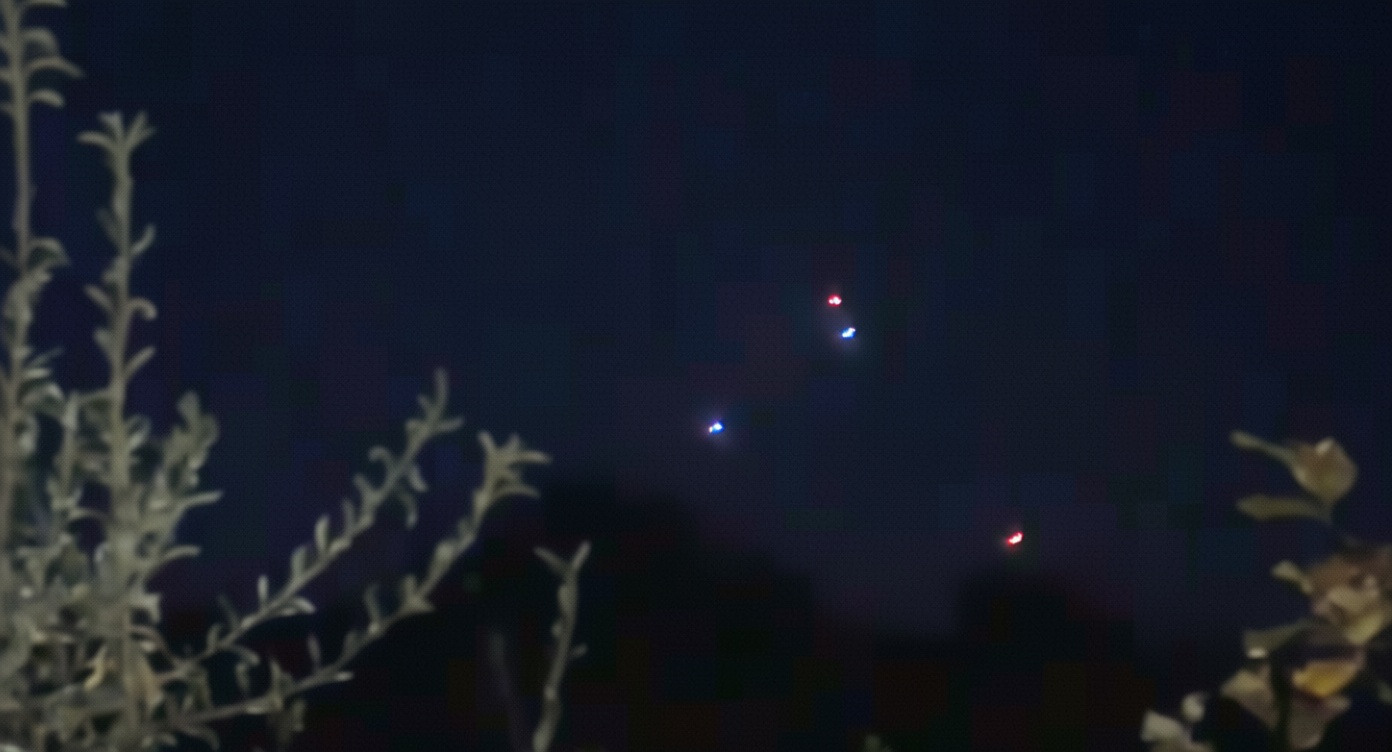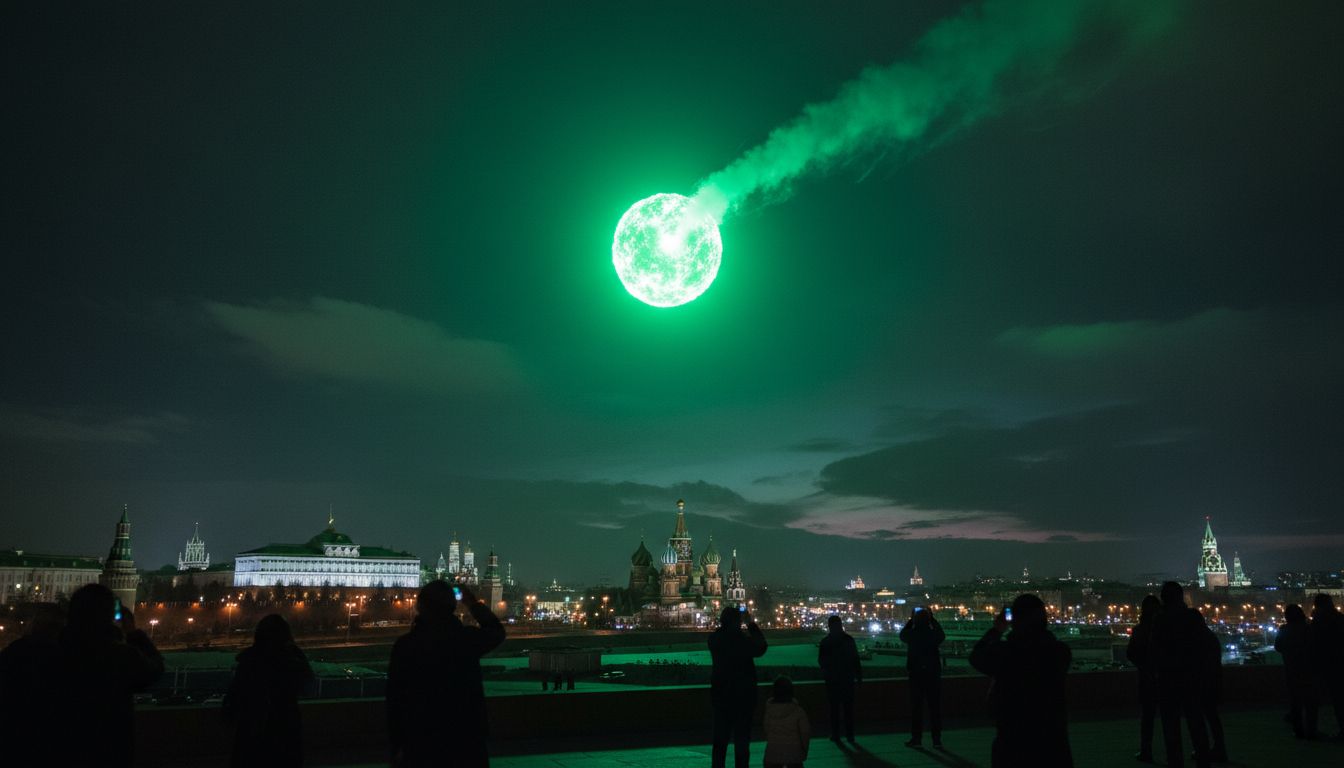
A bright green fireball streaked across the night sky over Moscow on the evening of October 27, prompting a wave of social‑media posts that labeled the phenomenon a “UFO.” Video clips shared on platforms such as TikTok and YouTube show a vivid, orange‑tinged orb moving erratically before disappearing behind the horizon. Witnesses described the object as “like a glowing marble” that left a multicoloured tail and seemed to change direction without any apparent propulsion. Within hours, the footage had been viewed millions of times, fueling speculation that the sighting could be evidence of an alien spacecraft or a technologically advanced, possibly AI‑controlled, drone.
Astronomers and aerospace experts were quick to intervene, emphasizing that extraordinary claims require ordinary explanations. Alexander Rodin, a senior researcher at the Moscow Institute of Physics and Technology, examined the publicly available video frame‑by‑frame and compared the object's apparent velocity with known orbital speeds. “The object entered the atmosphere at roughly 7.5 km s⁻¹ and decelerated in a manner consistent with a low‑mass, man‑made fragment re‑entering from low Earth orbit,” Rodin told reporters. He added that the green hue is typical of atmospheric ionisation caused by metal components heating up during re‑entry, a phenomenon observed in many satellite break‑ups.
The most plausible source, according to Russian space‑flight officials, is a fragment of a defunct satellite or a spent upper‑stage rocket body. The Russian Federal Space Agency (Roscosmos) confirmed that several aging communications satellites, launched in the 1990s, have been on a decaying orbit and are scheduled for controlled re‑entry in the coming months. “We track thousands of objects in low Earth orbit, and the trajectory recorded in the video matches the predicted path of a known debris piece slated to re‑enter over the European part of Russia,” said Elena Morozova, a flight dynamics analyst at Roscosmos. She noted that the object's slowdown and the gradual fading of its luminous tail are textbook signatures of atmospheric drag acting on a small, tumbling fragment.
Public reaction, however, has not been entirely quelled by the scientific assessments. Russian internet forums and UFO‑interest groups have circulated theories ranging from “extraterrestrial probes” to “artificial intelligence‑driven surveillance drones.” Some commentators have pointed to the irregular motion—briefly appearing to hover before accelerating—as evidence of advanced maneuverability. Yet experts caution that visual perception can be misleading when objects travel at high speed against a dark sky, especially when recorded on handheld devices with limited frame rates. “Our eyes and cameras can create the illusion of erratic movement when a fast‑moving object is viewed from a distance,” Rodin explained, adding that similar misinterpretations have occurred in past sightings across Europe and North America.
The incident underscores a broader challenge for authorities: distinguishing genuine aerospace events from misinformation in an era of instant sharing. Roscosmos has pledged to improve public communication about scheduled debris re‑entries, while the Russian Academy of Sciences plans to issue regular briefings on space‑related phenomena. As the green fireball faded into the night, the episode served as a reminder that many spectacular lights in the sky have terrestrial origins, even when they momentarily capture the imagination of a nation.