Overview
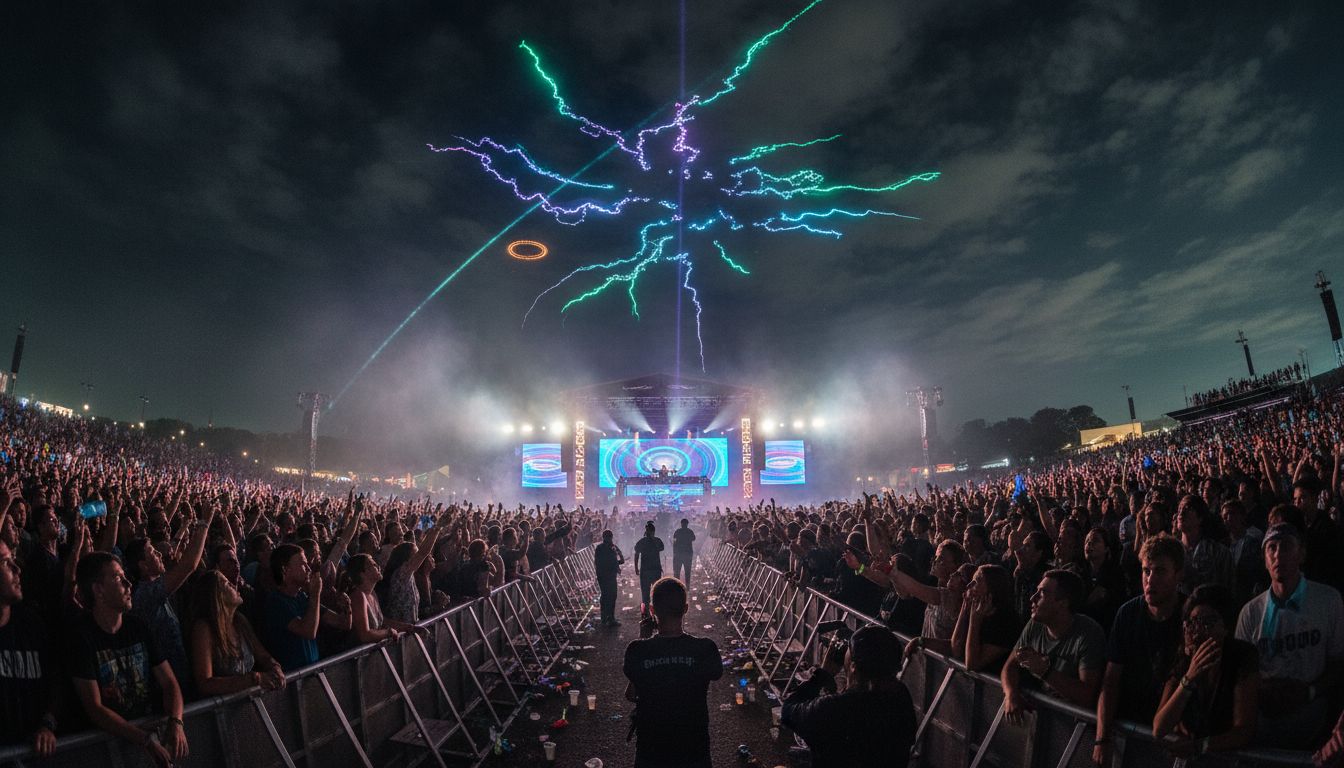
Recent reports from multiple music festivals have added a new layer to the ongoing discussion of unidentified aerial phenomena (UAP). Attendees at events ranging from the Roswell UFO Festival in New Mexico to larger mainstream gatherings have described “strange lights” and “unidentified objects” moving silently across the night sky. The accounts, shared widely on social‑media platform X and compiled by Alienated Media, represent some of the most densely witnessed sightings on record. Researchers note that the sheer number of observers—often in the thousands—provides a rare opportunity to cross‑check testimonies and assess the reliability of eyewitness data.
The Festival Effect: Why Sightings Surge in Crowds
Festivals create a unique environment that can amplify the perception of anomalous events. Large crowds are typically in a heightened state of excitement, with many participants already primed for extraordinary experiences. Psychologists point out that suggestibility rises when people are part of a collective mood, making ordinary stimuli—such as fireworks, drones, or atmospheric reflections—more likely to be interpreted as something “out of this world.” Additionally, the prevalence of high‑definition smartphones means that fleeting phenomena are captured and instantly disseminated, turning a single observation into a viral narrative within minutes.
Notable Mass‑Witness Cases
Three incidents stand out in the recent literature. In 2023, a three‑day electronic music festival in Phoenix, Arizona, dozens of festival‑goers reported a series of pulsating lights that hovered for several minutes before accelerating northward at speeds exceeding conventional aircraft. Witnesses submitted over 30 video clips, which analysts at the UAP Task Force are currently reviewing for propulsion signatures. A separate event in 2024 at the International UFO Congress in McMinnville, Oregon, saw attendees describe a “diamond‑shaped object” that emitted a low‑frequency hum before disappearing behind a cloud bank. Finally, the 2025 Roswell Festival—held on the anniversary of the 1947 incident—produced a surge of reports of “orbital formations” that moved in coordinated patterns, prompting a brief response from the Federal Aviation Administration to rule out known aircraft.
Implications for UAP Research and Culture
The concentration of reports from festival settings offers researchers a quasi‑controlled dataset. With many observers present simultaneously, investigators can compare timelines, triangulate positions, and evaluate the consistency of descriptions. Dr. Elena Martínez, a senior analyst with the National Institute for Aeronautics, remarked, “Mass‑witness events give us a statistical edge; they reduce the ambiguity that typically plagues single‑observer sightings.” At the same time, the phenomenon fuels cultural narratives, reinforcing the perception that UFO encounters are tied to moments of collective celebration. This feedback loop—media coverage prompting more reports, which in turn generate further coverage—has been identified as a key driver of public interest and, occasionally, misinformation.
Looking Ahead
As festival organizers increasingly incorporate advanced lighting and aerial displays into their productions, distinguishing between human‑made spectacles and genuine UAPs will become more challenging. Authorities are urging attendees to document sightings with time‑stamped video and to report them through official channels such as the All‑Domain Anomaly Resolution Office. Meanwhile, the growing body of mass‑witness data is prompting calls for a dedicated research framework that accounts for crowd psychology, environmental variables, and technological artifacts. Whether these festival sightings will ultimately advance scientific understanding or remain a footnote in the broader UFO discourse depends on the rigor of future investigations and the willingness of the community to separate credible evidence from the allure of the extraordinary.


