Overview
A recent analysis of UFO reports reveals a striking pattern: roughly one‑third of sightings are logged during active thunderstorms or other severe weather. The Mutual UFO Network (MUFON) identified that 30 % of its 2021 database entries occurred under stormy conditions, a figure echoed by the National UFO Reporting Center (NUFORC), which recorded 25 % of its cases during similar events. Researchers attribute this correlation to a mix of atmospheric optics, electromagnetic disturbances, and human perceptual factors, prompting a systematic review of both historic incidents and contemporary scientific explanations.
Historical Context
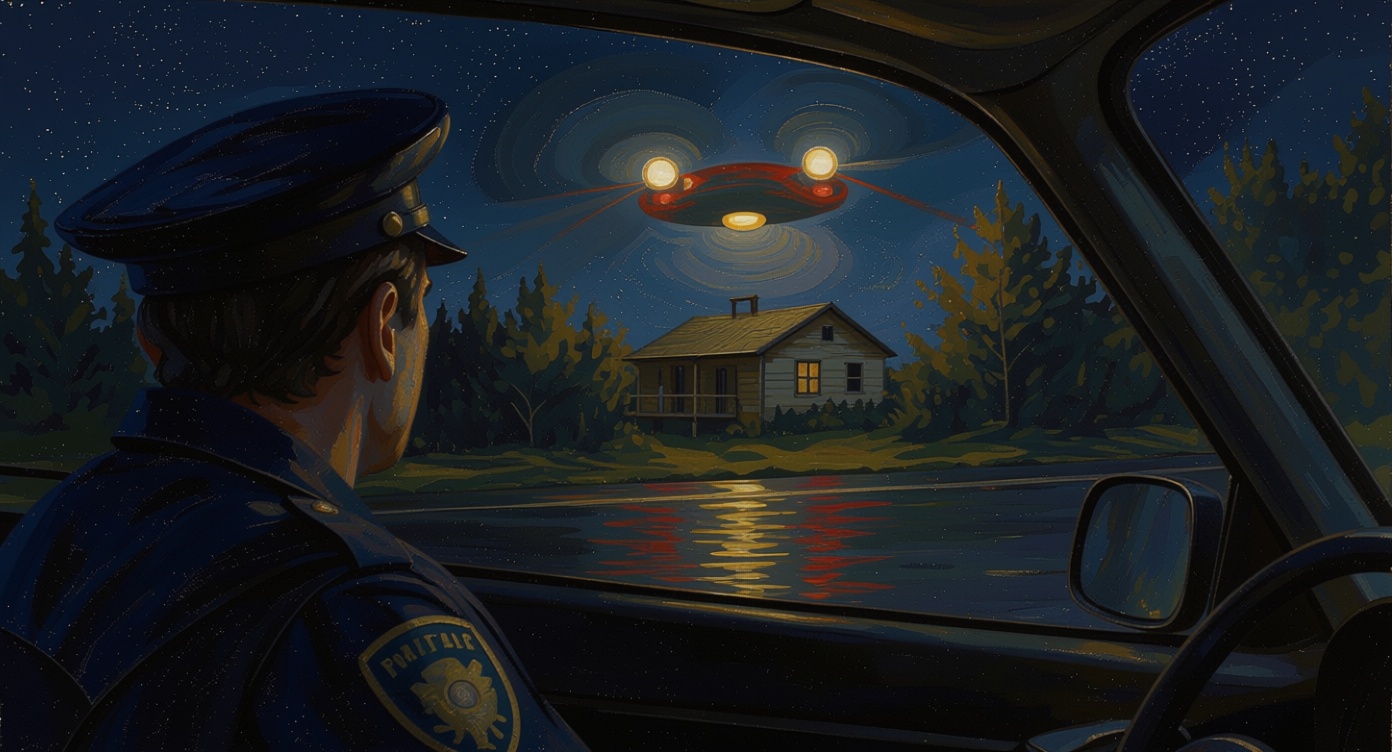
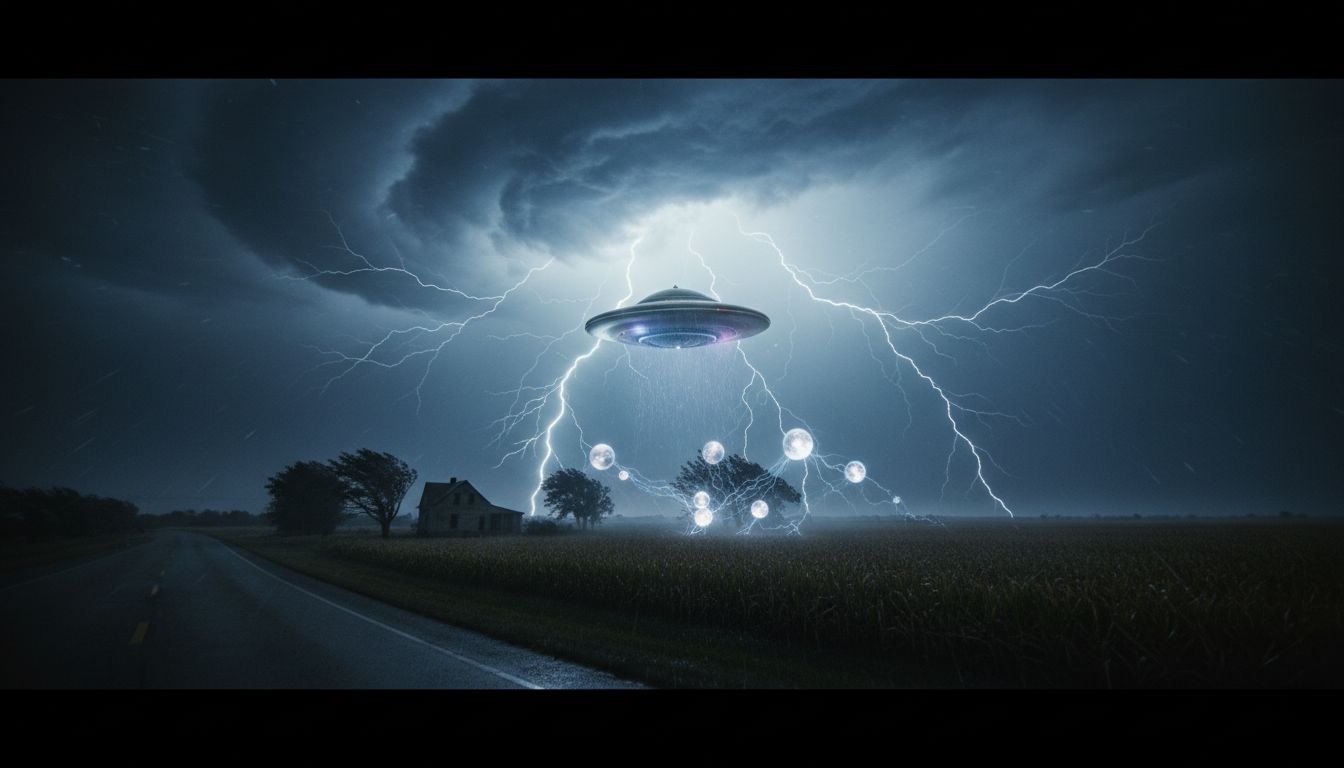
Two of the most frequently cited episodes involve dramatic weather. In July 1952, Washington, D.C. experienced a series of radar‑detected “unknown” contacts amid a prolonged thunderstorm. Air traffic controllers reported multiple blips that appeared to maneuver erratically, prompting the U.S. Air Force to launch Project Blue Book investigations. A similar pattern emerged in June 1973 over the Midwest, when a tornado outbreak coincided with dozens of eyewitness reports of luminous, disc‑shaped objects that reportedly hovered, accelerated, and vanished in seconds. Both cases were documented in contemporary newspaper accounts and later referenced in government UFO archives, underscoring that the storm‑sightings link is not a recent phenomenon.
Scientific Explanations
Atmospheric scientists point to several mechanisms that can produce UFO‑like visuals during storms. Sprites, elves, and other transient luminous events (TLEs) are high‑altitude electrical discharges triggered by powerful lightning strikes; they can appear as glowing, rapidly moving shapes that defy ordinary expectations. Ball lightning—an infrequent, self‑contained plasma sphere—has also been recorded during thunderstorms and can persist for several seconds, matching many eyewitness descriptions of hovering or slowly drifting lights.
Additionally, lenticular clouds and parhelia (sun dogs) can create optical distortions that make conventional aircraft or celestial bodies seem to change shape or speed. Electromagnetic interference from storm‑generated fields can affect the visual processing centers of the brain, a phenomenon known as “magnetoreception disruption,” potentially leading observers to misinterpret ordinary stimuli as extraordinary. Dr. Elena Martínez, a physicist at the University of Colorado, notes, “When a strong electromagnetic pulse coincides with low‑visibility conditions, the brain’s pattern‑recognition circuits can generate false positives, especially for moving light sources.”
Eyewitness Accounts
Interviews with witnesses from the 1952 and 1973 incidents reveal consistent themes: sudden appearance, silent propulsion, and rapid acceleration beyond known aircraft capabilities. One retired Air Force pilot who was on duty during the 1952 Washington sightings recalled, “The objects darted across the sky in a way that no conventional plane could—no sound, no visible exhaust, and they seemed to change direction instantly.”
In the 1973 Midwest case, a farmer named Harold Jensen described a “bright, disc‑shaped light that hovered over the field for a moment, then shot straight up at a speed that made the air itself seem to ripple.” While such testimonies are compelling, investigators stress the importance of corroborating visual reports with radar data, meteorological records, and, where possible, photographic evidence. To date, the majority of storm‑related sightings lack definitive instrumental verification, leaving room for multiple interpretations.
Assessment and Outlook
The convergence of meteorological activity and UFO reports suggests that many sightings likely stem from natural atmospheric phenomena amplified by human perception under stress. Nonetheless, a subset of accounts—particularly those involving precise radar returns and unexplained maneuverability—remain difficult to reconcile fully with known weather effects. Ongoing research initiatives, such as the U.S. Department of Defense’s Unidentified Aerial Phenomena (UAP) Task Force, are expanding data collection to include high‑resolution atmospheric monitoring alongside visual reports. As Dr. Martínez cautions, “Distinguishing between a rare electrical discharge and a genuinely unknown aerial vehicle requires interdisciplinary data, not just anecdotal evidence.”
Until a comprehensive dataset links specific atmospheric conditions to each anomalous observation, the debate will continue. What is clear, however, is that storm‑related UFO sightings provide a valuable laboratory for testing the limits of both atmospheric science and human perception, offering insights that may eventually clarify whether these events are weather anomalies, misinterpretations, or something yet to be understood.