Overview
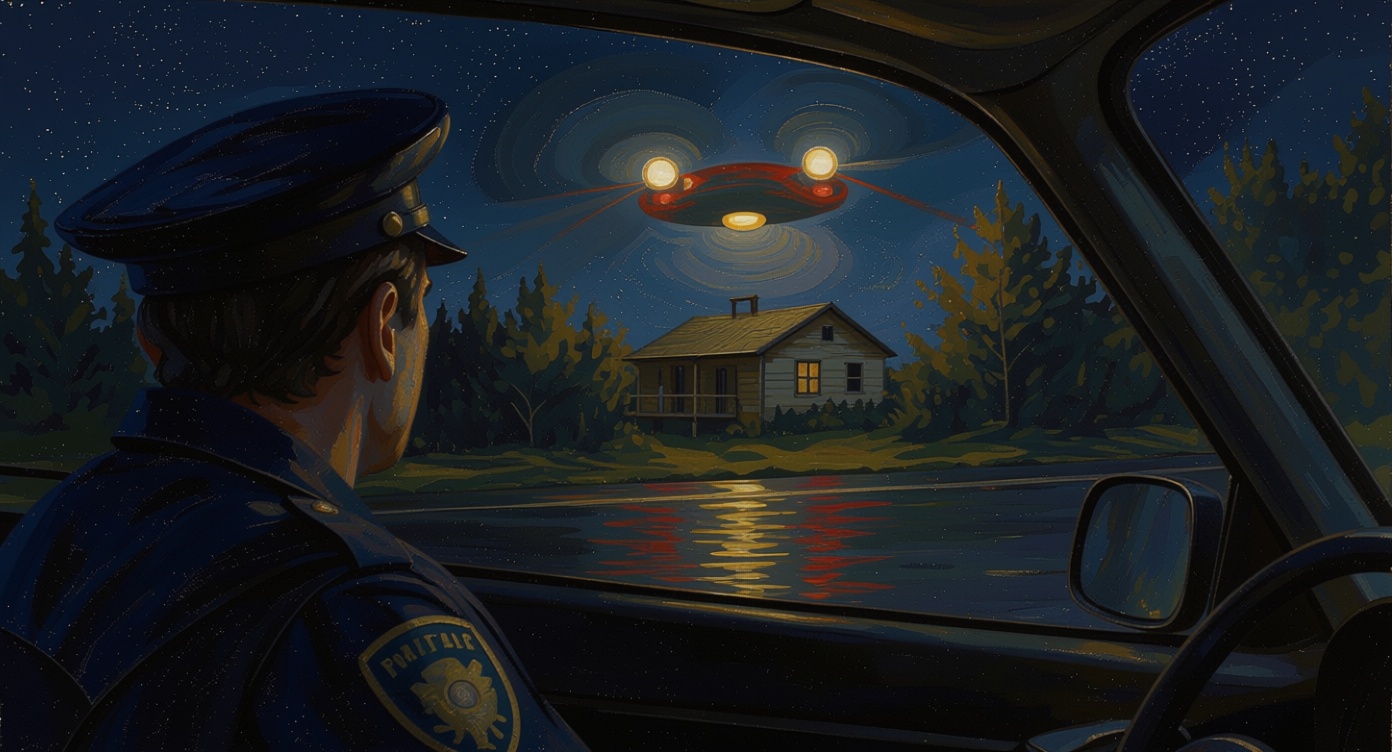
A recent episode of the “Unexplained News Update” podcast, released on Nov. 20, 2025, highlights a noticeable rise in UFO (Unidentified Flying Object) sightings across the United States. The episode focuses on reports describing multiple, tightly focused light beams and physical traces—such as scorched vegetation and shallow depressions—suggesting possible landings. The host, investigative journalist Maya Patel, frames the surge as “one of the most concentrated clusters of visual and material evidence in recent memory,” and the episode has been promoted on X (formerly Twitter) with hashtags #UFOs #UAP #LightBeams that have generated several thousand retweets and comments.
Witness Accounts
Patel interviews three civilian witnesses who observed the phenomena within a two‑week window in early November. Carlos Mendoza, a farmer near Roswell, New Mexico, described “three columns of bright, white light that hovered for about a minute before sweeping low over my field, leaving a faint, circular scorch mark on the corn.” Mendoza’s account was corroborated by a nearby rancher, Linda Chen, who reported “a humming sound that seemed to come from the sky, followed by a sudden gust that knocked over a fence post.”
In the Pacific Northwest, Air Force veteran Lt. Cmdr. Sarah Whitaker recounted a “diamond‑shaped craft that emitted intersecting laser‑like beams, creating a grid pattern on the ground. When the lights faded, there were shallow indentations roughly a foot deep, arranged in a perfect square.” Whitaker’s description matches a series of reports filed with the National UFO Reporting Center (NUFORC), which logged 27 sightings featuring “light columns” and “ground traces” between Nov. 1‑15, a 45 % increase over the same period in 2024.
Expert Analysis
The episode brings in two experts to evaluate the credibility of the reports. Dr. Jane L. Smith, professor of astrophysics at the University of Colorado, cautions that “while the visual characteristics—multiple coherent beams and rapid maneuvering—are atypical of conventional aircraft, they are also consistent with certain atmospheric optical phenomena, such as ball lightning or rare auroral sub‑storms.” Dr. Smith emphasizes the need for photographic or radar data to move beyond anecdotal evidence.
Conversely, Col. (Ret.) Mark Alvarez, a former commander of a U.S. Air Force reconnaissance squadron, argues that “the combination of sustained beam emissions and measurable ground impact points to a technology that is not currently fielded by known military platforms.” Alvarez notes that the Department of Defense’s Unidentified Aerial Phenomena (UAP) Task Force has recently upgraded its sensor network, which could explain why more events are being captured and reported.
Both experts agree that the lack of physical samples—soil or material residues—limits any definitive conclusion, and they call for a coordinated investigative effort involving local law‑enforcement, scientific labs, and federal agencies.
Broader Context
The surge aligns with a broader pattern observed over the past year. According to NUFORC’s 2025 annual summary, the total number of UAP reports reached 12,342, the highest count in the organization’s 70‑year history, with a marked uptick in “multiple light source” categories. The U.S. Office of the Director of National Intelligence (ODNI) released a supplemental briefing in August 2025, acknowledging that “some incidents exhibit characteristics that remain unexplained after standard analysis.” However, the ODNI stopped short of attributing any sightings to extraterrestrial origins, citing insufficient evidence.
Social media activity surrounding the podcast episode reflects growing public interest. The X promotion generated over 8,000 retweets and sparked a trending discussion about the need for transparent data sharing between civilian observers and government bodies. Critics warn against “hasty sensationalism,” while proponents argue that public reporting can act as a force multiplier for detection and verification.
Next Steps
In response to the heightened reporting, several state-level agencies have announced plans to deploy mobile lidar units to potential impact sites within the next month. The UFO Research Coalition, a nonprofit network of scientists and investigators, has issued a call for volunteers to collect soil samples from the documented “landing traces.” Meanwhile, the “Unexplained News Update” podcast promises a follow‑up episode featuring any newly obtained data and a round‑table with federal officials.
While the increase in sightings and the physical evidence described in the podcast raise compelling questions, the scientific community remains cautious. As Dr. Smith concludes, “extraordinary claims require extraordinary evidence; until we have verifiable measurements, the phenomenon stays in the realm of the unexplained.” The coming weeks will test whether the current wave of reports can be substantiated—or whether they will join the long‑standing catalog of unresolved aerial mysteries.