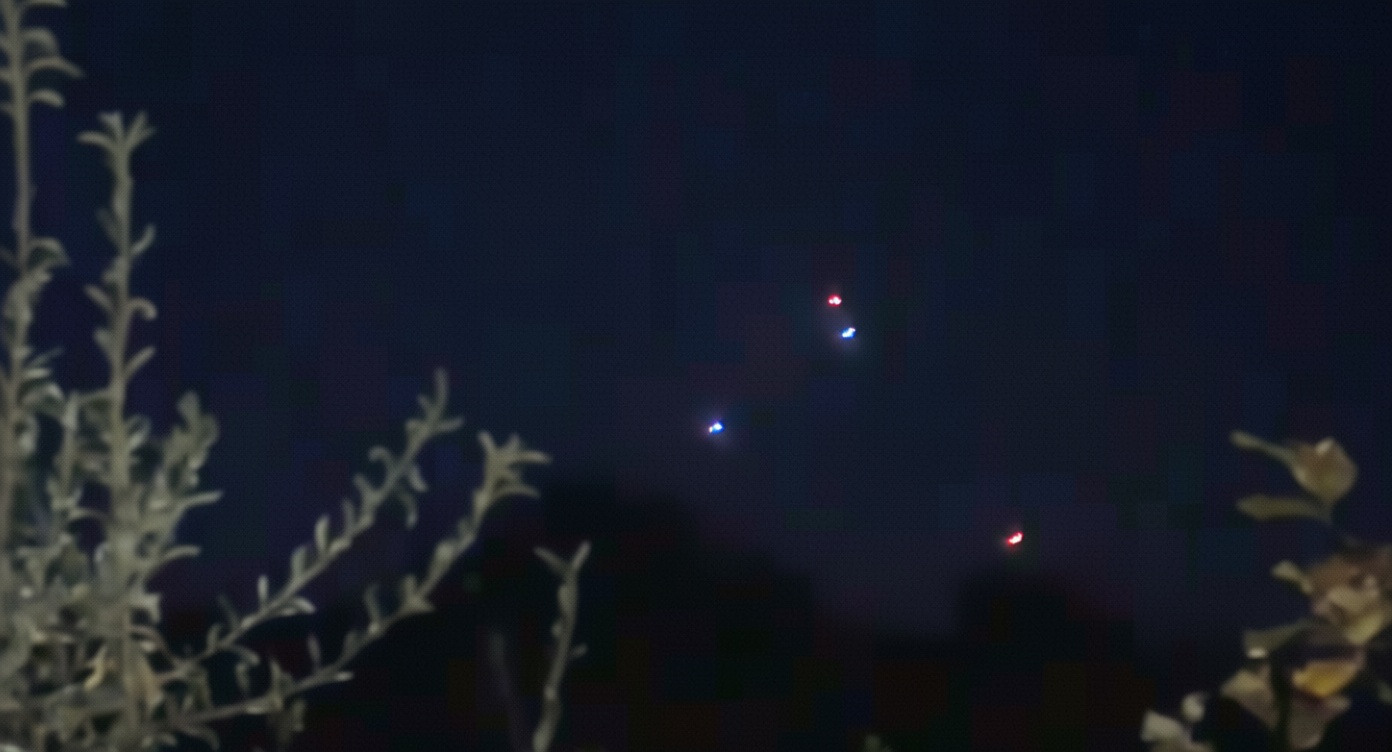
All reports of unidentified aerial phenomena that include electromagnetic disturbances share a striking commonality: ordinary technology suddenly ceases to work. From the 1965 Tokyo Airlines Convair‑240 incident over the Ieshima Islands to a 2023 truck in Ocala, Florida whose engine and GPS froze as a V‑shaped object hovered overhead, witnesses describe a sudden loss of power, radio static, or complete electronic failure. The earliest documented case cited in the new synthesis comes from the March 21 1965 edition of the Tokyo Japan Times, which recorded a Convair‑240 passenger plane experiencing total instrument blackout and radio loss while a luminous, disc‑shaped object hovered near the aircraft. The crew reported that the aircraft’s navigation lights flickered in synchrony with the object before the plane regained control once the object vanished.
The pattern repeats in later decades. In 1972, a driver on Illinois Route 59 recounted his car stalling and the highway’s traffic signals cycling erratically as a bright, cigar‑shaped light passed overhead. A similar episode unfolded near Lake Sorell, Australia, where a fishing boat’s sonar and radio went dead while a silent, metallic disc hovered above the water for several minutes. More recent sightings—such as a massive, low‑altitude object that halted traffic on a Manhattan avenue for ten minutes, and a multi‑witness event over Chile’s Vespucio highway where dozens of drivers reported simultaneous loss of power steering—reinforce the notion that electromagnetic interference (EMI) is not an isolated anomaly.
Researchers have long debated whether these effects are intentional signals, side‑effects of exotic propulsion, or simply misinterpretations of ordinary phenomena. Dr. Michael S. Collins, professor of aerospace engineering at the University of Arizona, cautions against drawing premature conclusions: “The electromagnetic signatures reported in these cases are consistent with high‑energy plasma interactions, which could theoretically arise from a propulsion system that manipulates the vacuum. However, without independent instrumentation, we cannot rule out more prosaic explanations such as power surges or atmospheric electricity.” The article’s author echoes this sentiment, noting that “electromagnetic effects could be an unintended consequence of UFOs, in general,” and suggesting that the recurrence of these effects across disparate locations points to a common underlying mechanism.
Government and civilian investigators have begun to catalog the phenomenon more systematically. The U.S. Department of Defense’s Unidentified Aerial Phenomena Task Force, now operating under the All‑Domain Anomaly Resolution Office, has logged at least 27 incidents since 2004 where pilots or vehicle operators reported electronic malfunctions coinciding with visual sightings. In parallel, civilian groups such as the Center for UFO Studies have compiled a database of over 150 civilian reports featuring similar EMI, noting that many involve vehicles—cars, trucks, aircraft—coming to a halt or experiencing erratic instrument behavior within seconds of a sighting.
While the data remain fragmentary, the consistency of electromagnetic disturbances across decades and continents adds a tangible dimension to the UFO debate. As the article concludes, the phenomenon “could prove to be an important one, perhaps even crucial in getting to the heart of the UFO mystery.” Whether these effects herald advanced, unknown propulsion technologies or simply reflect the human brain’s response to unusual visual stimuli, the growing body of documented cases urges scientists and policymakers to treat electromagnetic anomalies as a legitimate line of inquiry rather than dismiss them as folklore.