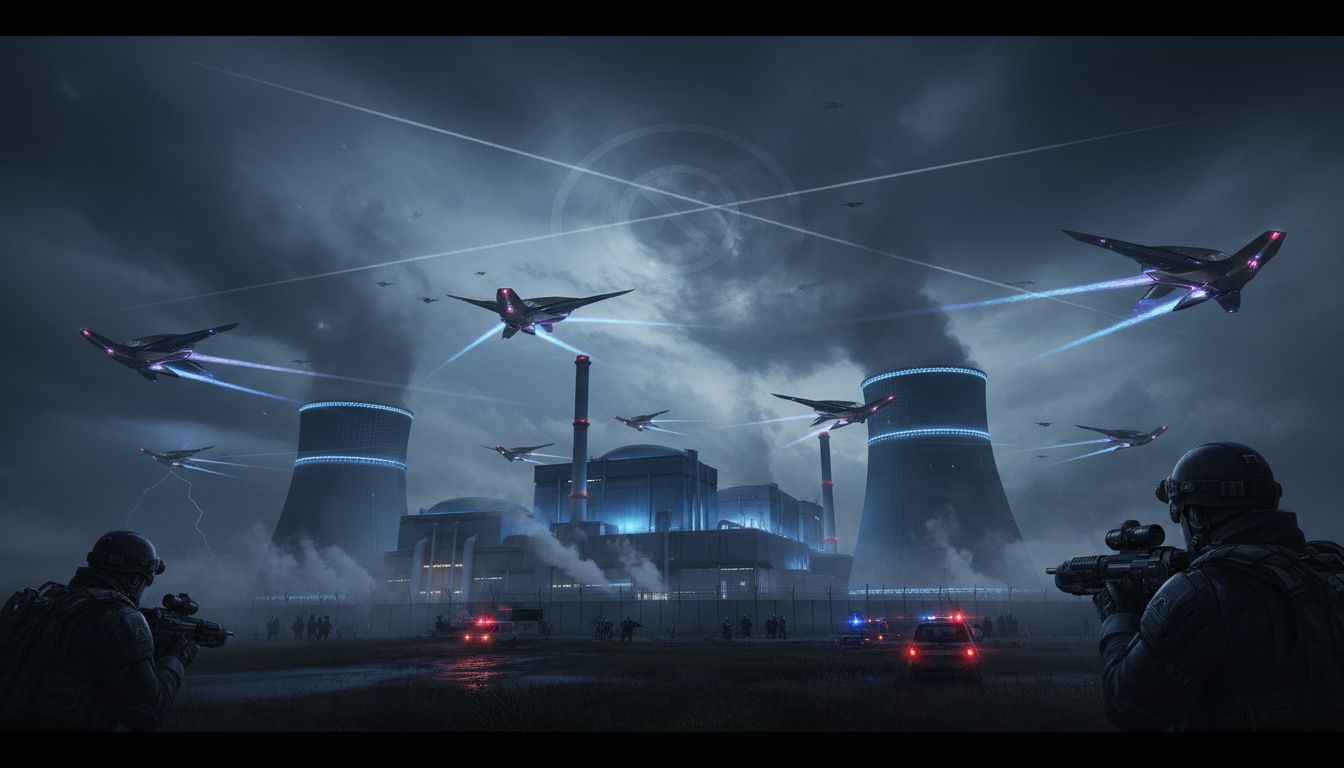
Drones have been observed over the Belgian Air Force base at Kleine‑Brogel for a third consecutive night, prompting the deployment of a military helicopter and a formal investigation by the Belgian defence ministry. Defence Minister Theo Francken told the national broadcaster VRT that the aircraft “looked like a clear mission targeting Kleine‑Brogel,” a site that hosts NATO’s nuclear sharing weapons. While he declined to name a potential adversary, Francken added on radio that “I have some ideas, but I’m going to be cautious,” underscoring the sensitivity of the incident given the base’s strategic importance.
The Kleine‑Brogel sightings are part of a broader pattern of unexplained aerial activity across Europe in recent months. In October, unverified drone reports forced Germany’s Munich airport to suspend operations twice within 24 hours, and Denmark’s airports experienced similar incursions that the Danish defence minister described as the work of a “professional actor.” Over the same period, Estonia and Poland lodged NATO consultations after approximately 20 unmanned aerial systems allegedly entered Polish airspace and Russian MiG‑31 fighters crossed into Estonian territory, incidents that Moscow denied. These events have heightened alarm among NATO members, who fear that coordinated swarms could exploit gaps in existing air‑defence networks.
Analysts note that the drones observed over Belgium appear to operate in coordinated formations, suggesting capabilities that exceed those of commercially available systems. Satellite imagery released by VRT shows the objects moving at high altitude before veering toward the Dutch border, a trajectory that would require precise navigation and real‑time communication. “The flight patterns are consistent with a swarm‑type architecture, which is difficult to counter with conventional radar alone,” said Dr Lena Kovács, a senior researcher at the European Centre for Air‑Space Studies. She added that such technology could be employed for intelligence‑gathering, electronic interference, or as a prelude to more aggressive actions.
European security officials have responded by accelerating plans for a continent‑wide counter‑drone strategy. The European Commission’s recent defence roadmap, unveiled in September, earmarks €1.2 billion for four joint projects, one of which focuses on a unified detection and neutralisation system capable of tracking low‑observable objects across national borders. NATO’s Allied Air Command has also begun a series of tabletop exercises to test member states’ readiness to respond to mass‑drone incursions, particularly over sites that store or transport nuclear material.
Belgian authorities have not yet disclosed the technical specifications of the drones, but they confirmed that the investigation involves both civilian aviation regulators and NATO liaison officers. “We are treating this as a potential security breach of a NATO‑critical asset,” Francken said, emphasizing the need for “transparent information sharing among allies.” Meanwhile, the Ministry of Defence in the Netherlands has increased aerial patrols along its southern frontier, and neighboring Germany has issued an advisory to commercial pilots to remain vigilant for unidentified objects near its own airfields.
The series of sightings, while not yet linked to a single actor, has amplified calls for a coordinated European response. As NATO members grapple with the dual challenges of safeguarding nuclear facilities and maintaining the free flow of commercial air traffic, the pressure is mounting on policymakers to close the technology gap that enables such sophisticated unmanned systems. The coming months will likely see intensified diplomatic dialogue, accelerated procurement of counter‑UAS capabilities, and heightened scrutiny of any future aerial anomalies over Europe’s most sensitive sites.