Overview
Recent analysis of data from the National UFO Reporting Center (NUFORC) shows that reported unidentified aerial phenomena (UAP) sightings in the United States have nearly doubled over the past five years, reaching 6,700 reports in 2023. The rise coincides with broader public interest spurred by the declassification of military UAP investigations and the ubiquity of smartphones that enable witnesses to record and submit observations instantly. Congressional hearings in 2022 and 2023 have amplified calls for systematic, transparent reporting, giving the phenomenon a higher profile among both policymakers and the scientific community.
Surge in Reports
NUFORC’s annual totals illustrate a steady climb: 3,000 sightings in 2019, 3,500 in 2020, 4,600 in 2021, 5,800 in 2022, and 6,700 in 2023. Researchers attribute the increase to several converging factors. “The democratization of recording technology means that a single credible witness can produce video evidence that previously required expensive equipment,” said Dr. Elena Ramirez, a senior analyst at the Mutual UFO Network (MUFON). In addition, the release of Pentagon UAP reports has reduced stigma, encouraging pilots, military personnel, and civilians to file reports they might have previously dismissed. A MUFON survey of recent submissions found that approximately 38 % of sightings occurred within 50 miles of a military installation or a nuclear facility, a pattern that warrants further security review.
Geographic Hotspots
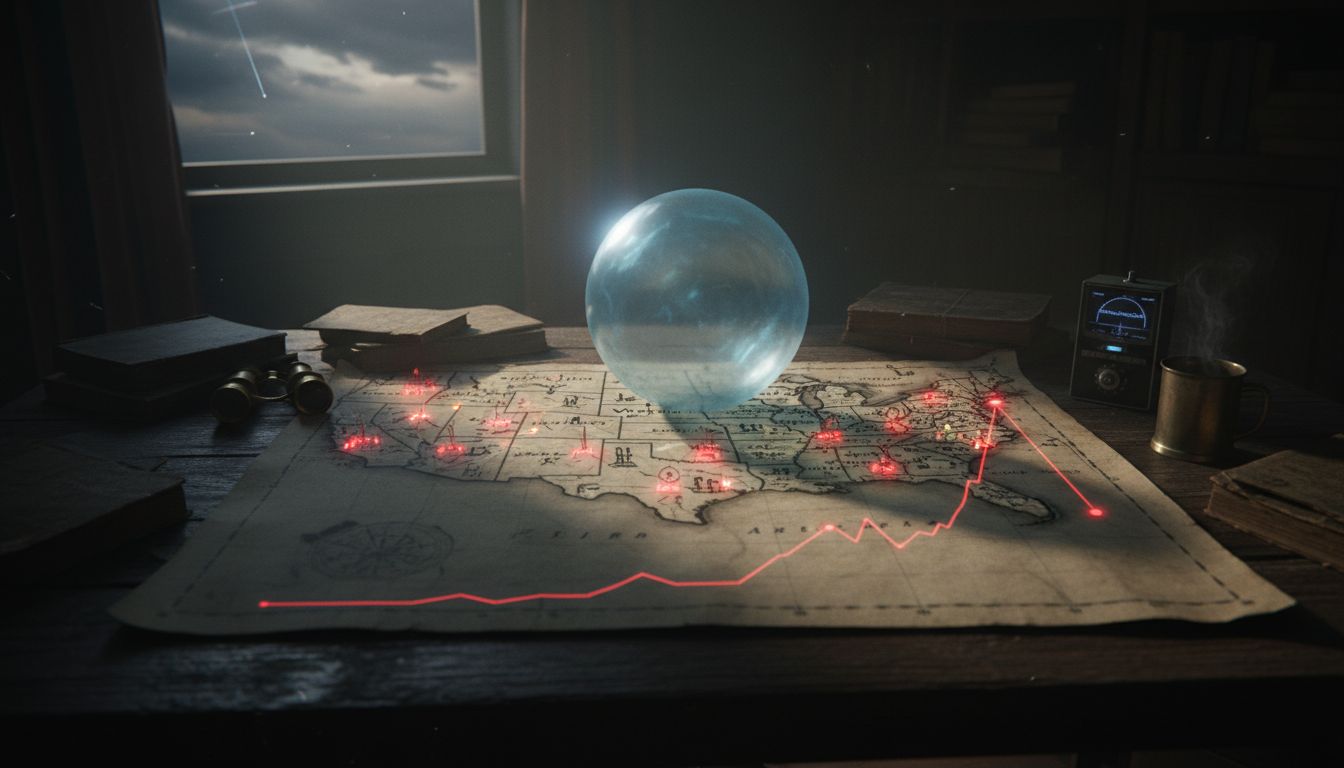
Mapping the 2023 data reveals three primary clusters: California, Texas, and Florida. California leads with 1,820 reports, many concentrated near Edwards Air Force Base and the Mojave Desert test range. Texas accounts for 1,560 sightings, with notable concentrations around the Red River Valley and the Davis–Monthan Air Force Base. Florida’s 1,340 reports cluster around the Atlantic coast and the Kennedy Space Center. The spatial distribution aligns with the MUFON finding that proximity to high‑security sites correlates with higher reporting rates, though analysts caution that population density also influences raw numbers. Seasonal trends are evident as well; summer months account for roughly 55 % of all reports, reflecting longer daylight hours and increased outdoor activity.
Witness Credibility
A significant portion of the recent reports comes from trained observers, including commercial pilots, Air National Guard members, and radar operators. In a 2023 briefing, former Navy pilot Lt. Cmdr. James Whitaker described an encounter over the Gulf of Mexico: “The object accelerated from a standstill to Mach 2 in under three seconds, executed a 180‑degree turn that defied known aerodynamic limits, and vanished without a trace.” Such testimonies, corroborated by multiple sensor readings, lend weight to the argument that at least some UAPs exhibit flight characteristics beyond current aerospace capabilities. Nonetheless, researchers emphasize the importance of rigorous verification, noting that many sightings still lack physical evidence or independent confirmation.
Implications for Security and Science
The growing body of reports has prompted both national‑security and scientific stakeholders to reassess existing protocols. The Department of Defense’s Unidentified Aerial Phenomena Task Force, now restructured as the All‑Domain Anomaly Resolution Office, is expanding its data‑sharing agreements with civilian reporting networks to improve situational awareness. Simultaneously, academic institutions are launching interdisciplinary studies that combine atmospheric physics, aerospace engineering, and data analytics to explore anomalous observations without presupposing extraterrestrial origins. As Dr. Ramirez notes, “Whether these phenomena represent advanced terrestrial technology, atmospheric anomalies, or something entirely new, the systematic collection and analysis of credible data is the only path forward.” The continued surge in sightings, especially in identified hotspots, underscores the need for transparent, evidence‑based inquiry that balances public curiosity with national‑security considerations.