Overview
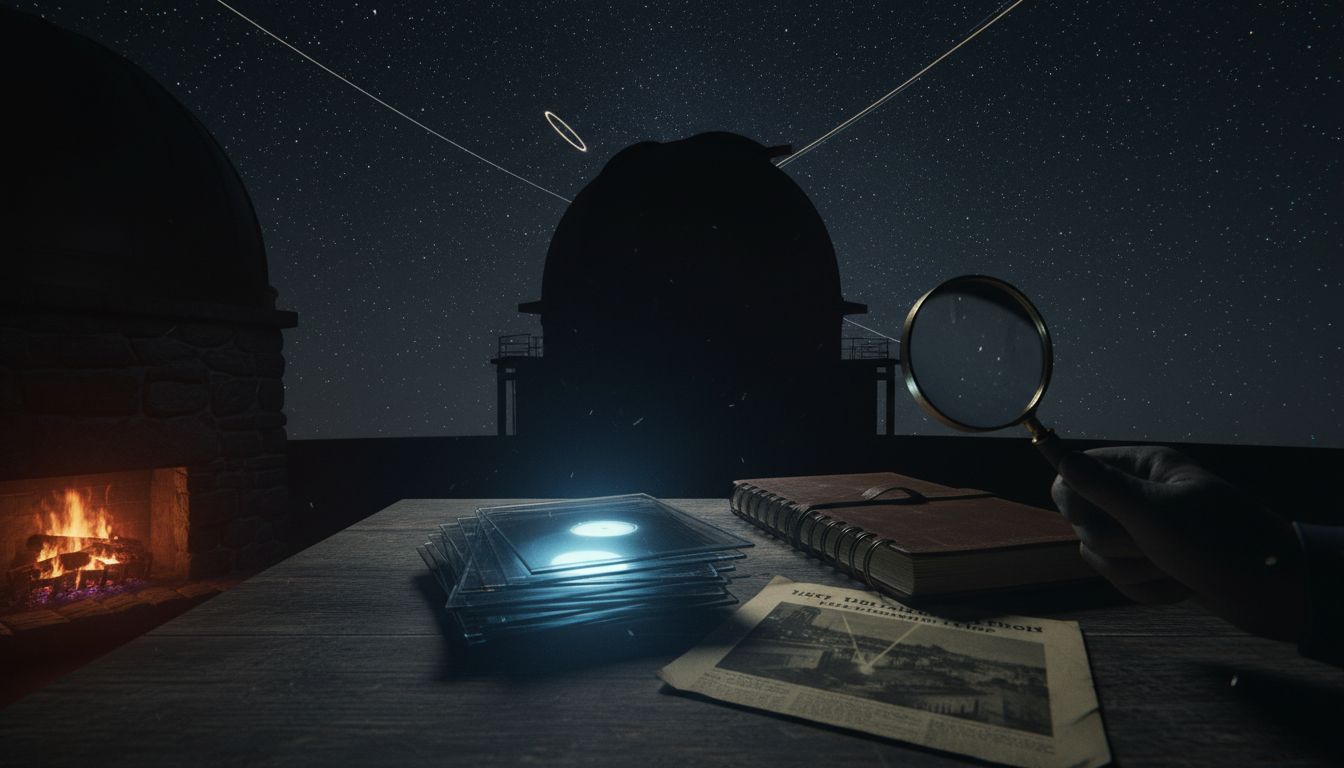
In a March 26, 2026 update, science‑writer John Michael Godier reviewed recent progress on the Vanishing and Appearing Sources during a Century of Observations (VASCO) project, which systematically compares historic astronomical plates to locate objects that have appeared or disappeared from the night sky. The latest focus is a set of nine faint, star‑like points recorded on a 1952 plate from the Mount Palomar Observatory. These “Palomar transients” were present on a single exposure but absent on plates taken 30 minutes earlier and six days later, suggesting a brief, localized phenomenon that occurred before the launch of Sputnik in 1957.
VASCO Findings
Dr. Beatriz Villarroel, who leads VASCO, emphasizes that the Palomar detections were consistent with objects moving in low Earth orbit, based on their apparent motion across the field of view. “The pattern of the points and their timing align with an orbital trajectory, not with a distant astronomical event,” Villarroel told the briefing. Independent verification came from a recent paper by Ivo Busko, who identified analogous transients on plates from the Hamburg Observatory in Germany taken within weeks of the Palomar exposure. Busko’s analysis ruled out plate‑handling errors, noting that the German plates displayed the same spatial distribution and brightness, reinforcing the hypothesis that the flashes were real optical events rather than artifacts.
Counter‑Arguments and New Evidence
Skeptics have long attributed such anomalies to radiation fogging caused by nuclear‑test fallout contaminating photographic emulsions—a problem documented for Kodak stock in the early 1950s. However, Godier points out that prevailing winds from the Nevada test sites would have carried fallout away from California, and the specific dot‑like signatures differ from the diffuse haziness typical of radiation damage. “The morphology of these points does not match the fogging patterns we see in other contaminated plates,” Busko wrote. This distinction weakens the fallout explanation and shifts attention toward genuine transient phenomena.
Historical Correlation with the 1952 Washington D.C. UFO Flap
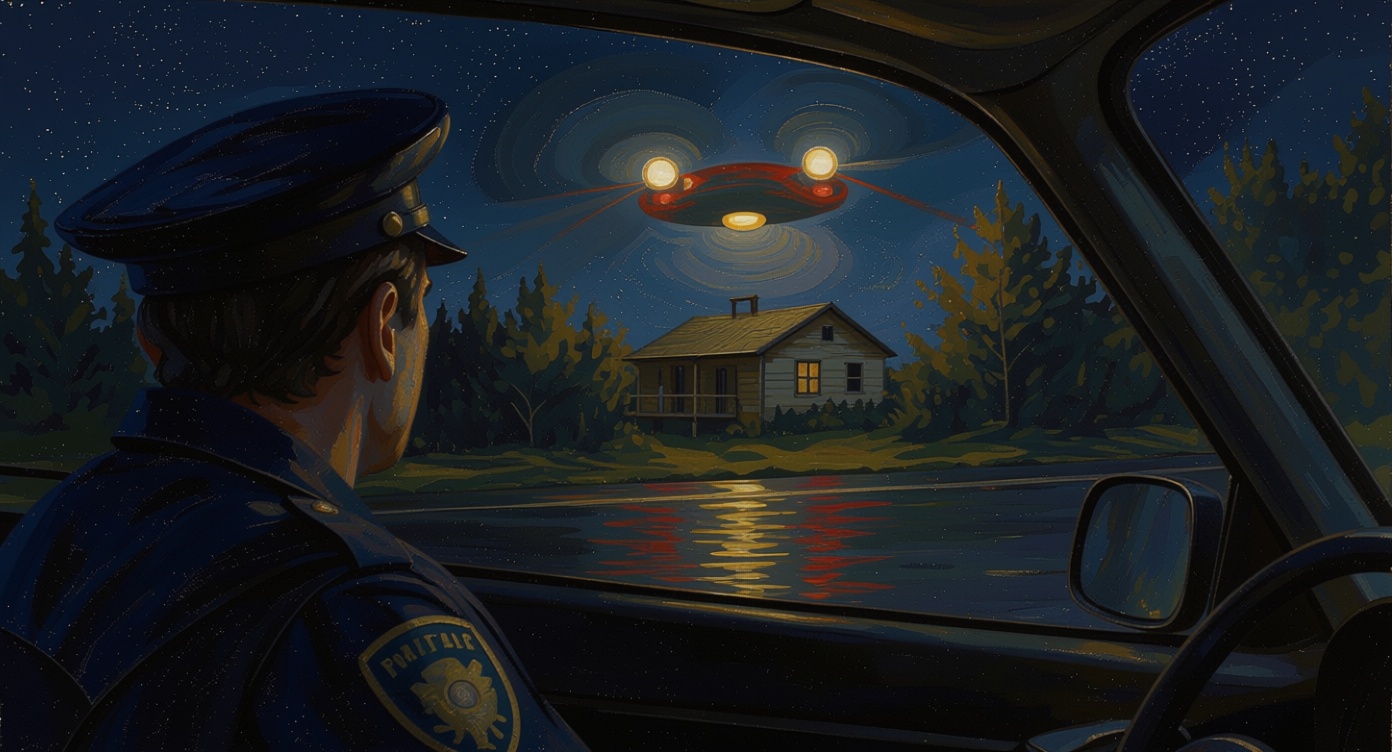
The Palomar transients coincide with a well‑documented UFO incident over Washington D.C. on July 19, 1952. Radar operators at Washington National Airport, including Edward Nugent and supervisor Harry Barnes, logged multiple unidentified contacts that were also visually confirmed by pilots and tower personnel. The contacts reportedly vanished when interceptor jets approached, a behavior that mirrors the fleeting nature of the Palomar flashes. While the two events occurred on opposite continents, the temporal alignment has prompted researchers to explore a possible common cause, though no definitive link has been established.
Institutional Controversy
The discussion also revisits the role of the late Dr. Donald Menzel, a prominent UFO skeptic who oversaw the disposal of a large portion of Harvard’s astronomical plate archive in the 1970s, citing storage constraints. Avi Loeb, now holding the Menzel Chair at Harvard, has suggested that the destruction may have been influenced by governmental pressure to eliminate potential evidence of unexplained aerial phenomena. “When archival data disappears, the scientific community loses a vital tool for retrospective analysis,” Loeb remarked, underscoring the importance of preserving historical observations for future inquiry.
Outlook and Future Work
Although Godier remains cautious about attributing the Palomar events to extraterrestrial technology, he acknowledges that the accumulating independent detections make a purely instrumental explanation increasingly untenable. Upcoming facilities such as the Vera Rubin Observatory and the Nancy Grace Roman Space Telescope are designed to monitor the sky for short‑duration transients with unprecedented sensitivity. These instruments could provide real‑time data that either confirms the existence of near‑Earth objects capable of producing such flashes or offers new insights into atmospheric or optical phenomena. As the scientific community prepares to leverage these next‑generation surveys, the “vanishing stars” of the 1950s may finally be placed within a robust, empirical framework.