Overview
A former British paratrooper has alleged that, in the late 1980s, a unit of UK special forces recovered a crashed “non‑human” craft in a remote area of northern England. The claim, first circulated on the social‑media network known as “#ufotwitter,” echoes recent disclosures by U.S. whistleblowers about unidentified aerial phenomena (UAP) recoveries. While the story has generated considerable buzz among UFO researchers, neither the Ministry of Defence (MoD) nor any official British agency has confirmed the incident.
Alleged Recovery
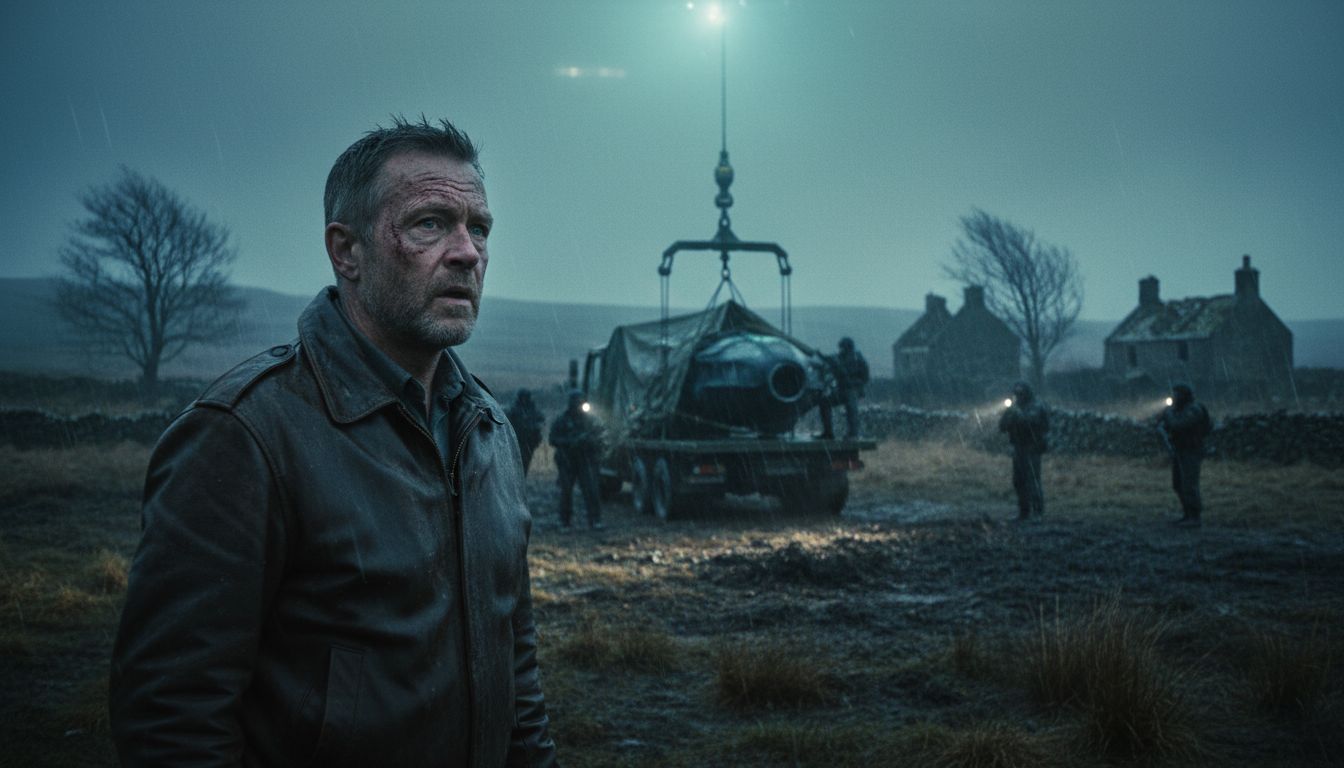
The ex‑paratrooper, who asked to remain unnamed for security reasons, says he was part of a “discreet operation” conducted by the Special Air Service (SAS) after local residents reported strange lights and a metallic object that struck the ground near the Pennine foothills in 1987. According to his account, a convoy of armored vehicles arrived under the cover of night, secured the crash site, and extracted the debris using a helicopter equipped with a “low‑observable” payload. He described the recovered material as “unlike any conventional aircraft—no rivets, no seams, and a surface that seemed to absorb radar.”
The claim was posted on a private Twitter thread on 10 January 2026, where it quickly amassed over 12 000 likes and prompted speculation about a possible “joint Anglo‑American cover‑up” of extraterrestrial technology. The post included a grainy photograph of a forest clearing taken at night, which the author said was taken from a distance during the operation. No verifiable identifiers—such as serial numbers or official markings—were visible in the image.
Historical Context
The United Kingdom has a long, though largely classified, history of investigating aerial anomalies. The MoD’s former “Project Condign” (2000‑2006) examined numerous sightings, concluding that most could be explained by atmospheric phenomena, but it left a small subset “unidentified.” More recently, the 2023 release of the U.S. Office of the Director of National Intelligence’s UAP report spurred renewed interest in allied investigations, prompting several former servicemen in the United States to come forward with similar recovery stories. The paratrooper’s narrative fits within this emerging pattern of veterans alleging that “non‑human” craft have been retrieved and studied in secrecy.
Official Response
When contacted, the Ministry of Defence declined to comment on the specific allegation, citing “operational security.” A spokesperson for the SAS reiterated that “the regiment does not discuss past missions.” The Parliamentary Defence Committee, which has previously called for greater transparency on UAP matters, issued a brief statement acknowledging the claim but emphasizing that “any credible evidence must be evaluated through formal channels.” No Freedom of Information request regarding the alleged 1987 operation has yet yielded documents, and the National Archives list no publicly released files on a crash of this nature.
Implications and Outlook
If substantiated, the alleged 1980s recovery would represent one of the earliest documented instances of a Western military retrieving a craft that defies conventional engineering. It could also suggest a level of coordination—or at least parallel activity—between the United Kingdom and the United States regarding UAP research. However, experts caution against drawing conclusions from unverified personal testimonies. Dr. Emily Hart, a senior researcher at the Centre for Aerospace Security, notes that “anecdotal accounts are valuable for guiding inquiry, but they must be corroborated by physical evidence and official documentation before reshaping policy.”
The story adds pressure on legislators in both countries to consider a more open framework for UAP disclosures. As public interest grows, the balance between national security and transparency will likely shape the next wave of investigations into what remains, for now, an unconfirmed chapter of modern aerospace history.