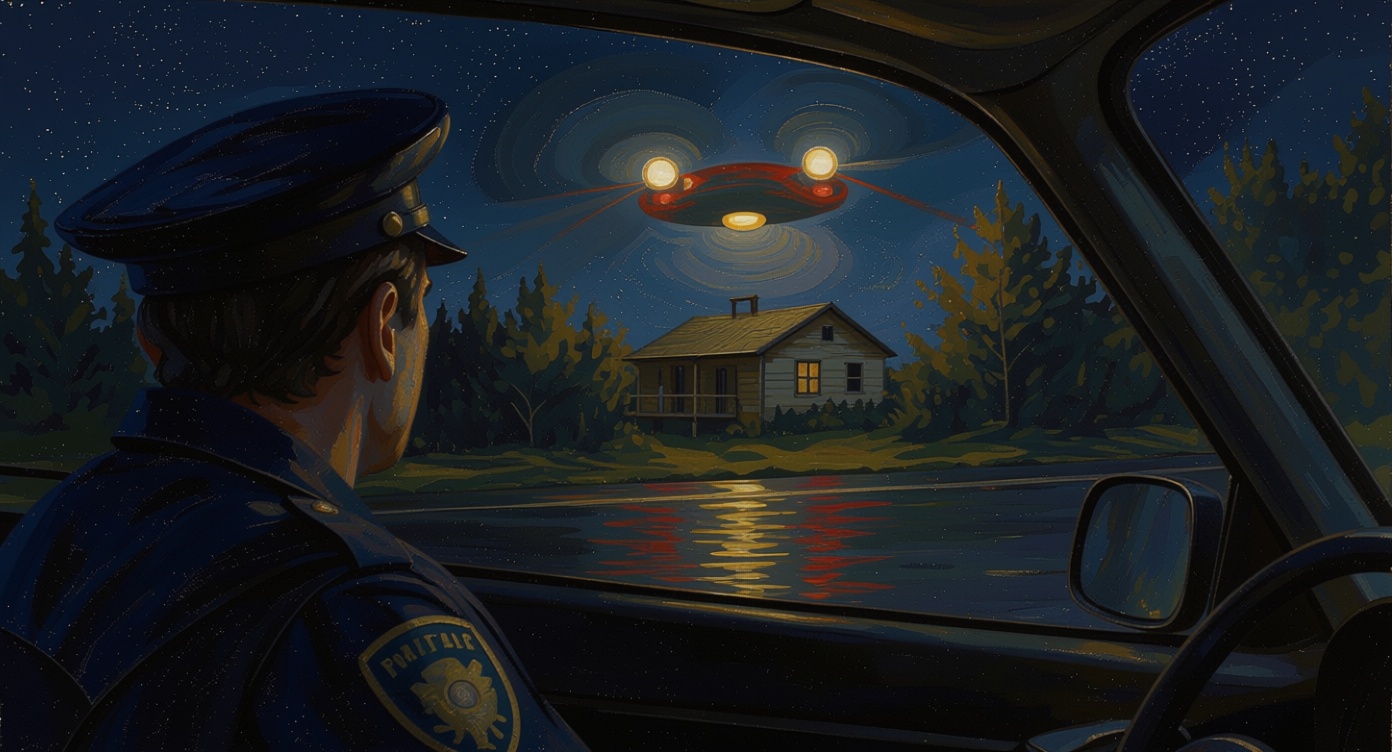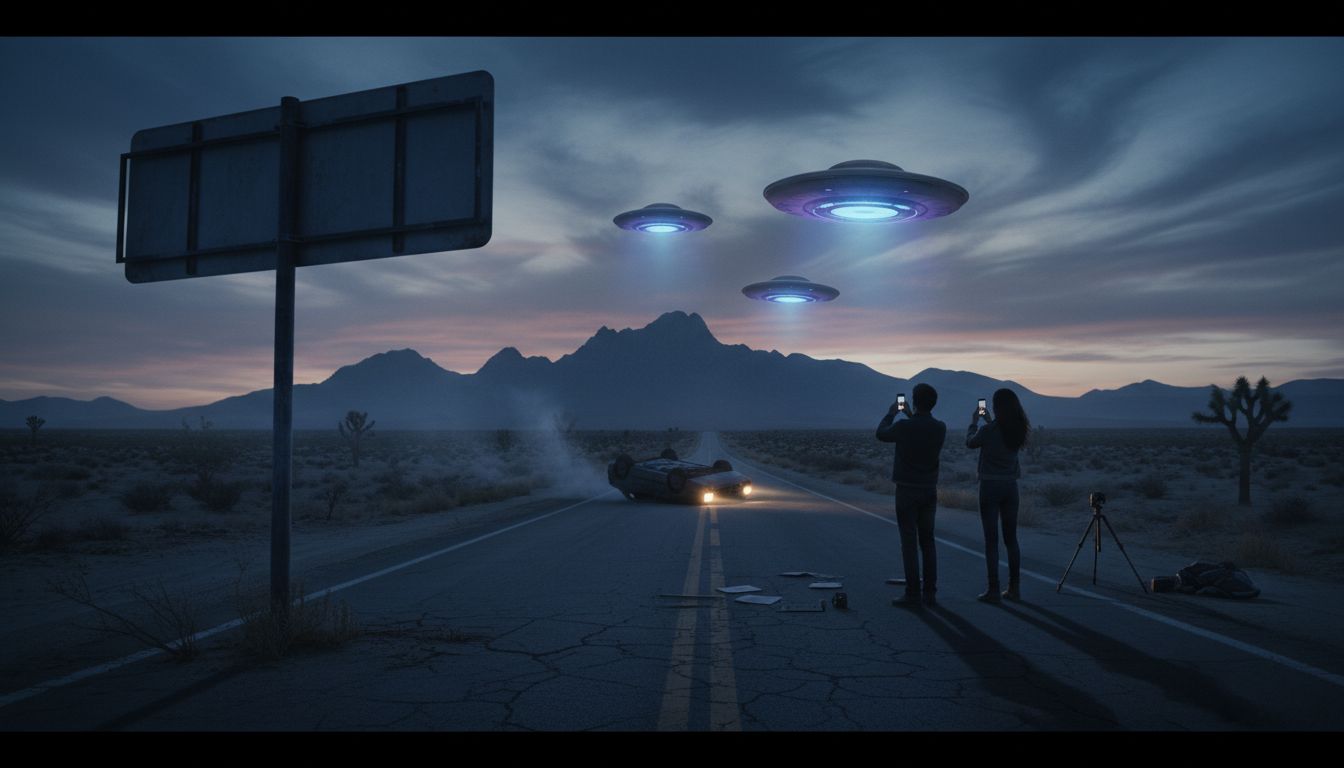
The number of reported unidentified aerial phenomena (UAP) sightings surged to an estimated 30,000 in 2025, more than double the total recorded in 2024, according to a data set compiled by Alienated Media. The increase is reflected in a steady upward trend that began in 2010, when the U.S. government logged roughly 1,500 reports, and accelerated after the 2020 release of the Pentagon’s preliminary UAP assessment. “We are seeing a cultural shift,” said Dr. Emily Hart, senior researcher at the National UFO Research Center, “where people feel empowered to share what they see, and the tools they have to document it are far more sophisticated than a decade ago.” The rise in reports has coincided with broader public interest sparked by recent documentaries, congressional hearings, and the declassification of several historic files.
Among the hundreds of submissions, ten incidents have emerged as the most compelling based on the quality of visual evidence, consistency of witness testimony, and proximity to known military installations. The first, recorded on 12 January near Roswell, New Mexico, involved three pilots from a civilian flight school who captured high‑definition video of a luminous, disc‑shaped object executing rapid accelerations beyond known aircraft capabilities. “It hovered for about thirty seconds, then vanished in a split‑second burst of light,” pilot Maria Alvarez told investigators. A second case, reported on 3 March over the Great Lakes, featured a fleet of infrared‑enabled drones that detected an unidentified formation at an altitude of 45,000 feet, moving in a precise triangular pattern for over ten minutes. The drones’ onboard sensors logged a radar cross‑section inconsistent with conventional aircraft, prompting the U.S. Air Force’s Advanced Aerospace Threat Identification Program to open a formal inquiry.
Geographic clustering suggests a pattern: six of the top ten sightings occurred within 200 miles of active military test ranges in the United States, Canada, and the United Kingdom. Night‑time observations dominate the dataset, with 78 % of the high‑confidence reports logged after sunset, a factor researchers attribute to both the visual contrast of illuminated objects against a dark sky and the increased use of night‑vision equipment by hobbyist astronomers. “The temporal and spatial distribution points to a mix of genuine unknowns and misidentified classified activities,” noted Lt. Cmdr. James Ortega, former director of the Pentagon’s UAP Office. “Our analysis does not rule out conventional explanations, but the consistency across independent sources merits further study.”
Social media has amplified the reach of these encounters, turning isolated eyewitnesses into a networked community that can corroborate details in near real time. Platforms such as X and TikTok have hosted viral clips that were later verified by independent analysts for authenticity, though many remain unverified. The rapid dissemination has also pressured policymakers to address public concern. In May 2025, the Senate Armed Services Committee convened a hearing titled “Unidentified Aerial Phenomena: National Security Implications,” where officials from the Office of the Director of National Intelligence pledged additional funding for a centralized UAP reporting hub. “Transparency is essential,” said Senator Karen Mitchell, chair of the subcommittee, “but so is rigorous scientific scrutiny.”
While the top ten sightings of 2025 have not produced conclusive evidence of extraterrestrial technology, they have reinforced the need for systematic data collection and interdisciplinary analysis. Researchers are calling for standardized reporting protocols, greater collaboration between civilian astronomers and defense agencies, and the integration of emerging sensor technologies such as lidar and quantum radar. As Dr. Hart cautioned, “The phenomenon remains a frontier of inquiry. Whether the answer lies in advanced human craft, atmospheric physics, or something else entirely, the expanding dataset offers a rare opportunity to apply the scientific method to one of humanity’s most enduring mysteries.”