Overview
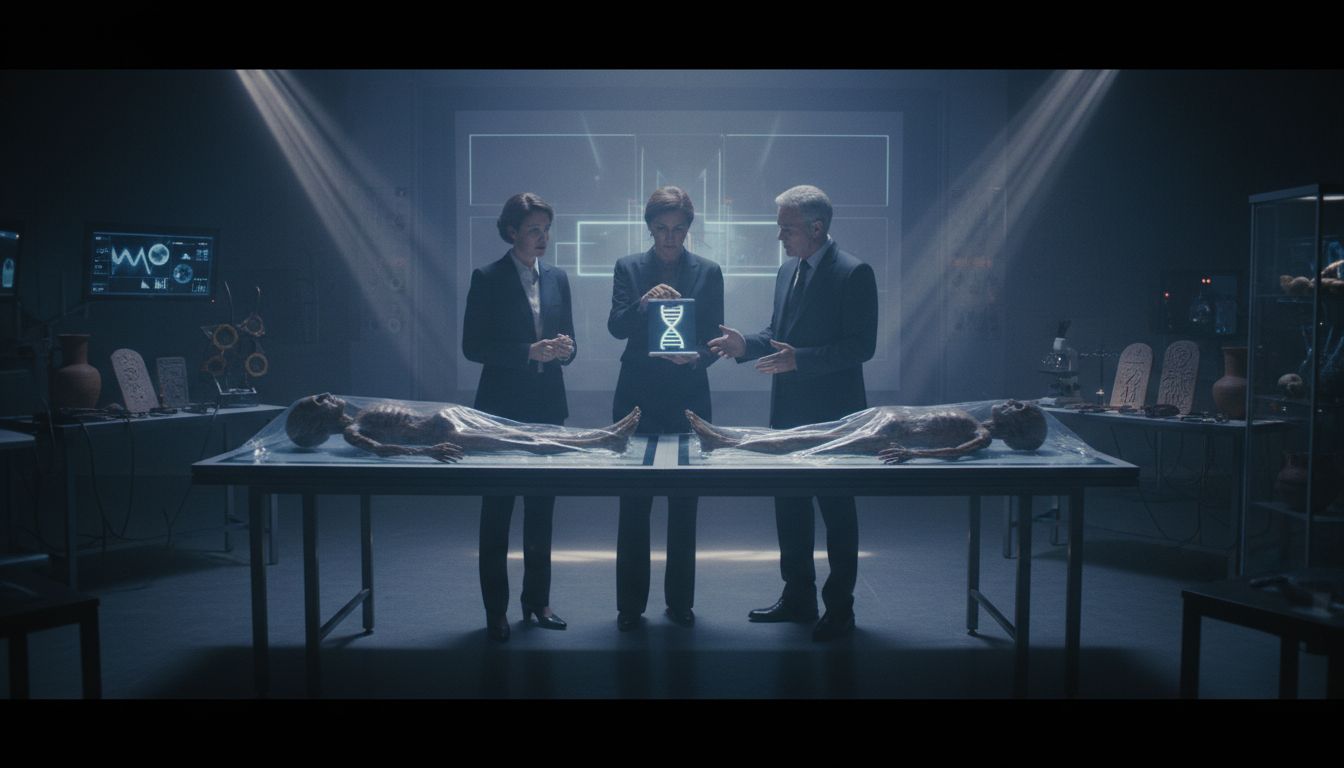
A recent wave of renewed interest has swept through the fringe archaeology and UFO communities following new updates on the enigmatic Nazca mummies. These ancient remains, first brought to global attention in 2017, are once again at the center of heated debate after independent researchers released further analysis—claiming the bodies represent non-human entities. Online discussions, especially those tagging “ancient aliens,” have reignited questions about the origins and authenticity of these specimens, as well as the possibility of ancient contact with non-human intelligences.
Controversial Findings and Claims
The latest claims center on alleged tridactyl (three-fingered) beings, with researchers sharing images and cross-sections of large hands, some purportedly belonging to individuals up to three meters tall and carbon dated to over 6,000 years ago. According to social media posts cited in the video, these cross-sections reveal distinct layers of skin, muscle, and fat, suggesting biological authenticity. However, the host, Jack from Cosmic Road, urges caution, noting, “Does that mean they came from another planet? No, not necessarily... I think it’s more likely that the Nazca mummies or the Nazca beings were hybrids of some sort.”
There is also discussion of implants found within the mummies, though the video host distinguishes them from the so-called “implants” reported by modern-day UFO abductees, remarking that those found in the mummies are not designed to escape notice. These anatomical and technological anomalies have fueled further speculation about the origins and potential purposes of the beings.
Loss of Artifacts and Scientific Frustration
Concerns have also been raised over the loss of key artifacts and specimens to the black market. The video highlights that several items, including a “headdress” found with one mummy known as Maria, have disappeared after being sold illicitly. “It’s really heartbreaking to consider how much has been lost to science and to public knowledge about these beings,” Jack notes, echoing frustration within the research community. There is also uncertainty about how many specimens may have been trafficked, with the possibility that entire species of Nazca beings could have vanished from the archaeological record.
Dissection Videos and Peer-Review Controversy
A particularly sensitive topic involves the alleged existence of a dissection video of a pregnant, 60cm tridactyl being, which has not been made public due to legal reasons. According to social media accounts referenced in the video, witnesses of the dissection were reportedly disturbed by the confirmation of the being’s biological reality. While some video evidence of hand dissections has surfaced, the lack of mainstream scientific involvement is a recurring concern. The host remarks, “We have to get mainstream science on board with this so that the general public will accept the reality that we are not alone and that... we have bodies.”
The legitimacy of peer-reviewed research on the Nazca mummies is also hotly debated. Critics argue that published studies have appeared in questionable journals, while supporters point to upcoming submissions to more reputable outlets, including possible collaborations with Chinese scientists. Gonzalo Chavez, a prominent commentator, notes that full medical scans and other data are now publicly accessible for independent review.
Looking Ahead
Amidst ongoing skepticism, there are signs of progress. The ENARI Institute reportedly plans to unveil a new tridactyl specimen in an upcoming documentary, with medical scans funded by well-known author Whitley Strieber. The hope among proponents is that greater transparency, improved peer review, and broader scientific engagement will clarify the true nature of the Nazca mummies.
For now, the debate continues, fueled by tantalizing evidence, missing artifacts, and questions that remain unanswered. As mainstream scientists and independent researchers alike grapple with the findings, the story of the Nazca mummies remains an emblematic case at the intersection of archaeology, ufology, and the limits of scientific consensus.