Overview
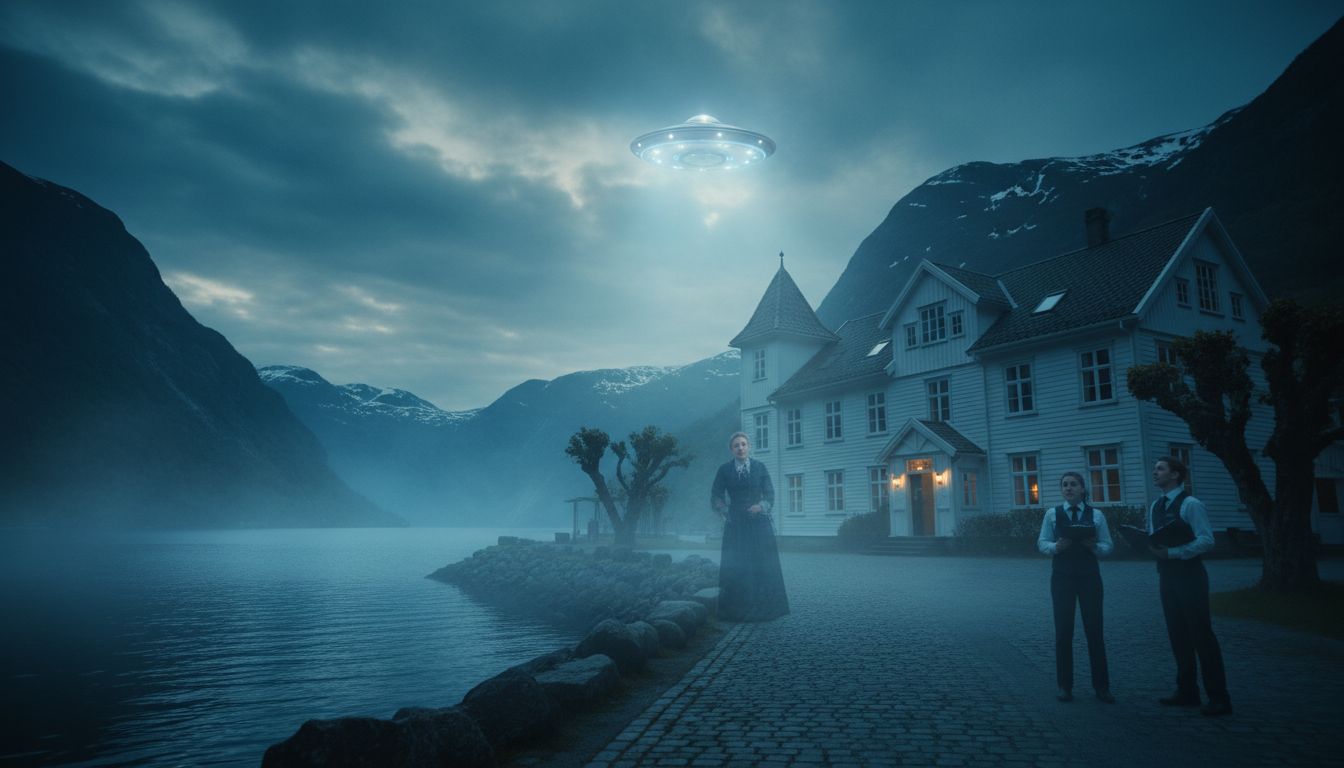
Utne Hotel, perched on the tranquil shores of Norway’s Hardangerfjord, is celebrated not only for its 18th‑century wooden architecture and regional specialties such as Hardanger cider and Fårikål, but also for a longstanding paranormal claim. Management and staff assert that the spirit of former hostess Mor Utne—who tended the inn for more than seventy years in the mid‑19th century—continues to oversee daily operations. The hotel, which opened in 1722, has become a focal point for both heritage tourism and folklore enthusiasts, drawing visitors who are curious about the alleged “watchful spirit” that still “runs things.”
Historical Background
Founded in 1722, Utne Hotel is among Norway’s oldest continuously operating inns. Its walls are lined with period antiques, and a portrait of Torbjørg Johannesdatter Utne (1812‑1903) hangs prominently above a rocking chair in the fireplace lounge. Historical records show that after the death of her husband in 1882, Mor Utne took charge of the establishment, passing it to her son Svein while remaining the public face of the business. The portrait, painted by Eilif Pettersen, has become a visual anchor for the legend, its “calm yet unyielding” gaze said to follow guests throughout the building.
The Legend of Mor Utne
According to the hotel’s current management, the matron’s presence is felt in subtle, often helpful ways. Staff recount instances where misplaced items reappear on the correct shelves, or a warm sensation fills a room just before a guest receives attentive service. The rocking chair beneath the portrait is left untouched during renovations, a practice described by longtime employee Kari Nilsen as “a sign of respect and an unspoken acknowledgment that something unseen prefers to remain where it has always been.” While the hotel does not market the story as a supernatural attraction, it acknowledges the narrative as part of its cultural heritage.
Reported Phenomena
Visitors and employees have documented a range of unexplained activities: lamps flicker on and off without apparent cause, doors close slowly as if guided by an invisible hand, and fleeting sensations of a presence at the edge of a corridor are frequently reported. These accounts are collected informally by the front desk and shared among staff, though no formal scientific investigation has been commissioned. The hotel’s director, Ole Berg, cautions that “while we cannot prove a ghost, the consistency of these reports over generations suggests a shared experience that shapes the atmosphere of Utne Hotel.”
Cultural Context and Reception
Norwegian folklore traditionally respects spirits tied to place, known as “vættir,” which are believed to protect homes and natural sites. The story of Mor Utne aligns with this tradition, positioning the former hostess as a benevolent guardian rather than a malevolent haunt. Local tourism boards have noted a modest increase in bookings from paranormal‑interest groups, but the hotel emphasizes its culinary and historical offerings above the spectral narrative. As the hotel approaches its 305th anniversary, the blend of authentic heritage and enduring legend continues to define Utne Hotel’s unique identity on the Hardangerfjord.