Overview
The former Val Sinestra Hotel, a once‑celebrated Swiss sanatorium perched in the Lower Engadine Valley, has reappeared in the media this week as the focus of renewed paranormal interest. Visitors and researchers are probing the claim that a specter known only as “Hermann” still roams its abandoned corridors. While the hotel’s Belle Époque past is well documented, the ghost story hinges on sparse testimony and a handful of unexplained incidents reported by the former owners. The discussion now centers on whether the legend reflects a genuine historical figure or a modern folklore phenomenon.
From Spa to Silent Hallways
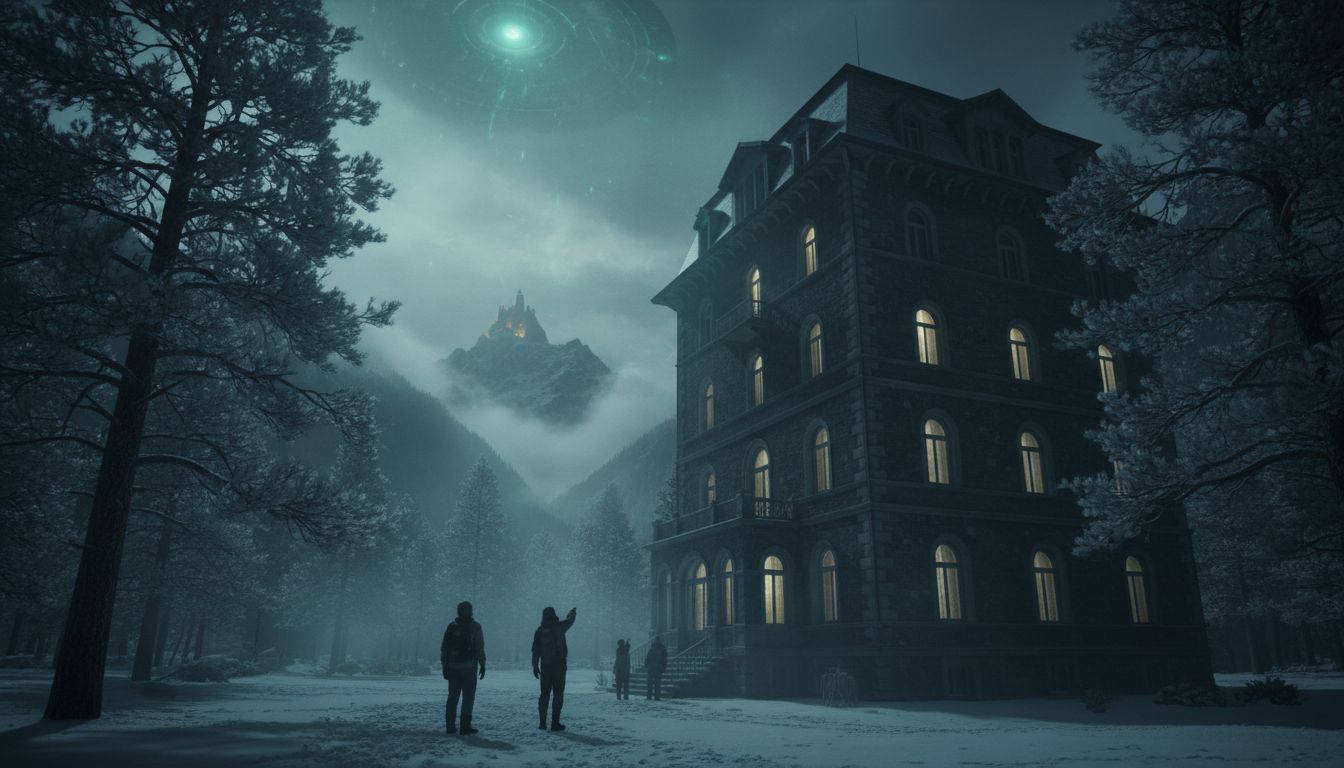
Constructed in 1912 as a Kurhaus (spa‑hotel), Val Sinestra was marketed across Europe for its mineral‑rich Ulrich spring, which was believed to treat tuberculosis, syphilis and severe anemia. At an altitude of roughly 1,500 metres, the eleven‑story stone complex—complete with a pointed tower overlooking the La Brancla river—quickly became a fashionable retreat for the continent’s elite. The outbreak of World I in 1914 curtailed its golden era, and the facility continued operating intermittently until its therapeutic services were finally discontinued in 1972. Since then, the building has stood largely empty, its Belle Époque façade masking a quieter, more somber interior.
The Legend of Hermann
According to hotel owner Adrienne Kruit, the first unsettling episode occurred shortly after she and her husband purchased the property in 1978. She recounts a night in which a disembodied voice allegedly shouted from the doorway, prompting her husband to flee the premises and drive “all night to the North Sea.”
“There were loud noises, keys were swinging on their hooks, and the windows were suddenly open!” Kruit told local reporters in 2025. “Once, a wall clock fell to the floor right next to me. But the hook was stuck in the wall.”
The entity is identified only as Hermann, described in family lore as a former patient who died in a remote mountain fortress. The precise identity of Hermann—whether he was a tuberculosis sufferer, a soldier, or an itinerant worker—remains unverified. The hotel’s archives, which were partially lost during the 1972 closure, contain no record of a patient by that name, fueling speculation that the name may have been altered or conflated over time.
Research and Skepticism
Paranormal investigators from the Swiss Society for Anomalous Phenomena (SSAP) visited Val Sinestra in early 2026, deploying infrared cameras and ambient sound recorders. Their preliminary report notes “intermittent electromagnetic spikes and isolated audio anomalies” but stops short of attributing these to a conscious apparition. Dr. Luca Bergmann, a historian specializing in Alpine medical institutions, cautions against drawing conclusions from anecdotal evidence.
“The region’s history is replete with stories of patients who never left the sanatorium, often because of the harsh climate or financial constraints,” Bergmann explained. “Without contemporaneous documentation, it is difficult to separate genuine historical tragedy from later myth‑making.”
Local folklore scholar Marta Fischer adds that the motif of a solitary, tormented spirit is common in Alpine ghost narratives, often serving as a cultural reminder of the isolation endured by early 20th‑century patients.
Visitor Experiences and Cultural Impact
Since the resurgence of the Hermann story, guided tours of the dilapidated hotel have attracted both curiosity seekers and academic observers. Tour participants report “a sudden drop in temperature” and “the faint echo of footsteps” in the west wing, though these sensations are not uniformly recorded. The hotel’s owners have capitalized modestly on the attention, offering limited “heritage nights” that blend historical exposition with the ghost legend.
The phenomenon illustrates how historic sites can acquire new layers of meaning as collective memory intertwines with contemporary storytelling. Whether Hermann is a lingering soul of a forgotten patient or a narrative device that enriches the site’s mystique, the story underscores the enduring fascination with places where medical history and human emotion intersect.
Outlook
As research continues, scholars emphasize the need for rigorous archival work and scientific monitoring before declaring the presence of any paranormal entity. In the meantime, Val Sinestra remains a poignant relic of a bygone era, its silent corridors echoing both the aspirations of early‑20th‑century health tourism and the lingering questions that surround the enigmatic Hermann.