Overview
The latest episode of Paranormal Declassified: The SPIRIT Files—titled “Veil of Fire: The Ancient Origins of Halloween”—offers listeners a deep dive into the holiday’s Celtic roots while framing the discussion within contemporary paranormal investigation. Hosted by veteran researcher Eric Extreme of the Mount Washington Valley SPIRIT team, the hour‑long podcast blends historical scholarship with a scientific examination of the supernatural claims that often accompany Halloween folklore. The episode, released on the MWVSpirit Podbean feed, seeks to separate myth from measurable phenomena, echoing the host’s mantra: “Science comes before the spooky.”
Historical Context
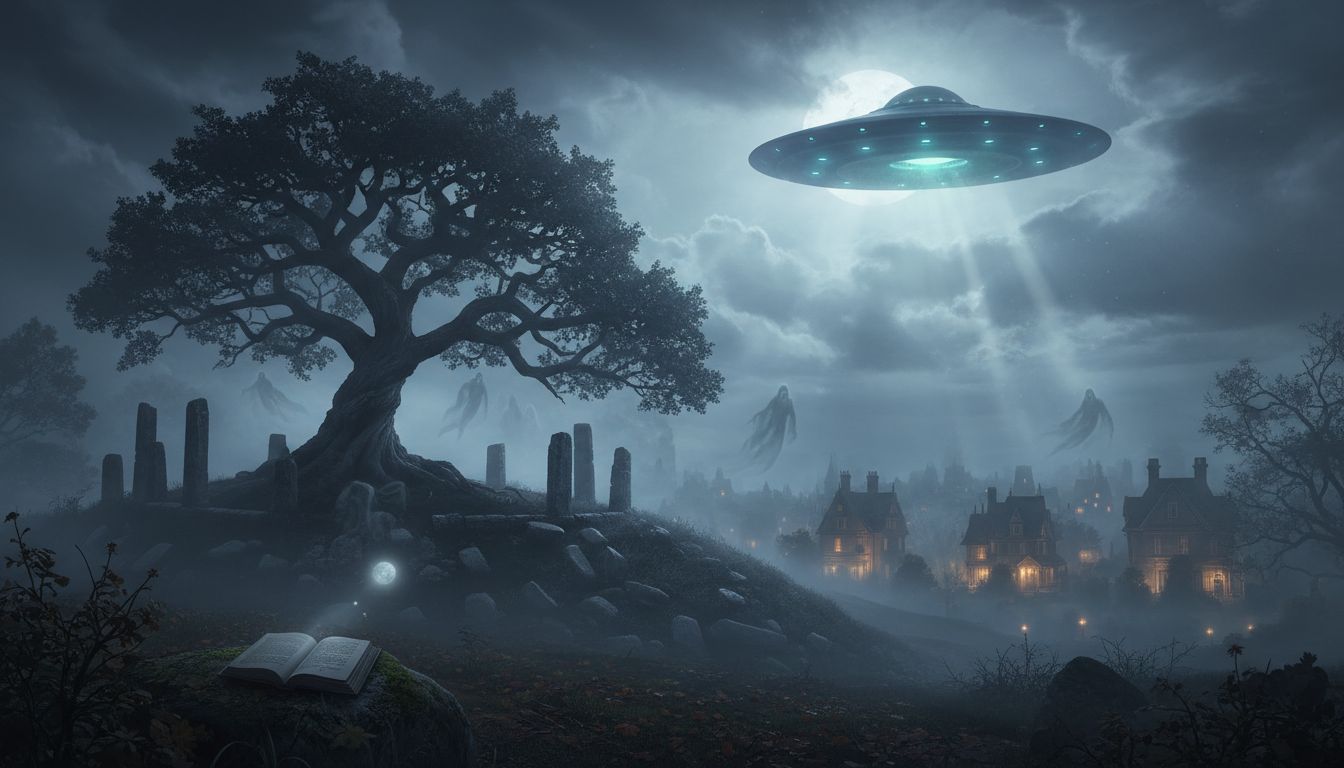
Eric begins by tracing Halloween to the ancient Celtic festival of Samhain, a night when “hilltop fires smoke and stubble fields whisper.” Samhain marked the transition from the harvest season to winter, a time traditionally believed to thin the veil between the living and the dead. The podcast outlines how early customs—such as lighting bonfires to guide wandering spirits and donning masks to protect the living—evolved as Celtic migrants carried them across the Atlantic.
The narrative then follows the 19th‑century Irish diaspora to America, where “immigrant hands carving pumpkins” gave rise to the iconic Jack‑o’‑lantern. Eric notes that the original lanterns were made from turnips, not pumpkins, and that the practice of “children in guises bargaining for soul cakes” reflects medieval “souling” traditions. By the mid‑20th century, these rituals had been reshaped into the suburban “trick‑or‑treat” spectacle familiar today.
The Paranormal Lens
While the episode is grounded in historical fact, it does not shy away from the “unexplained phenomena” that have long haunted Halloween lore. Eric references “whispers that echo in the void” and “faint signals that shape our sense of the supernatural,” inviting listeners to consider why certain nights seem to amplify reports of apparitions, EVP (electronic voice phenomena), and other anomalous experiences. He cites anecdotal accounts of “hilltop fires” where temperature drops and electromagnetic spikes have been recorded, suggesting that environmental factors may prime observers for paranormal interpretation.
A Scientific Approach
Central to the podcast is Eric’s insistence on a methodical, evidence‑first mindset. He outlines the investigative tools his team employs—magnetometers, infrared cameras, and controlled environmental monitoring—to rule out “cognitive biases, environmental conditions, and technological anomalies” before entertaining paranormal explanations. In his own words, “Science comes before the spooky,” underscoring the SPIRIT team’s commitment to “identify natural causes first.” This approach aligns with broader trends in paranormal research, where rigorously documented fieldwork is increasingly demanded by both skeptics and believers.
Reception and Broader Implications
Listeners have responded positively to the episode’s balanced tone, praising the blend of “historical depth” and “clear‑cut scientific methodology.” The podcast’s reach, amplified through the team’s extensive online presence—including a blog post dated November 15, 2025, and active channels on Bluesky, Facebook, and Instagram—has sparked renewed conversation about how cultural traditions can be examined without resorting to sensationalism. As Halloween approaches, the episode serves as a reminder that the holiday’s allure lies not only in its spooky decorations but also in its rich, centuries‑old narrative—a story that continues to evolve as researchers like Eric Extreme apply modern science to age‑old mysteries.


