Overview
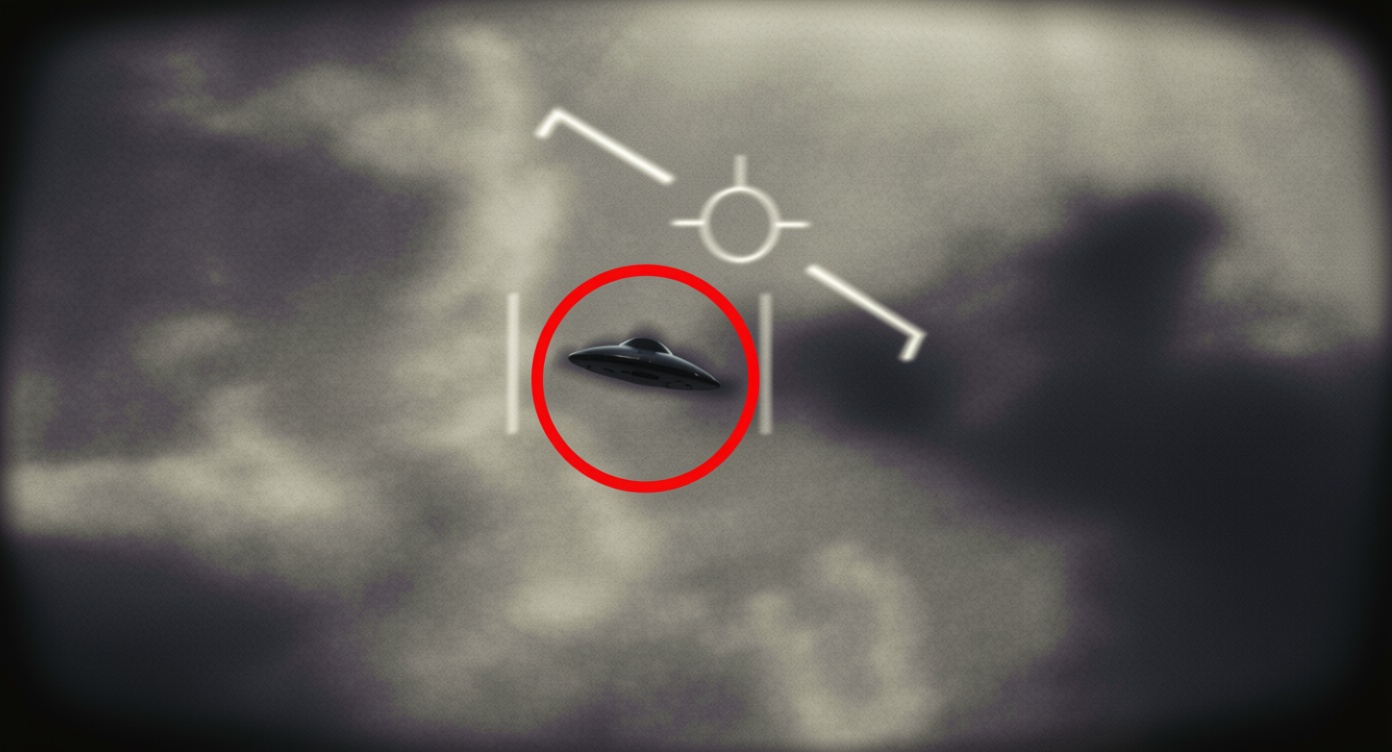
The Department of Defense has added a new entry to its public‑facing repository of Unidentified Aerial Phenomena (UAP) material. The video, labeled DOW‑UAP‑PR46, documents an unresolved UAP incident observed by the U.S. Indo‑Pacific Command (INDOPACOM) during 2024. Posted on the Defense Visual Information Distribution Service (DVIDS) platform, the footage joins a growing archive of unexplained aerial observations that the Pentagon is reviewing under its UAP Office and the All‑Domain Anomaly Resolution Office (AARO).
Incident Details
According to the DVIDS release, the video captures a brief, high‑altitude maneuver that does not correspond to any known aircraft or missile signature in the region. The clip, lasting roughly 30 seconds, shows a luminous object executing rapid changes in direction and speed before disappearing from sensor range. INDOPACOM’s surveillance assets—comprising radar, infrared, and visual recordings—were all active at the time, yet analysts were unable to match the phenomenon to any conventional platform.
The incident occurred in a sector of the Indo‑Pacific that is routinely monitored for both civilian and military air traffic, a fact emphasized by the release’s description: “The event remains unresolved after initial analysis of multi‑sensor data.” No injuries, equipment damage, or airspace violations were reported.
Official Response
In a statement released alongside the video, a Department of Defense spokesperson said, “The Department continues to collect and evaluate data on UAPs in accordance with established protocols. While this particular encounter has not yet been explained, it contributes to our broader effort to understand any potential safety, security, or technological implications.” The spokesperson declined to provide further operational details, citing standard security considerations.
INDOPACOM’s public affairs office echoed the sentiment, noting that “our forces maintain continuous situational awareness across the region, and any anomalous observation is taken seriously and forwarded to the AARO for comprehensive review.”
Context and Implications
The addition of DOW‑UAP‑PR46 follows a series of disclosures that began with the 2022 establishment of the UAP Task Force and the 2023 Office of the Director of National Intelligence’s unclassified report on UAPs. Those documents highlighted the need for systematic data collection and inter‑agency coordination. The Indo‑Pacific theater, encompassing critical sea lanes and a dense patchwork of national airspaces, has become a focal point for UAP reporting due to its strategic importance and the high concentration of surveillance assets.
Analysts note that the continued release of raw sensor data—rather than solely summary findings—allows independent experts to examine the material, fostering transparency while preserving operational security. However, the lack of a definitive identification for the object in DOW‑UAP‑PR46 underscores the challenges faced by investigators: limited sensor resolution, brief observation windows, and the possibility of novel technologies or atmospheric phenomena.
Next Steps
The video has been entered into the AARO’s growing database, where it will undergo further multi‑sensor correlation, expert analysis, and, if appropriate, cross‑agency consultation. Researchers at the Pentagon’s Advanced Aerospace Threat Identification Program (if re‑activated) or at civilian institutions may be invited to review the data under controlled conditions.
For now, the DoD emphasizes that the investigation is ongoing and that any future findings will be communicated in accordance with policy. The release of DOW‑UAP‑PR46 serves both as a reminder of the unknowns that persist in modern airspace and as a signal of the Department’s commitment to methodical, evidence‑based inquiry.
Source: Defense Visual Information Distribution Service (DVIDS) – “Video - DOW‑UAP‑PR46, Unresolved UAP Report, INDOPACOM, 2024.”