Overview
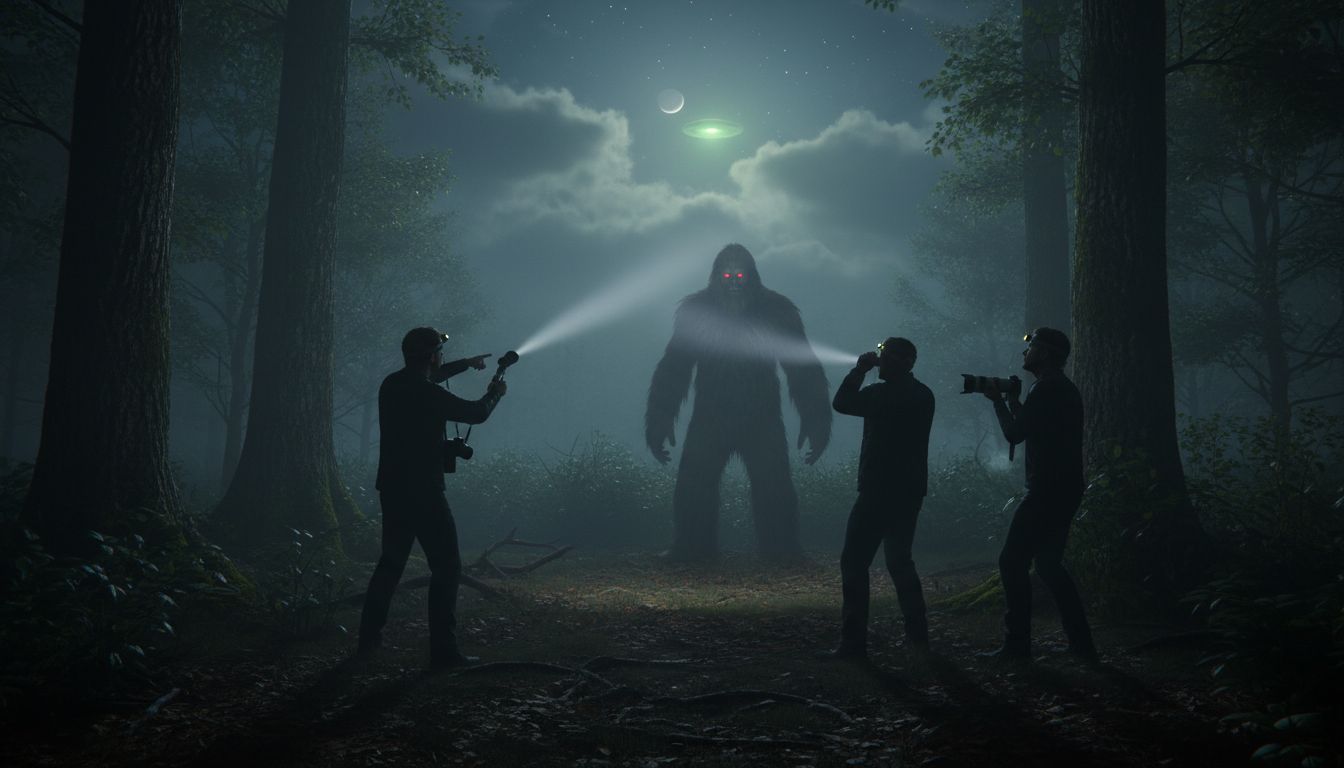
A wave of reported Bigfoot sightings in Ohio during the spring of 2026 has reignited a debate that has persisted for more than a century. Known among enthusiasts as a “flap,” the cluster of accounts emerged in March around Portage County, just east of Akron, where witnesses described large, hairy humanoid figures, some as tall as eight feet, moving through the woods along the Mahoning River. The sudden increase, followed by an equally rapid decline, has prompted both amateur investigators and skeptics to revisit the question of whether a previously undocumented hominoid species could be living in North America.
Recent Ohio Reports
The Ohio Night Stalkers, a regional cryptozoology group, catalogued 27 sightings between March 1 and March 28. Most reports came from hikers and hunters who said the creature moved silently and vanished before they could get a clear view. “When you hear something or you see something, it sticks with you and becomes part of you; you just can’t shake it,” said Mike Miller, a two‑decade veteran of the Night Stalkers. The group’s host, Jeremiah Byron, who runs the Bigfoot Society Podcast, mapped the incidents and suggested that an abrupt shift from winter to spring weather may have prompted a temporary “herd” to move through the area. “It stopped just as quickly as it started,” Byron noted, adding that the pattern mirrors previous flaps documented in the Pacific Northwest.
Expert Perspectives
The Ohio flare has drawn comments from both believers and skeptics. Benjamin Radford, a folklorist and deputy editor of Skeptical Inquirer, emphasized the scientific burden of proof. “If they’re real, they live and breathe, eat, sleep and die. We should be able to find one,” he said. “How are they being elusive? There would have to be thousands of them.” Radford’s stance reflects a broader scholarly view that extraordinary claims require extraordinary evidence, a standard not yet met by any physical trace. Conversely, Miller argues that the mystery itself justifies continued fieldwork, noting that “finding Sasquatch is a mystery whose answer could be around any corner or in any cave.” Both agree, however, that the conversation is “a helluva lot of fun,” underscoring the cultural allure of the legend.
Historical Context
The modern Bigfoot phenomenon dates back to a 1960 True magazine article that described a “tall, hairy figure” as part‑human, part‑animal. The story gained national traction after the 1967 Patterson‑Gimlin film, which captured a figure walking through Northern California woods. Decades of analysis have produced conflicting conclusions, and the case even attracted federal attention. In 1976, the FBI examined 15 hair samples from an Oregon encounter, ultimately determining they belonged to the deer family. Television series such as “In Search Of…,” hosted by Leonard Nimoy, further cemented the creature in popular imagination, while commercial products—from novelty deodorants to apparel—have turned the legend into a marketing niche.
Looking Ahead
As the Ohio sightings fade, the community of researchers and hobbyists is already planning the next field season. Night Stalkers intend to deploy motion‑activated cameras and environmental DNA (eDNA) sampling along the Mahoning River corridor, hoping to capture verifiable data. Radford, while remaining skeptical, welcomes rigorous methodology, stating that “a well‑designed study could finally settle the question, one way or the other.” Whether the Ohio Flap of 2026 proves to be a fleeting series of misidentifications or the first credible hint of an undiscovered primate, it has undeniably revitalized public interest and underscored the need for systematic, evidence‑based inquiry into one of North America’s most enduring mysteries.


