Overview
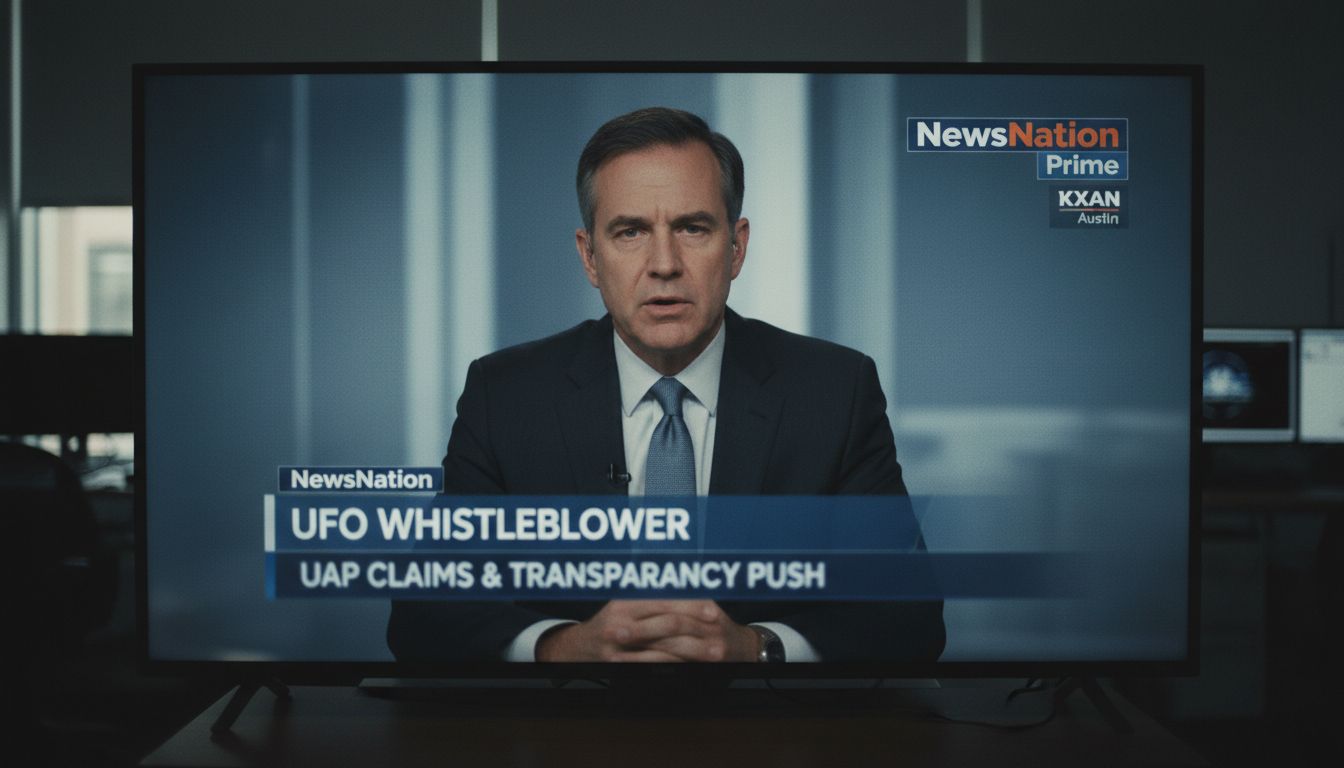
A recent NewsNation Prime segment aired on KXAN Austin put renewed attention on the long-running debate over unidentified anomalous phenomena, or UAP, with a featured whistleblower arguing that humanity may not be alone. The interview, presented under the title “We are not alone: The UFO whistleblower speaks,” focused on the growing call for government transparency and more formal investigation into unexplained aerial sightings that continue to generate public interest and official scrutiny.
While the clip’s listing does not identify the whistleblower or provide a full transcript, the central message was clear: claims about unusual objects or encounters should not be dismissed outright, and the public deserves more information about what U.S. agencies know. That framing reflects a broader shift in how the topic is discussed in mainstream media, where “UFO” has increasingly been replaced by the more technical UAP label used by federal officials.
Push for transparency
The segment comes amid a wider push from lawmakers, researchers, and advocacy groups who argue that unexplained sightings merit deeper review rather than ridicule. Over the past several years, the U.S. government has acknowledged that some military sightings remain unresolved, and Congress has held hearings aimed at assessing whether reporting systems, data collection, and classification rules are adequate. In that context, whistleblowers have become an increasingly important part of the conversation, with some alleging that relevant information has been withheld from both elected officials and the public.
The whistleblower featured in the NewsNation segment appeared to frame the issue as one of public accountability as much as curiosity. The argument is not simply that strange objects have been observed, but that the absence of full disclosure has left the public with an incomplete understanding of what may be occurring in U.S. airspace. That concern has helped sustain bipartisan interest in the topic, even as skeptics continue to urge caution and emphasize the need for hard evidence.
The broader UAP debate
The renewed attention also reflects how far the conversation has moved from fringe speculation to a more institutional discussion. Military pilots, radar operators, and intelligence officials have described cases involving objects with unusual flight characteristics, though many incidents remain unresolved because of limited sensor data, incomplete witness accounts, or competing explanations. Federal offices assigned to review UAP reports have said their work is focused on identifying threats to safety and national security, not proving extraordinary claims.
Still, for advocates of greater disclosure, unresolved cases are reason enough to keep pressing for answers. They argue that unexplained reports could indicate anything from advanced foreign technology to sensor errors — or, as some whistleblowers contend, something more unusual. That uncertainty, they say, is precisely why open inquiry matters. As the NewsNation segment suggested, the issue remains less about proving a conclusion than about ensuring that serious questions are not buried.
What comes next
For viewers in Austin and beyond, the segment underscores that UAP reporting is likely to remain a recurring national topic, especially as more witnesses come forward and Congress continues to examine what the government knows. Whether the claims ultimately point to misidentified objects, classified programs, or something still unexplained, the demand for transparency is not going away. As the whistleblower’s message made clear, the central question is no longer whether people are paying attention — it is whether institutions are prepared to answer what they know.