Overview
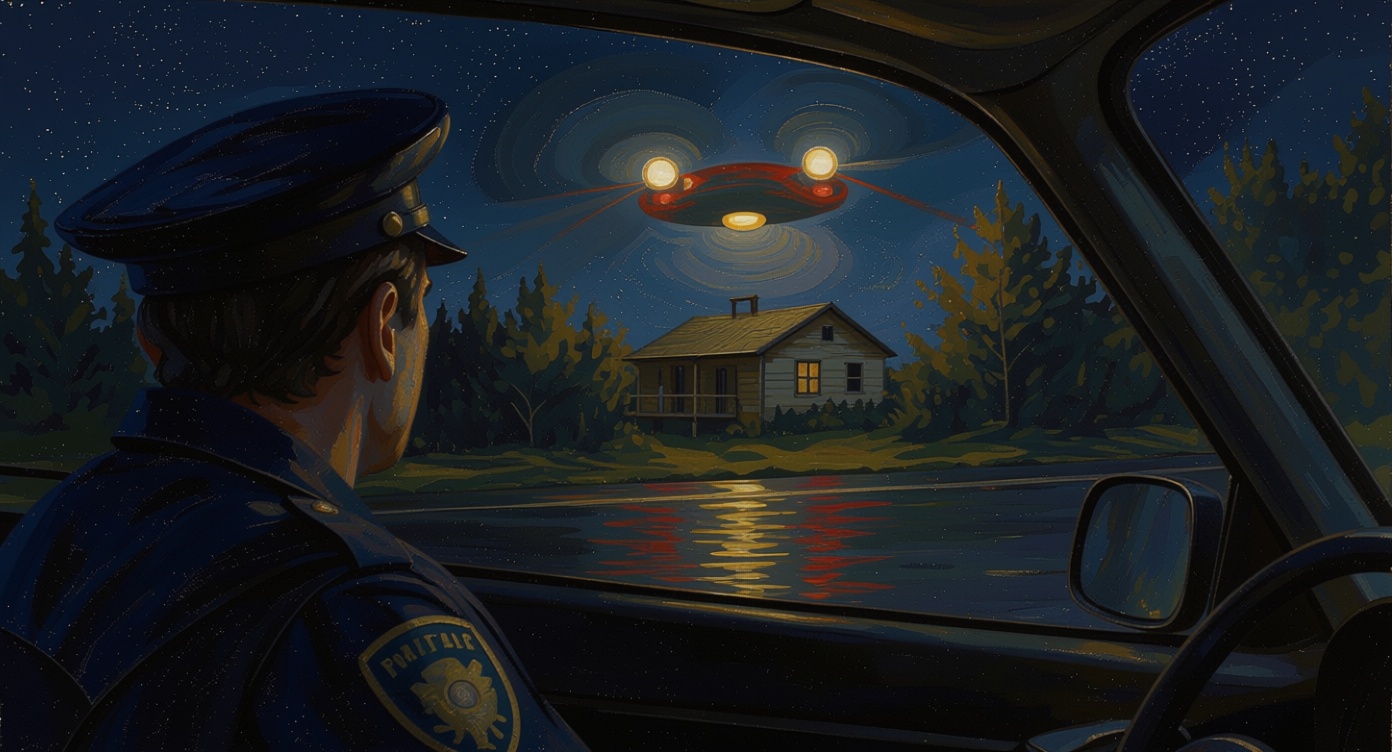
The year 2025 closed without a definitive breakthrough on the long‑standing mystery of unidentified anomalous phenomena (UAP). Despite a series of high‑profile congressional hearings, increased public reporting of sightings near military installations, and a surge of academic interest, no conclusive evidence has emerged to explain the most compelling cases. Researchers stress that the lack of answers does not signal the end of the investigation, but rather underscores the need for more rigorous data collection and a shift away from the stigma that has traditionally hampered serious study of the subject.
Recent Developments
In the spring of 2025, the U.S. Senate Armed Services Committee convened a public hearing that featured testimony from former Pentagon UAP officials, aerospace engineers, and intelligence analysts. While the hearing highlighted “credible” observations of objects maneuvering over restricted airspace, the committee’s final report concluded that “the data currently available are insufficient to determine the nature or intent of these phenomena.”
Parallel to the governmental effort, civilian reporting platforms logged a 27 % rise in sightings near sensitive sites such as the Nevada Test and Training Range and the Pacific Missile Range Facility. Analysts at the Defense Department’s Advanced Aerospace Threat Identification Program (AATIP) noted that many of these reports lacked the high‑resolution sensor data needed for scientific validation, a shortfall that has become a focal point for the research community.
Ongoing Research Initiatives
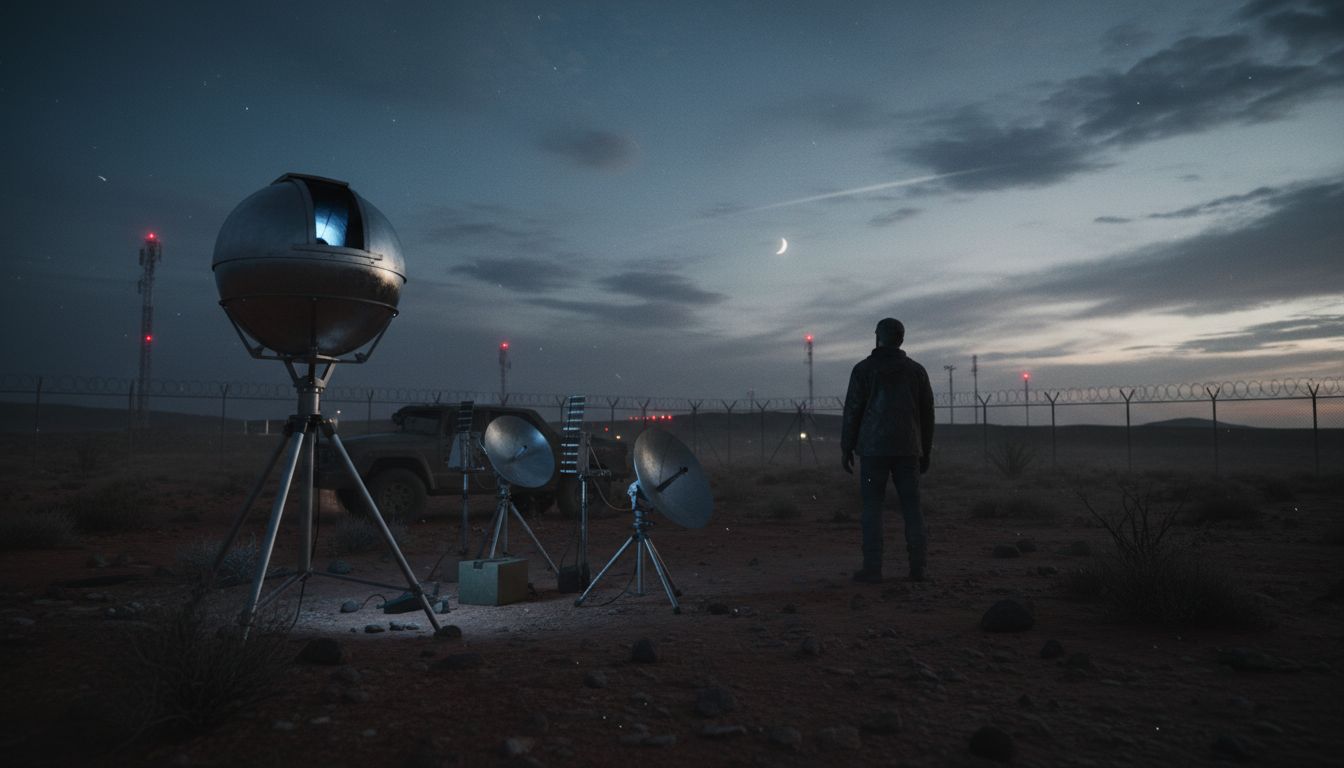
Two projects have emerged as the most systematic attempts to fill the data gap. The Galileo Project, led by Harvard astrophysicist Dr. Avi Loeb, operates a network of optical and radio telescopes designed to capture high‑speed imagery of transient aerial events. In a recent briefing, Loeb explained, “Our goal is to apply the same standards we use for exoplanet detection to UAP—repeatable observations, calibrated instrumentation, and peer‑reviewed analysis.”
Complementing the Galileo effort, the AllSkyCAM consortium, coordinated by atmospheric scientist Dr. Emily B. Wilson at the University of Arizona, has deployed over 200 low‑cost, wide‑field cameras across the continental United States. The system automatically flags anomalous light signatures and streams raw data to an open‑access repository. Wilson noted, “By democratizing data collection, we reduce reliance on anecdotal reports and give the scientific community a shared foundation for hypothesis testing.”
Both initiatives have begun publishing preliminary datasets, prompting a modest uptick in submissions to journals such as Physical Review Letters and Astronomy & Astrophysics. While none of the early findings have yet resolved the core mystery, the methodological transparency marks a departure from the secrecy that characterized earlier UAP inquiries.
Challenges: Stigma and Funding
Despite these advances, researchers continue to confront two persistent obstacles: cultural stigma and limited financial resources. A survey conducted by the Center for Scientific Inquiry into UAP (CSIU) found that 68 % of physicists view UAP research as “fringe” and are reluctant to allocate grant funding. Dr. Mark S. Patel, a senior fellow at CSIU, warned, “When a field is stigmatized, talented scientists are dissuaded from entering, and the funding pipeline dries up, creating a self‑fulfilling prophecy of scarcity.”
Federal appropriations for UAP‑related science remained modest in the FY 2025 budget, with the Office of the Director of National Intelligence allocating just $12 million—far less than the $150 million earmarked for satellite surveillance. Private philanthropy has partially bridged the gap; the Galileo Project received a $5 million endowment from the X‑Prize Foundation, while AllSkyCAM benefitted from a $2 million grant from the National Science Foundation’s Emerging Frontiers program. Nonetheless, researchers argue that sustained, multi‑year funding is essential for building the longitudinal datasets required to distinguish rare natural phenomena from potential engineered objects.
Outlook for 2026
Looking ahead, optimism is cautiously building within the scientific community. The Department of Defense announced plans to formalize a “UAP Data Integration Office” in early 2026, aimed at standardizing sensor formats across military and civilian platforms. Simultaneously, the International Astronomical Union has convened a working group to develop guidelines for reporting and analyzing aerial anomalies, echoing the rigor applied to meteoritic and atmospheric research.
If these institutional reforms take hold, the next year could see a transition from episodic anecdote to systematic inquiry. As Dr. Loeb put it, “We are at the threshold of turning curiosity into a testable science. The absence of answers in 2025 is not a failure—it is a baseline from which we can measure progress.”
The coming months will likely determine whether the momentum generated by Galileo, AllSkyCAM, and emerging governmental frameworks can finally produce the empirical evidence that has eluded investigators for decades.