Overview
A video posted on the social‑media platform X captured Tennessee Representative Tim Burchett stating that naval personnel have reported “sightings” of unidentified objects emerging from the ocean depths. The comment, made during a town‑hall‑style interview on December 30, 2025, has quickly been cited by UFO‑enthusiasts as evidence of a possible USO (Unidentified Submersible Object) phenomenon. While the remark adds a new layer to the ongoing public discourse on UAP (Unidentified Aerial Phenomena) disclosure, officials from the Department of Defense and the U.S. Navy have not confirmed any such incidents.
Official Statement
In the short clip, Burchett said, “We have naval personnel telling me we have these sightings…” and went on to speculate that “entities… have been on this earth for who knows how long.” The representative’s remarks were not part of an official briefing; they were made in response to a question from a constituent about recent Pentagon releases of UAP footage. Burchett did not provide specifics about the alleged sightings—no dates, locations, sensor data, or corroborating reports were offered. The video has since been shared widely, but it remains unclear whether the “naval personnel” referenced are senior officers, pilots, or other service members.
Naval Reports and the USO Context
The U.S. Navy has, over the past several years, publicly acknowledged encounters with unidentified aerial phenomena—most notably the 2020 “Gimbal” and “GoFast” videos released by the Pentagon’s All‑Domain Anomaly Resolution Office (AARO). However, the Navy’s official statements have consistently limited their scope to aerial observations, explicitly noting that “no evidence of a foreign adversary” has been found. In 2023, the Navy’s Undersea Warfare Division released a brief that referenced “unexplained acoustic signatures,” but it stopped short of labeling them as physical objects.
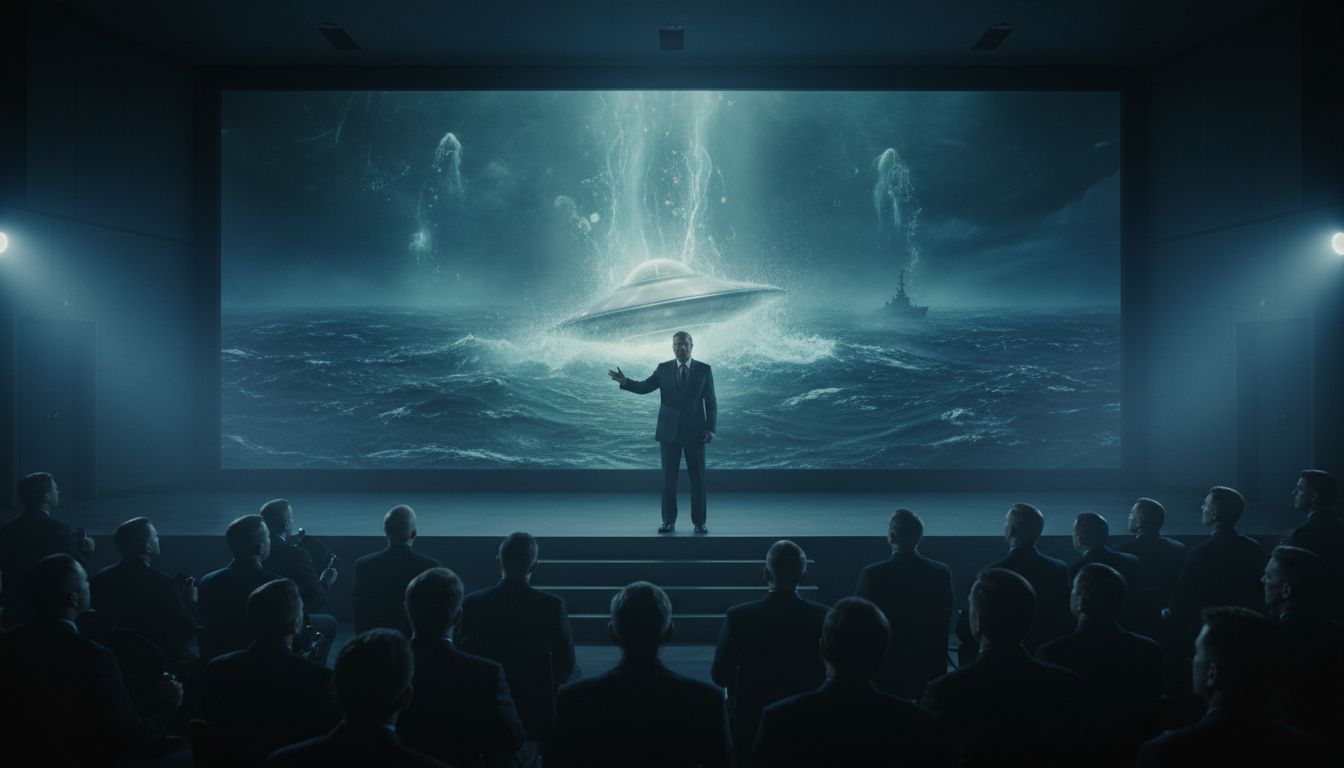
Burchett’s comment, therefore, taps into a growing body of anecdotal reports of USOs—objects that appear to rise from the ocean surface, sometimes accompanied by luminous phenomena. Researchers such as Dr. Jacques Vallée and organizations like the Scientific Coalition for UAP Studies (SCU) have warned that underwater sightings are under‑documented, partly because the Navy’s sensor suite is optimized for surface and air detection. Nonetheless, no declassified evidence has yet substantiated the existence of craft capable of sustained sub‑surface propulsion beyond known submarines or autonomous underwater vehicles.
Congressional and Pentagon Response
The House Committee on Oversight and Reform, which held its first public hearing on UAPs in 2022, has repeatedly called for greater transparency from the Department of Defense. In a recent statement, the committee’s chair, Rep. James Comer, emphasized the need for “comprehensive data sharing across all domains—air, space, and sea.” While Burchett’s remarks were not made under oath, they echo the committee’s push for a broader investigative mandate that includes underwater anomalies.
The Pentagon’s AARO, established in 2022, now tracks “anomalous phenomena” across the full spectrum of operational domains. AARO spokesperson, Lt. Cmdr. Megan O’Connor, told reporters in November that the office “continues to evaluate reports from naval platforms, but any conclusions about the nature of these observations remain preliminary.” No official acknowledgment has been made that the Navy has observed objects “coming out of the depths” in the manner described by Burchett.
Implications and Next Steps
If corroborated, Burchett’s claim could expand the scope of UAP investigations to include sub‑surface domains, prompting a reassessment of existing sensor coverage and classification protocols. Analysts caution, however, that anecdotal statements without supporting data risk inflating public expectations. “Extraordinary claims require extraordinary evidence,” noted Dr. John Alexander, a former congressional staffer on the UAP issue, adding that “the scientific community needs rigorous, peer‑reviewed data before drawing conclusions about extraterrestrial origins.”
For now, the comment remains an unverified allegation that aligns with a broader pattern of increasing public interest in UAPs. As the AARO continues to collect and analyze reports, further disclosures—especially those that include sensor logs, radar tracks, or acoustic recordings—will be essential to move the conversation from speculation to substantive inquiry. Until such evidence emerges, officials and journalists alike must balance curiosity with a commitment to factual reporting.