Overview
A new international poll released on 14 January 2026 by the German news outlet BILD explores how people around the world might react if humanity were to receive a verifiable signal from an extraterrestrial civilization or encounter an alien craft. The study, which surveyed respondents in more than 30 countries, aimed to capture public sentiment on first‑contact scenarios and to gauge the degree to which the idea of alien visitation already shapes popular belief. While the questionnaire was conducted online, the researchers applied stratified sampling to reflect age, gender and regional distribution, allowing the results to be compared with earlier polls on similar topics.
Methodology
The survey collected responses from ≈ 12 000 participants between November 2025 and January 2026. Questions were phrased in neutral language to avoid leading answers; for example, respondents were asked whether they would feel “happy, fearful, indifferent or skeptical” about receiving an extraterrestrial signal, and whether they believed “aliens have visited Earth in the past.” The study also presented a hypothetical scenario in which an alien species offered humanity access to advanced technologies, asking participants to indicate how such an offer might affect their views on religion, governance and personal freedoms. Data were weighted according to national census figures, and statistical significance was set at a p‑value < 0.05.
Key Findings
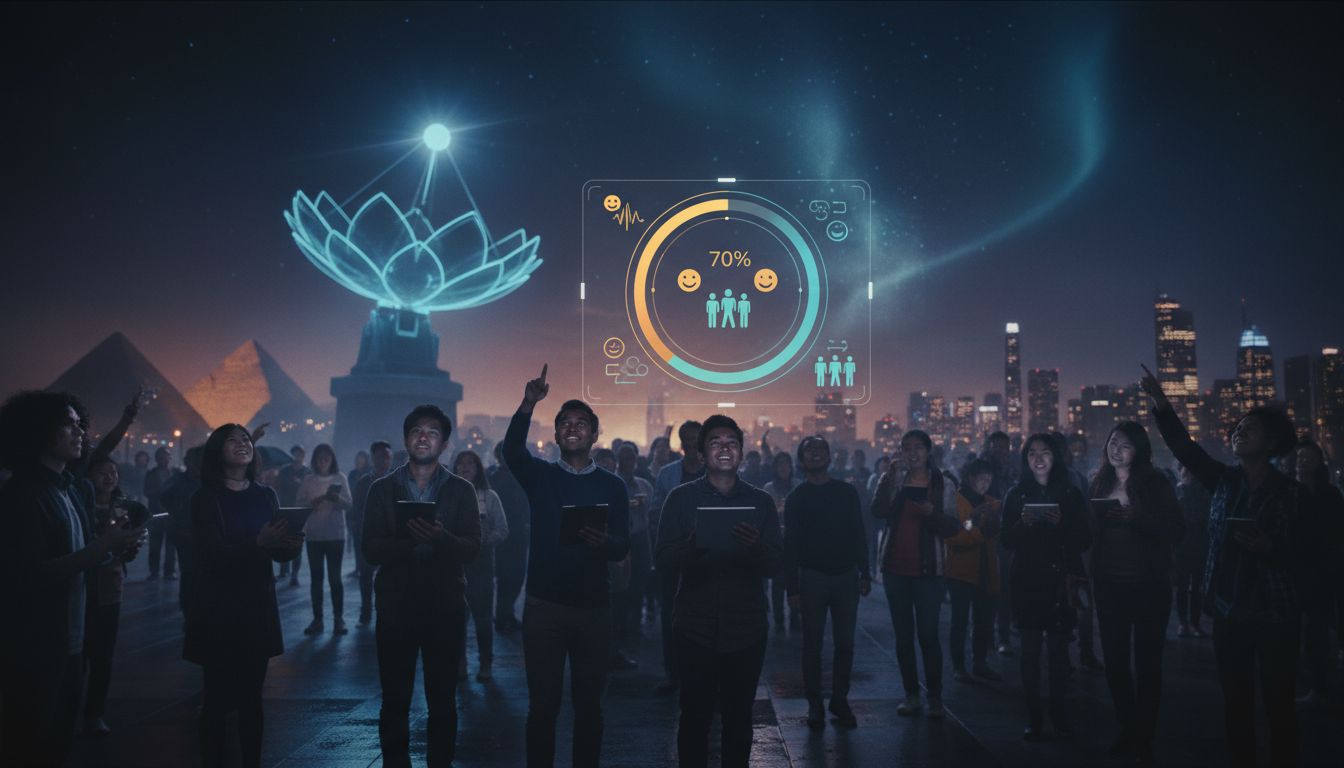
- 70 % of respondents said they would be happy if humanity received a clear, non‑human signal, citing curiosity and the prospect of scientific breakthroughs as primary motivations.
- 60 % believe that extraterrestrials have already visited Earth, a figure that exceeds previous estimates by roughly 15 percentage points. Belief in prior visitation was strongest in North America (68 %) and parts of South America (65 %).
- When asked about the potential receipt of alien technology, 48 % expressed concern that such gifts could undermine fundamental human values, including religious belief systems and democratic institutions. Conversely, 42 % saw the offer as an opportunity to solve pressing global challenges such as climate change and energy scarcity.
- Younger respondents (aged 18‑34) were more likely to view alien contact as a catalyst for progress, while older participants (55 +) showed higher levels of apprehension regarding societal disruption.
Societal Implications
The survey highlights a paradox: a strong enthusiasm for the scientific possibilities of contact coexists with a persistent belief that humanity has already been visited, despite the absence of conclusive evidence. Analysts suggest that the latter sentiment may be fueled by popular media, internet folklore, and recent declassified government reports on unidentified aerial phenomena. If an actual encounter were to occur, policymakers would face unprecedented ethical dilemmas—balancing the desire for technological advancement against the risk of cultural destabilisation. The study’s scenario‑based questions reveal that many citizens anticipate a clash between alien-provided solutions and existing legal frameworks, raising questions about sovereignty, intellectual property and the potential for a new “technology gap” between nations that accept or reject extraterrestrial assistance.
Expert Commentary
Dr. Elena Martínez, a sociologist at the University of Barcelona who was not involved in the poll, cautions against interpreting the results as a straightforward endorsement of alien contact. “Public opinion is shaped by narratives that oscillate between awe and fear,” she notes. “The high percentage of people who would be happy about a signal reflects a deep‑seated hope for answers to existential questions, but the simultaneous belief in past visits indicates a readiness to accept extraordinary claims without rigorous proof.”
Astrophysicist Prof. Michael Liu of the International Astronomical Union adds that the findings underscore the need for transparent communication strategies from scientific institutions. “If we ever detect a credible extraterrestrial signal, the way we present the data will influence public reaction more than the content of the message itself,” he says. “Preparedness plans should incorporate not only technical protocols but also sociocultural impact assessments, as this survey clearly shows.”
The BILD study thus provides a timely snapshot of global attitudes at a moment when the scientific community is intensifying the search for technosignatures. Whether humanity’s first encounter will be greeted with celebration, skepticism, or trepidation remains uncertain, but the data suggest that the conversation is already well under way.