Overview
A growing strand of speculation has resurfaced around the medieval legend of Saint Brendan’s seven‑year sea voyage, suggesting that Irish monks may have reached the shores of North America centuries before the Vikings set foot at L’Anse aux Meadows in the early 11th century. The hypothesis, which blends literary analysis with experimental archaeology, has been revisited by scholars and enthusiasts alike. While the tale remains a cornerstone of Irish hagiography, researchers caution that the story’s symbolic nature and the paucity of material evidence make definitive conclusions premature.
Historical Background
The Navigatio Sancti Brendani Abbatis, composed in Latin sometime between the 8th and 9th centuries, recounts the monk’s quest for the “Promised Land of the Saints,” a mystical island described in vivid, otherworldly terms. Medieval chroniclers such as the Annals of Ulster and later Irish poets treated the voyage as both a spiritual allegory and a possible record of real maritime exploration. By contrast, the Viking saga of Leif Eriksson’s Vinland is supported by archaeological finds at L’Anse aux Meadows, Newfoundland, dated to c. 1000 CE. The temporal gap—over four centuries—between Brendan’s alleged journey (c. 6th century) and the Viking settlement fuels the intrigue.
The Legend of Saint Brendan
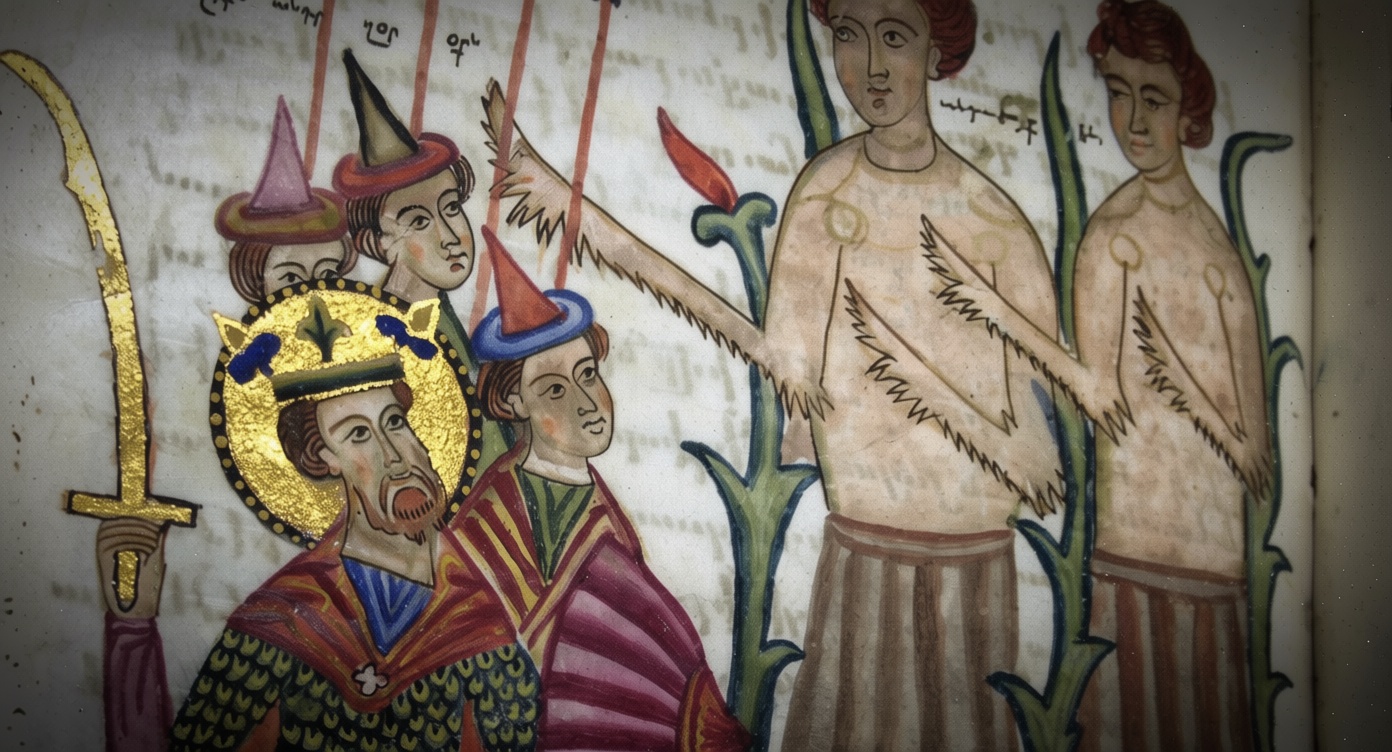
Proponents of the pre‑Viking Irish contact theory point to several passages in the Navigatio that describe encounters with “white‑clad” peoples, “tall trees bearing fruit like apples,” and “a river that ran eastward into a vast sea.” Dr. Eoin McCormack, a medievalist at Trinity College Dublin, notes, “The text uses familiar Celtic motifs, yet the geographic clues—particularly the description of a ‘land of perpetual daylight’—could be interpreted as a reference to high‑latitude coastlines.”
In 1976, British explorer Tim Severin tested the plausibility of such a voyage by sailing a replica leather‑hulled currach from Ireland to the Canadian coast. His successful 35‑day crossing demonstrated that early medieval Irish vessels, when equipped with favorable winds and currents, could indeed make the Atlantic crossing, lending a measure of practical credibility to the legend.
Archaeological and Scientific Evaluation
Despite the navigational feasibility, the archaeological record offers no concrete artifacts linking early Irish monks to North America. Systematic surveys of the Atlantic seaboard, from Newfoundland to New England, have uncovered only Viking-era Norse items and later European colonial material. Dr. Linda Harrington, an archaeologist with the Canadian Museum of History, emphasizes, “To date, we have not recovered any Irish inscribed stones, metalwork, or organic residues that can be securely dated to the 6th or 7th century in the New World.”
Genetic studies of indigenous populations have similarly found no trace of early Celtic lineages. A 2022 review of ancient DNA from pre‑contact North American remains concluded that “the genetic signatures are consistent with Siberian and Beringian ancestry, without detectable European admixture before the 15th century.”
Nevertheless, some researchers argue that a small, transient monastic group could have left minimal material traces. “Ephemeral wooden structures, if any, would have decayed without leaving a durable footprint,” says Dr. McCormack, adding that oral traditions among certain First Nations peoples contain motifs reminiscent of Celtic myth, though such parallels remain speculative.
Implications and Outlook
The debate over Saint Brendan’s possible trans‑Atlantic journey underscores the broader challenge of distinguishing myth from history in early medieval sources. While experimental voyages like Severin’s provide compelling evidence that the technology existed, the absence of corroborating archaeological or genetic data keeps the claim in the realm of informed conjecture. As new remote‑sensing technologies and interdisciplinary collaborations emerge, scholars hope to revisit coastal sites with greater precision. Until such evidence surfaces, the legend of Saint Brendan will continue to inspire curiosity—serving as a reminder that the line between faith‑filled narrative and factual exploration often blurs in the annals of early seafaring history.