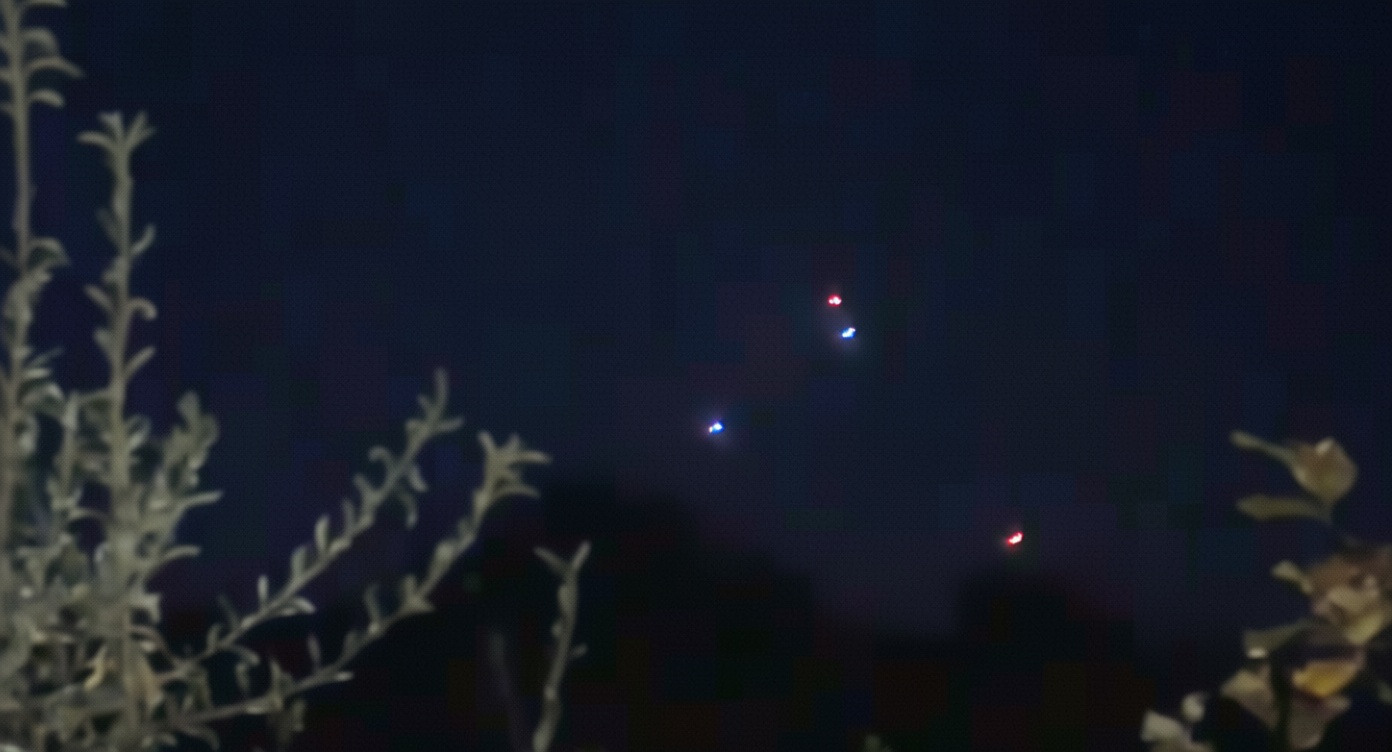
The number of reported unidentified aerial phenomena has risen sharply in recent years, according to the National UFO Reporting Center (NUFORC) and the Mutual UFO Network (MUFON). NUFORC logged more than 10,000 sightings in 2022, up from 7,200 the year before, and an estimated 12,000 reports are already on record for 2023. MUFON’s figures show a similar upward trend, with 8,000 reports in 2022 and just over 9,000 so far this year. Researchers attribute much of the increase to the proliferation of smartphones equipped with high‑resolution cameras and night‑vision modes, which make it easier for witnesses to capture and upload visual evidence in real time. “The barrier to documenting an odd light in the sky has essentially disappeared,” said Dr. Elena Ramirez, a senior analyst at the Center for Aerial Phenomena Research. “What used to be a handwritten note in a notebook can now be a video clip shared worldwide within minutes.”
The bulk of the reports describe luminous objects that behave in ways that deviate from conventional aircraft or known natural phenomena. Witnesses frequently mention rapid, angular changes in direction, hovering for several minutes, and sudden bursts of color. In terms of shape, discs dominate the data set, accounting for roughly 40 % of all sightings, while triangular formations appear in about 30 % of cases. Color preferences are similarly skewed: white lights are reported in 35 % of incidents, and red lights in 25 %. Less common descriptions include spherical (15 %) and cylindrical (10 %) objects, often accompanied by blue or green hues. These patterns emerge across multiple geographic regions, suggesting a degree of consistency that researchers find noteworthy, even as they caution against jumping to extraterrestrial conclusions.
Assessing credibility remains a central challenge for investigators. Both NUFORC and MUFON assign higher confidence scores to reports that involve multiple independent witnesses, corroborating video or photographic evidence, and detailed flight‑path information. Roughly one‑third of the 2022 and 2023 submissions meet these stricter criteria, according to a joint analysis released by the two groups in March. However, experts emphasize that many sightings can be explained by conventional sources. “A significant portion of recent reports turn out to be drones, high‑altitude balloons, or even bright planets misidentified under unusual atmospheric conditions,” noted Dr. Michael Liu, an aerospace engineer who consults for the Defense Department’s UAP task force. The 2020 U.S. government report on Unidentified Aerial Phenomena, which confirmed several military encounters with objects that defied immediate classification, has also prompted a more systematic approach to separating genuine anomalies from misinterpretations.
The renewed public interest in UFOs is not solely a product of technology. The declassification of several government documents in the past few years, including the Pentagon’s Unidentified Aerial Phenomena Task Force findings, has legitimized the conversation and encouraged more people to come forward. Sociologists observe that this transparency, combined with the viral nature of social‑media platforms, creates a feedback loop that both amplifies reporting and raises the bar for evidence. “When the government acknowledges that it has observed objects it cannot readily explain, the public feels empowered to share their own experiences, expecting that they will be taken seriously,” explained Dr. Sandra Patel, a cultural anthropologist at the University of Colorado.
Looking ahead, the scientific community is pushing for standardized data collection and peer‑reviewed analysis to move the field beyond anecdote. Several universities have begun collaborating with MUFON to develop protocols for verifying video metadata, triangulating sighting locations, and cross‑referencing reports with known flight schedules and satellite passes. While the surge in sightings underscores a genuine increase in public engagement, researchers agree that rigorous methodology will be essential to determine whether any of the documented phenomena represent truly novel aerial behavior or are simply the byproduct of a more connected, camera‑rich world.