Overview
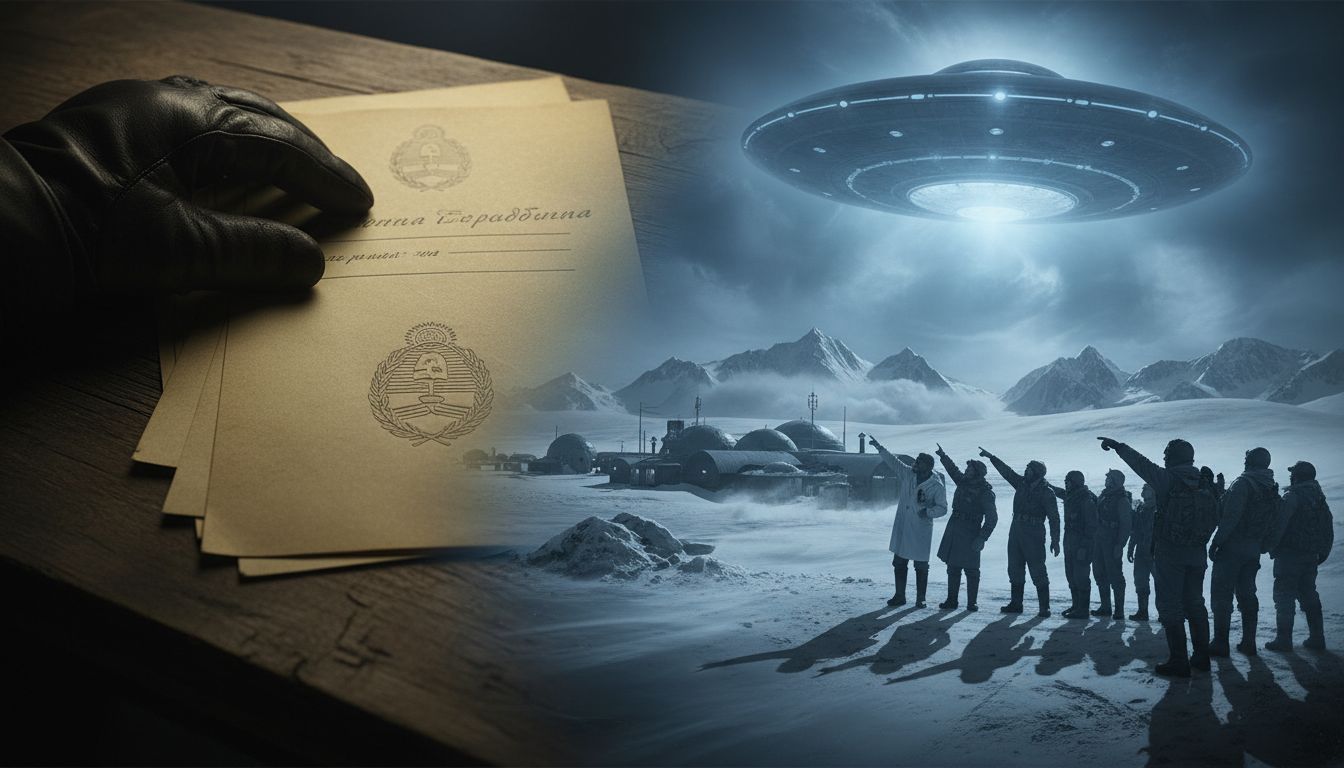
Declassified documents released by Argentina’s Ministry of Foreign Affairs this week shed new light on a 1991 incident at the General San Martín research station in Antarctica. The files, made public under the country’s Law on Access to Public Information, contain previously classified reports, instrument readings and photographs that describe a large luminous object observed hovering silently over the base. The revelation has prompted renewed calls from scientists and transparency advocates for further disclosure of historic aerospace anomalies recorded by Argentine military and scientific personnel.
Incident Details
According to the newly released records, the event occurred on the night of 15 July 1991. Meteorological sub‑officer Miguel Amaya wrote in his log that a “huge circle of light, about the size of a football field, drifted slowly across the sky, emitting no sound and leaving a faint after‑glow.” The object remained visible for approximately ten minutes before disappearing behind the horizon. Simultaneously, a riometer—a device used to measure ionospheric disturbances—registered a sudden spike in cosmic‑ray absorption, which the report interpreted as evidence of a massive, localized energy source. Photographs taken by a stationed photographer show a faint, disc‑shaped glow intersecting the horizon, corroborating the written accounts.
Declassification Process
The documents were classified for more than three decades, listed under “national security” and “defense research” categories. Their release follows a formal request filed by a coalition of Argentine journalists and academic researchers under the 2016 transparency law, which obliges government agencies to disclose information unless it poses a clear threat to security. The Ministry’s statement emphasized that the files “do not contain evidence of any breach of sovereign territory” but acknowledged that the anomalous readings merit further scientific examination. Alongside the textual reports, the package includes two black‑and‑white images and a raw riometer data trace that were previously withheld.
Official Reactions
Argentina’s Defense Ministry issued a brief comment, noting that “the 1991 observation was recorded in the context of routine atmospheric monitoring and that no operational threat was identified at the time.” The Ministry also confirmed that senior officers had instructed personnel to keep the incident “confidential to avoid public alarm.” In response, the Argentine Scientific Committee for Space Studies (CICAE) announced that it would convene an expert panel to review the data, with Dr. Lucía García, a senior ionospheric physicist, stating: “While the phenomenon is unusual, it falls within the scope of natural atmospheric events that merit rigorous analysis.”
Implications and Next Steps
The declassification adds a rare, government‑sourced account of a luminous aerial phenomenon in one of the world’s most remote research outposts. Scholars of anomalous aerial events note that the combination of visual observation, instrument anomaly, and photographic evidence is uncommon in the historical record. Advocacy groups, including the Argentine Transparency Network, are urging the government to release additional logs from nearby stations and any related communications with international partners, arguing that a broader data set could help determine whether the 1991 event was isolated or part of a pattern of unexplained high‑latitude occurrences.
As the expert panel convenes in the coming weeks, the scientific community will be watching closely to see whether the riometer spike can be attributed to known ionospheric disturbances—such as solar flares or geomagnetic storms—or if it points to an unidentified energy source that warrants further investigation. Regardless of the outcome, the episode underscores the importance of transparent archival practices in building a credible record of aerospace phenomena.


