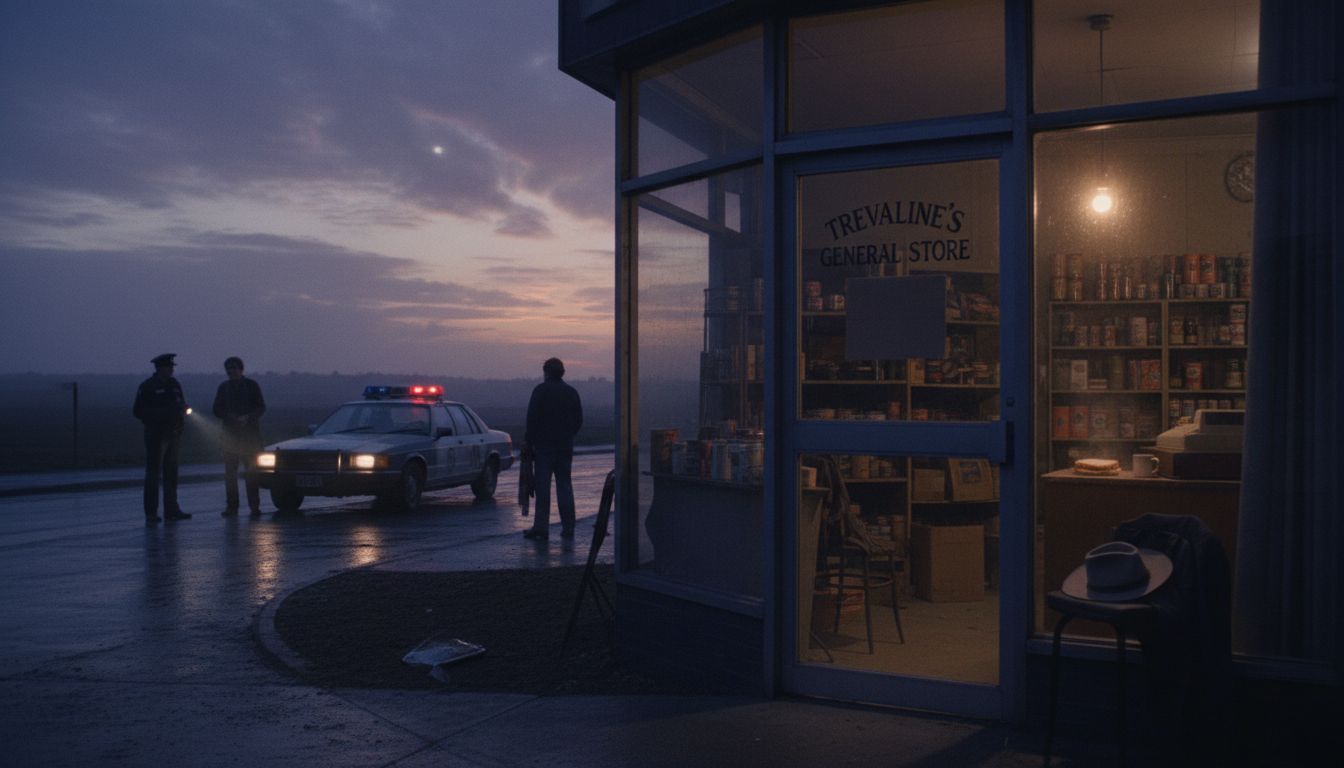
Trevaline Evans, a 52‑year‑old proprietor of the modest Attic Antiques shop in Llangollen, Denbighshire, vanished on 16 June 1990 after posting a handwritten “back in two minutes” sign on her shop door. The note, left at approximately 12:40 p.m., was never removed, and Evans was never seen again. Police records show that the last confirmed sighting of her was near her home on Market Street at about 2:30 p.m., but the circumstances of that brief encounter remain unclear. The case, which has remained open for more than three decades, is now one of the most enduring unsolved disappearances in the region.
At the time of her disappearance, Evans was a well‑known figure in the tight‑knit community. She and her husband, Richard Evans, a maintenance engineer, had recently returned from a weekend renovating a holiday bungalow in nearby Rhuddlan. While Richard stayed behind to finish the work, Trevaline opened her shop for the Saturday rush, serving roughly 25 customers that morning. Witnesses recalled her as “cheerful and attentive,” noting that she had plans to dine out that evening. After stepping out briefly to purchase an apple and a banana, she placed the note on the door and, according to shop‑floor staff, appeared to return briefly before leaving again, although no one saw her re‑enter the premises.
The police response was swift and thorough, despite the rarity of serious crime in the largely rural Llangollen area. Detectives canvassed every household in the town, amassing more than 300 statements, and extended their search to neighboring villages. “We treated this as a missing‑person case with all the resources available to a county force,” said Detective Inspector Gareth Hughes of the Denbighshire Police, who led the original investigation. Search teams combed the River Dee, nearby canals, and disused mine shafts, yet no physical evidence linked Evans to any of those locations. A lone banana peel recovered from the shop’s waste bin was noted, but investigators could not confirm whether it belonged to the fruit she bought that afternoon.
The absence of concrete leads has fostered a range of theories, from accidental injury to deliberate foul play. Local historian Megan Price cautions against speculation: “In small towns, rumors can fill the vacuum left by unanswered questions, but the facts we have are limited to the timeline and the lack of forensic evidence.” The police have not publicly identified any suspects, and no ransom demands or communications have ever been reported. Over the years, volunteers have organized periodic searches of the surrounding countryside, yet each effort has concluded without new information.
As of the latest review in 2024, the case remains open and active on the National Missing Persons Database. Authorities continue to appeal for anyone with knowledge of Evans’s movements on 16 June 1990 to come forward, emphasizing that even seemingly minor details could prove pivotal. The disappearance of Trevaline Evans underscores the challenges faced by law‑enforcement agencies when a seemingly ordinary day turns into a mystery, and it serves as a reminder that, in rural communities, the loss of a single resident can leave a lasting imprint on collective memory.


