Overview
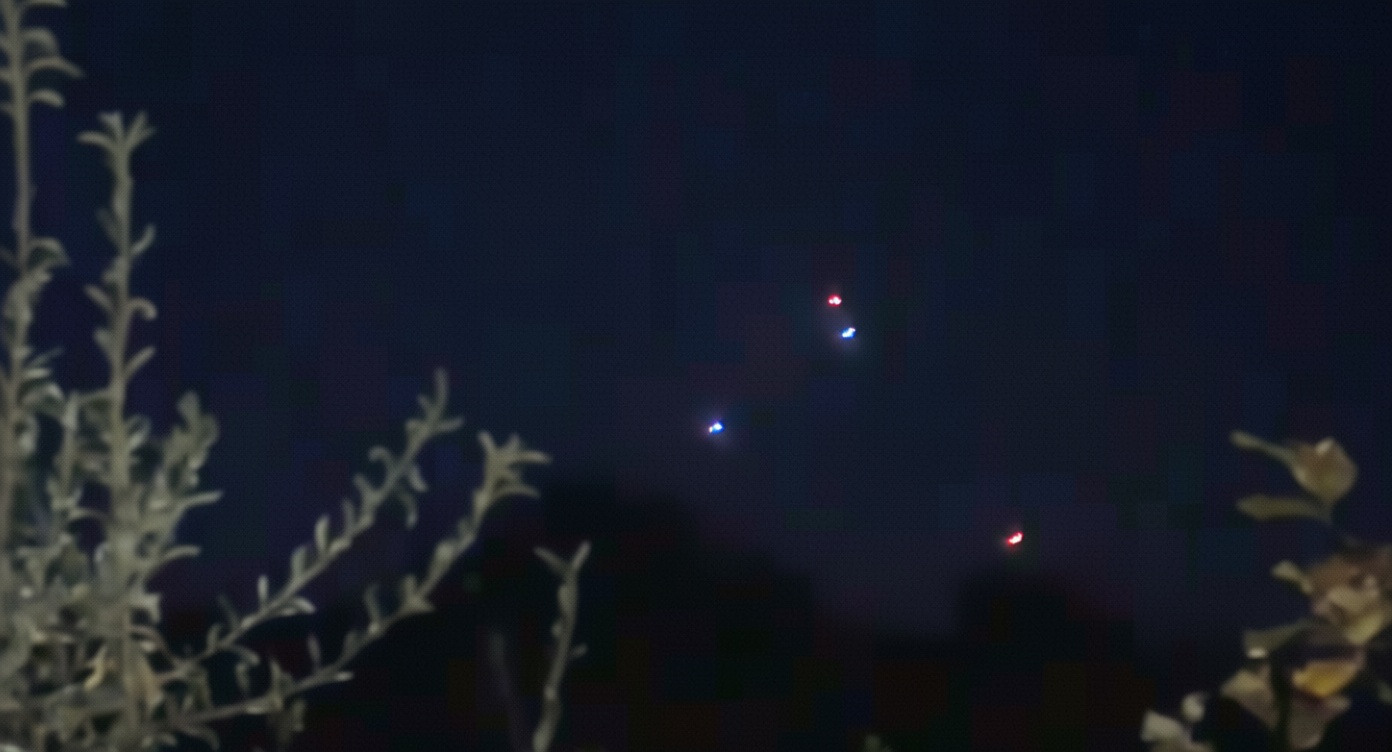
In a recent Substack essay, writer Dana Kippel tackles the often‑misunderstood concept of “alien disclosure.” Rather than focusing on declassified government files or sensational sightings, Kippel frames disclosure as a collective shift in consciousness that could redefine humanity’s relationship with any extraterrestrial intelligence. The piece, published in early 2026, weaves together references to UFO research, metaphysical theories of the “higher self,” and emerging fringe scientific models that treat consciousness as a fundamental component of reality.
Key Themes
Kippel argues that the conventional narrative—wherein a secretive agency releases proof of alien craft—misses the deeper purpose of disclosure. She writes that “the real unveiling is internal, a co‑creative plasma reality where human perception expands to recognize non‑human intelligences as part of a shared field.” The essay links this idea to recent discussions about plasma‑consciousness dynamics, a model suggesting that matter and mind are intertwined at a sub‑atomic level. According to Kippel, if humanity begins to experience reality as a mutable, fractal “Mandelbrot plasma,” the distinction between “us” and “them” dissolves, paving the way for authentic contact.
Scientific Context
Mainstream scientists remain cautious about claims that consciousness can directly interface with extraterrestrial entities. The U.S. Office of the Director of National Intelligence’s 2021 UAP report, for instance, emphasized the need for rigorous data collection and warned against speculative interpretations. Nonetheless, a growing niche of researchers—often labeled “fringe”—explores parallels between quantum entanglement, information theory, and the possibility of non‑local communication. Kippel cites work from physicists investigating “co‑creative plasma” as a medium that could, in theory, support such exchanges, though she acknowledges that empirical validation is still pending.
Fringe Perspectives
The essay also highlights voices from the UFO and metaphysical communities who view disclosure as an evolutionary catalyst. Authors like Dr. Jacques Vallée have long suggested that UFO phenomena may be psychological or sociocultural mirrors, prompting humanity to confront unresolved aspects of its own consciousness. Kippel extends this line of thought, proposing that alien contact could act as a “mirror of the higher self,” encouraging individuals to transcend egoic limitations. She references a recent live discussion with fellow researcher Jonathan Cohen, noting that participants reported “heightened intuitive awareness” after meditative sessions focused on interstellar dialogue.
Implications
If Kippel’s interpretation gains traction, the policy implications could shift dramatically. Rather than preparing for a sudden release of classified footage, governments and scientific institutions might prioritize public education on consciousness research and interdisciplinary collaboration between physicists, neuroscientists, and philosophers. Critics caution that such a pivot risks blurring the line between evidence‑based inquiry and speculative mysticism. Yet Kippel maintains that “the surprise of true disclosure lies not in the arrival of alien ships, but in humanity’s readiness to recognize itself as part of a larger, self‑organizing cosmos.”
The Substack note, while rooted in personal metaphysical exploration, underscores an emerging dialogue at the intersection of UFO studies, consciousness science, and cultural transformation. Whether this perspective will influence mainstream discourse remains uncertain, but it adds a nuanced layer to the ongoing debate over what “alien disclosure” truly means for the future of human understanding.