Overview
UAP disclosure refers to the ongoing effort—driven by legislation, congressional oversight, whistle‑blower testimony, and public pressure—for the United States government to acknowledge, declassify, and release information about Unidentified Anomalous Phenomena (UAP). The term, adopted by the U.S. Army, expands the traditional “UFO” label to include objects that move not only through the air but also underwater and into space. While the phenomenon has been discussed publicly since the 1947 Roswell incident, recent developments have moved the conversation from fringe speculation to formal government scrutiny.
Legislative Landscape
In July 2023, Senate Minority Leader Chuck Schumer introduced the “UAP Disclosure Amendment,” modeled on the JFK Assassination Records Collection Act, to mandate the declassification of all government records related to UAPs. The amendment was incorporated into the National Defense Authorization Act (NDAA) and passed with bipartisan support. A subsequent “UAP Disclosure Act” (UAPDA) was introduced in early 2024, calling for an independent oversight board, mandatory reporting of anomalous encounters by military personnel, and a public reporting schedule. Proponents argue that taxpayer funds have been spent on “preserving and researching material” without congressional approval, making transparency a fiscal responsibility as well as a national security issue.
Congressional Hearings
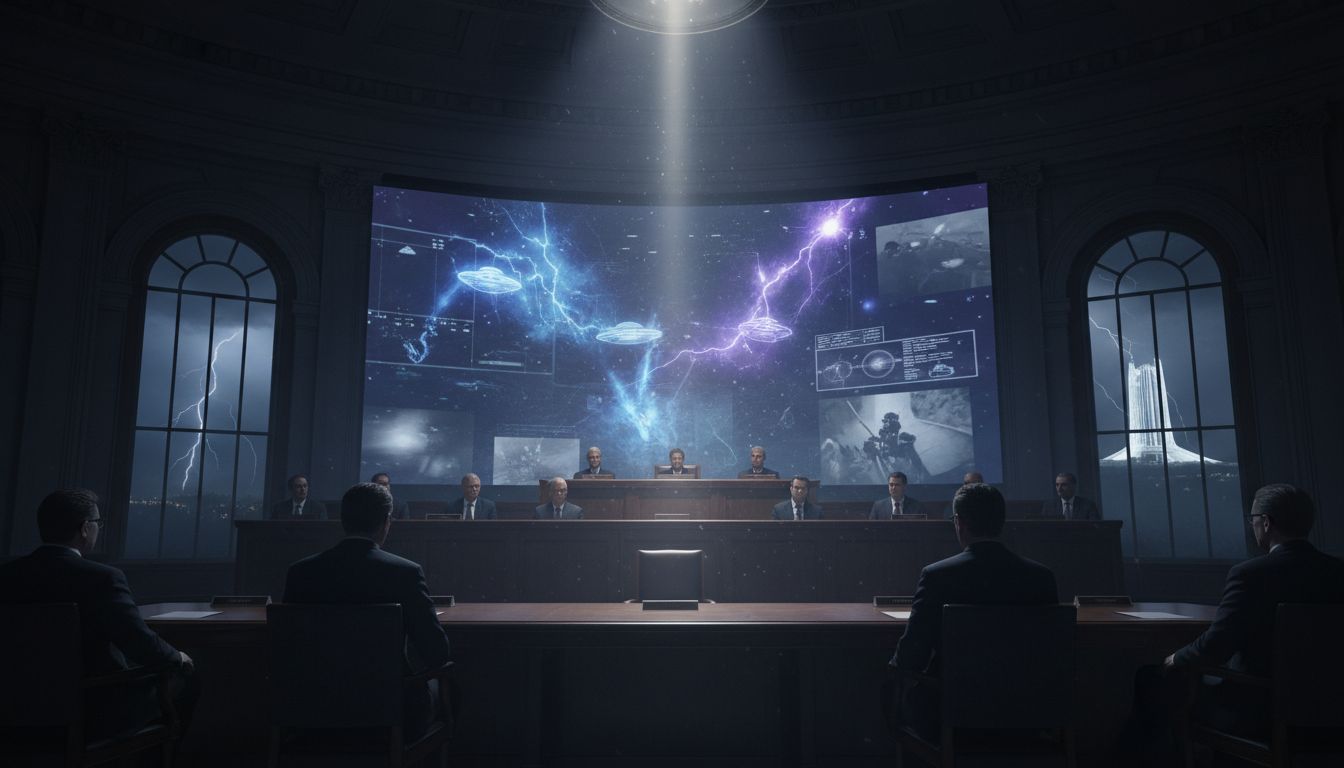
The most visible moment of the disclosure push came with the live public hearing on 7 July 2023, where former intelligence officer David Grusch and veteran fighter pilots Ryan Graves and David Fravor testified before the House Oversight Committee. Grusch claimed he had “direct knowledge of non‑human craft and recovered material” and urged the Pentagon to release the data. Graves and Fravor, both respected pilots, described encounters with transmedium objects that performed maneuvers “beyond any known aerospace capability.” Their statements prompted a surge of demand from scientists, journalists, and lawmakers for a formal investigation and accelerated the legislative timetable.
International Dimension
UAP disclosure is not limited to the United States. In 2024, allied nations—including the United Kingdom, Canada, and Brazil—began their own parliamentary inquiries, citing the “global nature of the phenomenon.” A joint NATO working group was established to share sensor data and standardize reporting protocols across member states. Brazil’s “Operation Saucer” archives, long rumored to contain credible sightings, were partially opened to researchers in late 2025, providing an international benchmark for how declassification can be managed without compromising national security.
Current Status and Outlook
As of February 2026, the disclosure process is advancing incrementally. The Pentagon’s UAP Office has released a redacted “Preliminary Assessment” that confirms several incidents remain “unexplained” after rigorous analysis, but it stops short of confirming extraterrestrial origins. The independent oversight board, mandated by the UAPDA, is slated to issue its first public report in mid‑2027. Meanwhile, public interest remains high, fueled by documentaries such as the upcoming interview with former Area 51 employee Jim Goodall, who hinted at further revelations slated for 2025. Analysts caution that while full transparency may still be years away, the combination of legislative mandates, continued congressional hearings, and international cooperation suggests a steady, evidence‑based trajectory toward greater openness on UAP matters.


