Overview
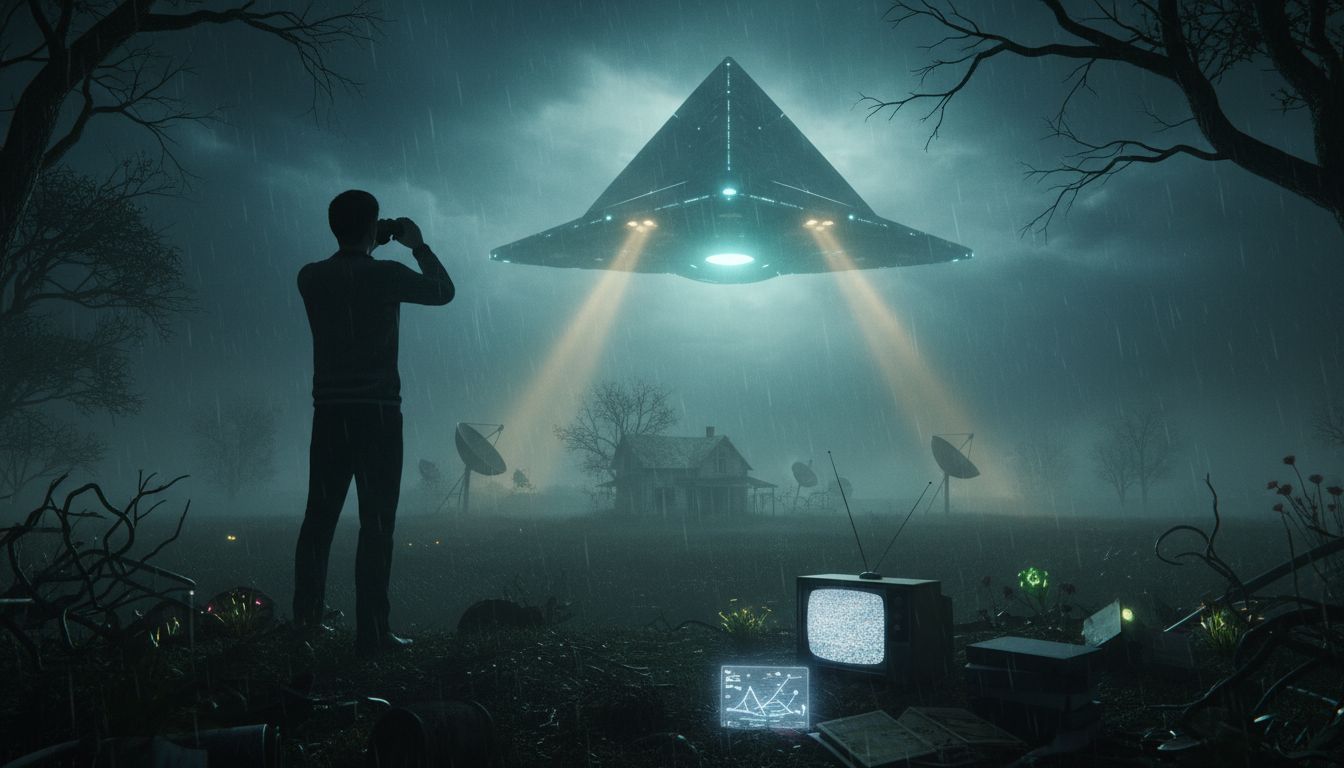
A new poll released this month shows that 34 % of Americans now think unidentified flying objects are likely alien spacecraft or evidence of extraterrestrial life, a marked rise from the roughly 20 % who held a similar view in 1996. The survey, conducted by the Pew Research Center in partnership with the National UFO Reporting Center, underscores a growing mainstream acceptance of the idea that we are not alone. Researchers attribute the shift to a confluence of media exposure, historical events, and a uniquely American cultural narrative that blends curiosity with a sense of frontier optimism.
Poll Findings
The poll surveyed 2,500 adults across the United States, asking whether they believed UFO sightings were “most likely” explained by advanced alien technology. One‑third of respondents answered “yes,” while another 22 % said they were “unsure but open to the possibility.” By contrast, only 12 % of respondents in a comparable 1996 Gallup poll expressed confidence that UFOs were alien in origin. Demographically, belief was strongest among men aged 18‑34 and among residents of the Southwest, where military testing sites and the legacy of the 1947 Roswell incident remain prominent in local lore.
Dr. Emily Hartman, a sociologist at the University of Arizona who helped design the questionnaire, noted, “The data suggest that belief in extraterrestrials is no longer confined to fringe groups. It has entered the broader public consciousness, reflecting both a distrust of official explanations and an appetite for wonder.”
Cultural Roots
American media has long amplified the allure of the unknown. From the 1950s science‑fiction films such as The Day the Earth Stood Still to contemporary streaming series like The X‑Files reboot and Project Blue Book, visual storytelling has framed UFOs as both mystery and menace. Hollywood’s global reach means that these narratives reinforce a feedback loop, where popular culture fuels public interest, which in turn encourages more productions.
Professor Michael Liu of the Media Studies Department at Northwestern University explains, “Unlike many other nations, the United States has a commercial entertainment ecosystem that treats extraterrestrials as marketable characters. That commercial incentive creates a steady stream of content that normalizes the idea of alien contact.”
Historical Catalysts
Key historical moments have also cemented the United States’ fascination with the skies. The 1947 Roswell incident, the 1969 Apollo moon landing, and the 2004 release of the Pentagon’s “Advanced Aerospace Threat Identification Program” (AATIP) videos each reignited public debate. Moreover, the declassification of Project Blue Book files in the 1970s gave the government a veneer of transparency that many interpreted as tacit acknowledgment of the phenomenon.
“Each wave of official disclosure—whether it’s a leaked video or a congressional hearing—acts as a catalyst for renewed speculation,” says former Air Force officer and UFO researcher Lt. Col. James Ortega, who testified before the Senate Intelligence Committee in 2023. “When the government appears to admit it’s looking into something, the public’s curiosity spikes.”
Comparative Perspective and Outlook
While interest in UFOs exists worldwide, surveys consistently show the United States leads in the proportion of believers. A 2022 European poll found only 18 % of respondents across the EU considered alien visitation plausible. Analysts point to the United States’ pioneering role in space exploration, its militarized aerospace sector, and a cultural tradition of individualism that encourages questioning authority.
Looking ahead, the forthcoming release of the Office of the Director of National Intelligence’s unclassified UFO report later this year may further shift public opinion. If the document contains conclusive evidence of advanced aerial phenomena, the 34 % figure could climb sharply, potentially reshaping policy discussions about national security and scientific research. Until then, the American public appears poised at the intersection of skepticism and wonder, a place that has defined the nation’s unique relationship with the stars.


