Overview
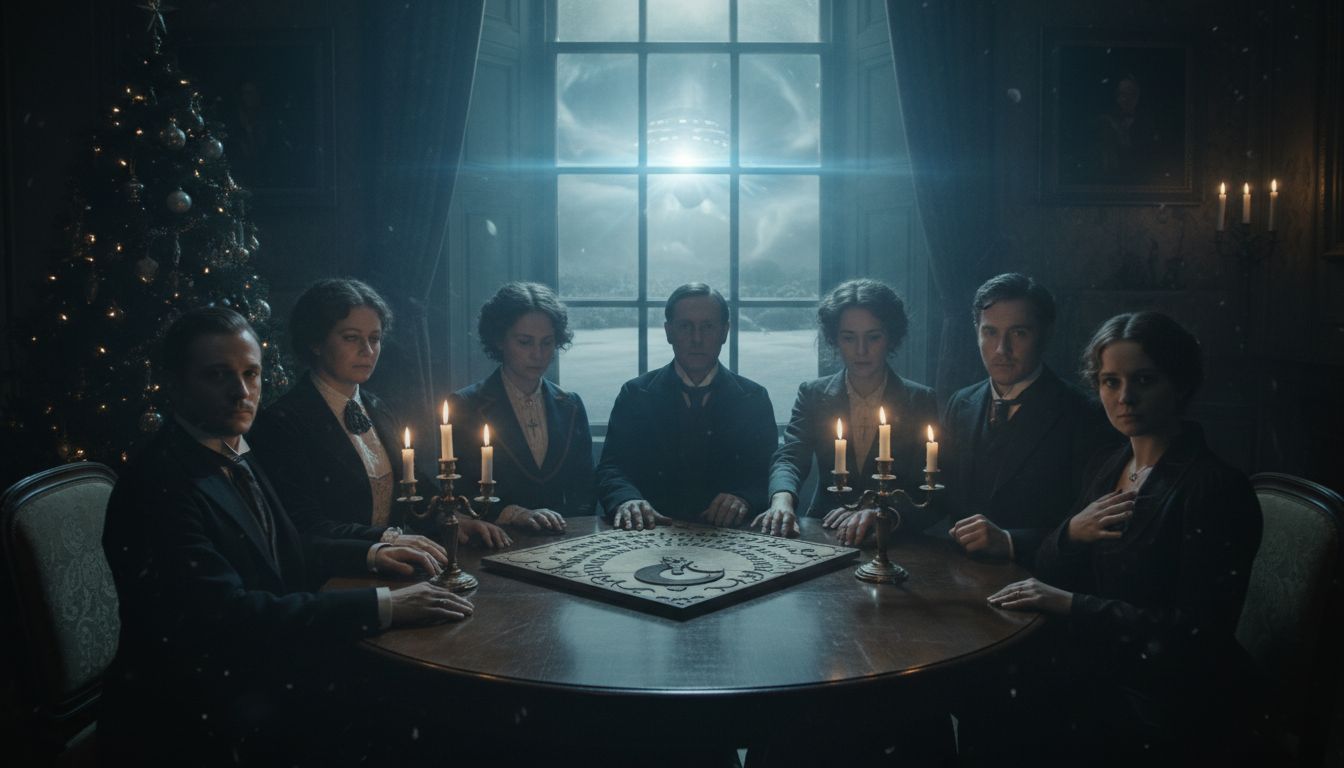
The latest Christmas‑time episode of Downton Abbey sparked a strikingly different reaction on the two sides of the Atlantic. While British critics treated the scene in which the Crawley family gathers around an Ouija board as a familiar nod to holiday tradition, several American reviewers described the same moment as “out of place” and “confusing.” The disparity underscores a long‑standing cultural divide: ghosts and spectral storytelling are woven into England’s festive folklore, yet they remain largely absent from the United States’ Christmas narrative.
Historical Roots
England’s association of ghosts with the holiday season stretches back to the Victorian era, when the long, dark evenings of December provided an ideal backdrop for communal storytelling. Charles Dickens’ 1843 novella A Christmas Carol cemented the idea that the supernatural could serve both moral instruction and seasonal entertainment. Folklorists note that 19th‑century Christmas gatherings often featured “ghost‑telling” sessions, a practice that persisted into the 20th century through radio dramas and televised specials. By contrast, early American Christmas celebrations were shaped by Puritanical restraint and later by the commercial rise of Santa Claus, emphasizing cheer and material generosity over the macabre.
Modern Media
The Downton Abbey Christmas special, aired on BBC One on December 20, 2024, included a brief Ouija board segment where characters attempt to contact a long‑lost ancestor. British newspaper The Telegraph praised the moment, writing, “the spectral interlude feels as natural as a mince‑pie on the mantel, reminding viewers of our rich tradition of festive hauntings.” In the United States, the same episode aired on PBS and streaming platforms, prompting a different response. Variety’s television critic remarked, “the Ouija scene feels jarring in an American holiday context, where ghosts rarely share the holiday spotlight.” Similar sentiment appeared in user comments on Reddit’s r/television, where American viewers labeled the sequence “odd” and “un‑Christmas‑like.”
Cultural Contrast
Scholars attribute the divergence to differing mythic frameworks. Dr. Eleanor Whitaker, a professor of cultural anthropology at the University of Cambridge, explains, “In England, Christmas has historically been a liminal time—a moment when the veil between worlds is perceived as thin. This is reflected in literature, music, and now television.” Conversely, Dr. Michael Alvarez of Georgetown University observes that “American holiday media has long centered on Santa, family reunions, and consumer joy, leaving little room for the spectral.” Market research from Nielsen indicates that 68 % of U.S. viewers associate Christmas programming with “family togetherness” and “gift‑giving,” while a 2023 UK survey showed 42 % of respondents expecting “a ghost story” as part of their holiday viewing.
Implications
The contrasting receptions highlight how cultural memory shapes contemporary entertainment expectations. For British producers, integrating ghostly elements can tap into a deep‑seated seasonal nostalgia, potentially boosting viewership among audiences who relish the tradition. American creators, meanwhile, may need to contextualize supernatural motifs more explicitly or risk alienating viewers accustomed to a Santa‑centric holiday palette. As global streaming platforms continue to blur regional boundaries, understanding these cultural nuances becomes essential for content developers aiming to resonate across markets without compromising authenticity.