Overview
In a recent Medium post, Harvard astrophysicist Avi Loeb argues that NASA may have overlooked evidence of past microbial life in data returned by the 1976 Viking landers. Loeb contends that anomalous chemical signals—particularly the release of radioactively tagged gases from Martian soil samples—were dismissed as “false positives” rather than investigated as possible biosignatures. He frames the episode as part of a broader pattern in which the scientific community, wary of premature claims, may inadvertently generate “false negatives” that suppress unconventional discoveries.
Viking’s Biological Experiments
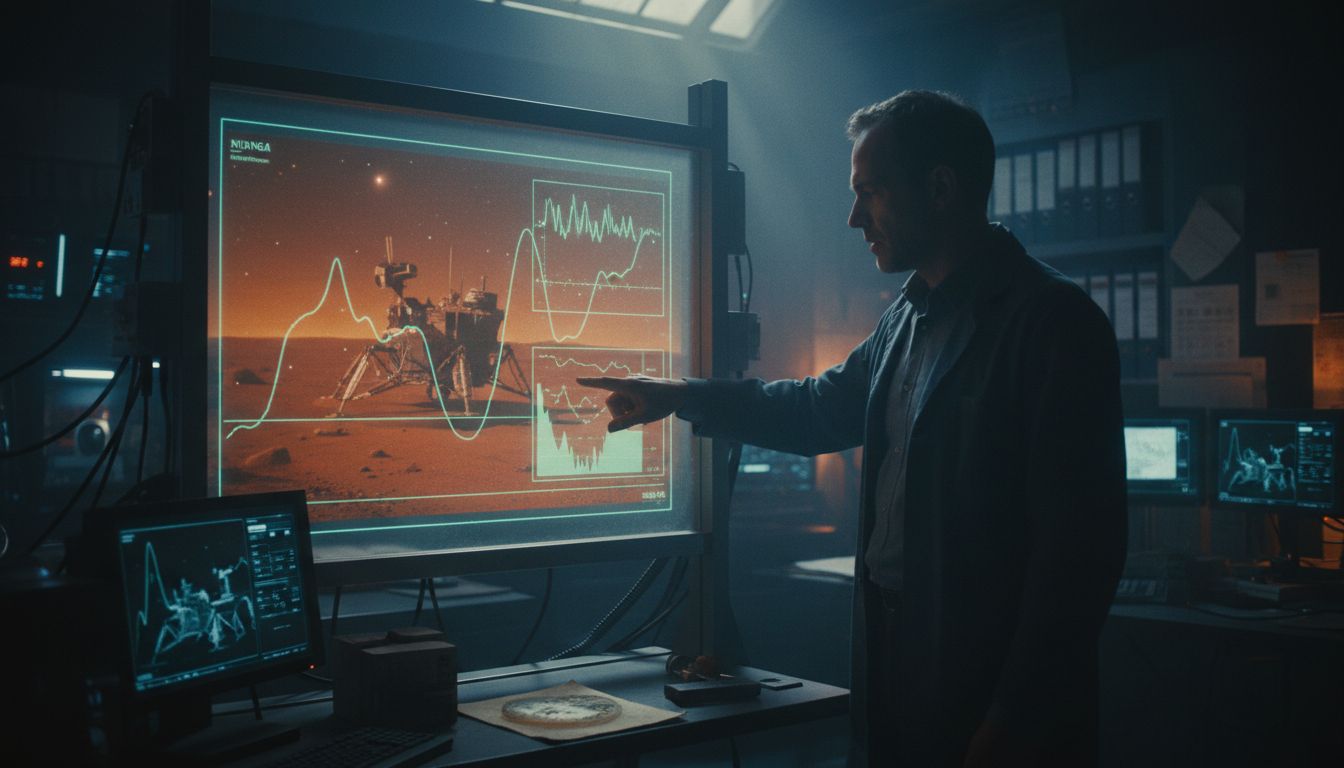
The Viking 1 and Viking 2 missions carried a suite of biology experiments designed to detect metabolic activity in Martian regolith. Soil samples were mixed with a nutrient solution containing carbon‑14, then monitored for the production of labeled carbon dioxide, methane, or the consumption of carbon monoxide. While the Labeled Release (LR) experiment recorded a brief spike in carbon‑14 gas release, the Gas Chromatograph–Mass Spectrometer (GC‑MS) failed to detect organic molecules, leading NASA to conclude that the LR response was likely caused by non‑biological oxidants such as perchlorates. Loeb points to the LR signal as a “persistent, reproducible anomaly” that merits re‑examination.
Loeb’s Interpretation
Loeb writes, “The job of science is not done when a signal is detected; the discoverers must demonstrate that the signal is statistically significant relative to the noise and cannot entertain mundane interpretations.” He suggests that the prevailing caution against “false positives” may have become a bias against any extraterrestrial hypothesis, citing his own experience proposing a techno‑signature for the interstellar object 1I/‘Oumuamua. “By attempting to avoid a false positive out of prejudice, they might have created a false negative,” he notes, drawing a parallel to the Viking results. Loeb also references a recent Nature Astronomy perspective that warns astrobiology of similar pitfalls when interpreting ambiguous data.
Community Response
Most planetary scientists maintain that the Viking data remain consistent with a sterile Martian surface. Subsequent missions—Mars Pathfinder, Spirit, Opportunity, Curiosity, and Perseverance—have detected perchlorates and other oxidizing compounds that can mimic biological signatures, reinforcing the original non‑biological interpretation. Dr. Sarah M. Johnson, a NASA astrobiologist not involved in Loeb’s work, cautions, “Re‑analysing Viking data is valuable, but any claim of past life must be supported by multiple, independent lines of evidence, which we have yet to obtain.” The debate underscores a tension between openness to novel ideas and the rigor required to avoid premature conclusions.
Broader Implications
Loeb’s critique extends beyond Mars, touching on the emerging Galileo Project, which aims to systematically search for technosignatures in the solar system. He argues that a culture of “acidic” academic criticism can stifle innovative research, potentially delaying breakthroughs in the search for extraterrestrial life or intelligence. While his assertions have sparked discussion, the scientific method demands that any reinterpretation of Viking results be subjected to peer‑reviewed analysis and, ideally, corroborated by new measurements—such as those forthcoming from the ExoMars Rosalind Franklin rover and future sample‑return missions. The conversation highlights the delicate balance between skepticism and curiosity that drives planetary science forward.