Introduction
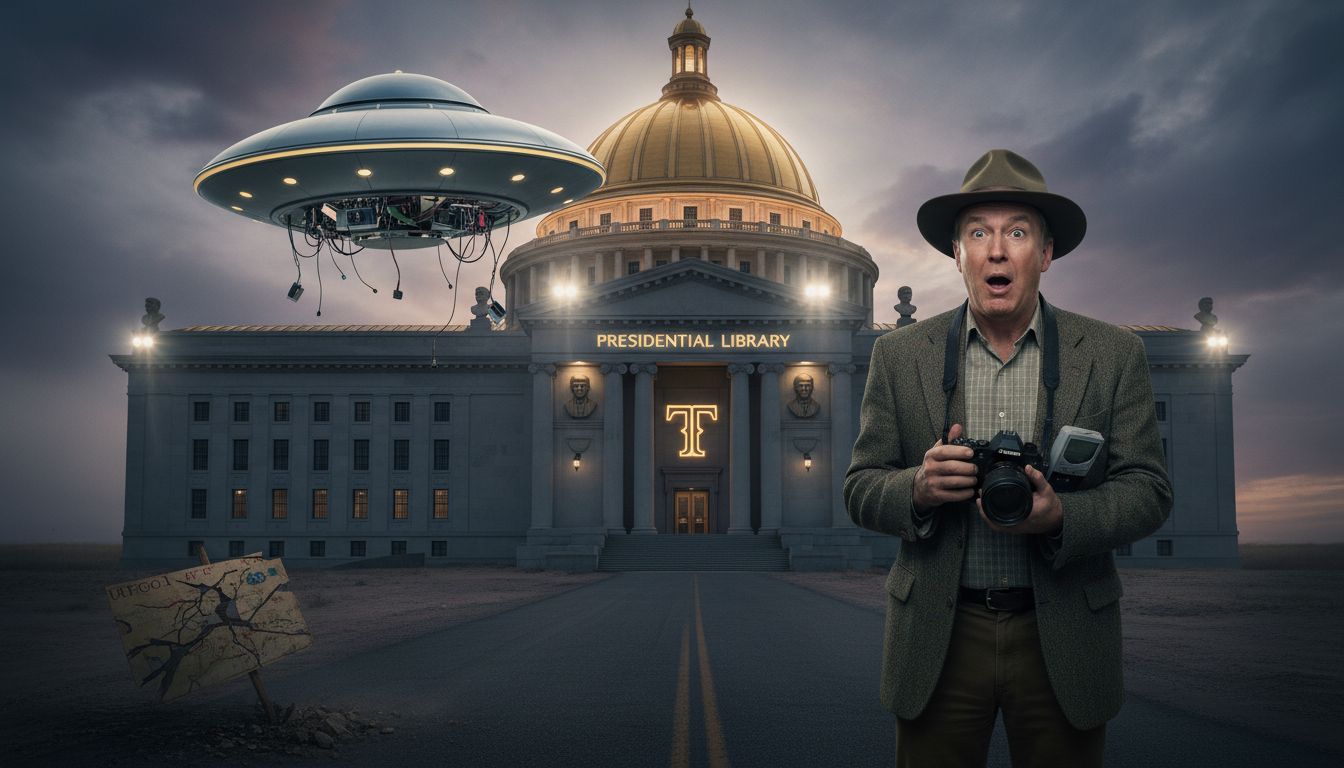
A recent essay published on The Good Men Project recounts a peculiar detour that turned a night‑time hunt for unidentified flying objects into an unexpected encounter with a piece of contemporary American political history. The author, a self‑described “UFO enthusiast,” set out to investigate a series of reported sightings in a rural area of the Midwest. Instead of extraterrestrial craft, the writer found a construction site for the newly announced Donald J. Trump Presidential Library, prompting a humorous juxtaposition of the otherworldly with the very earthly legacy of a polarizing former president.
The UFO Quest
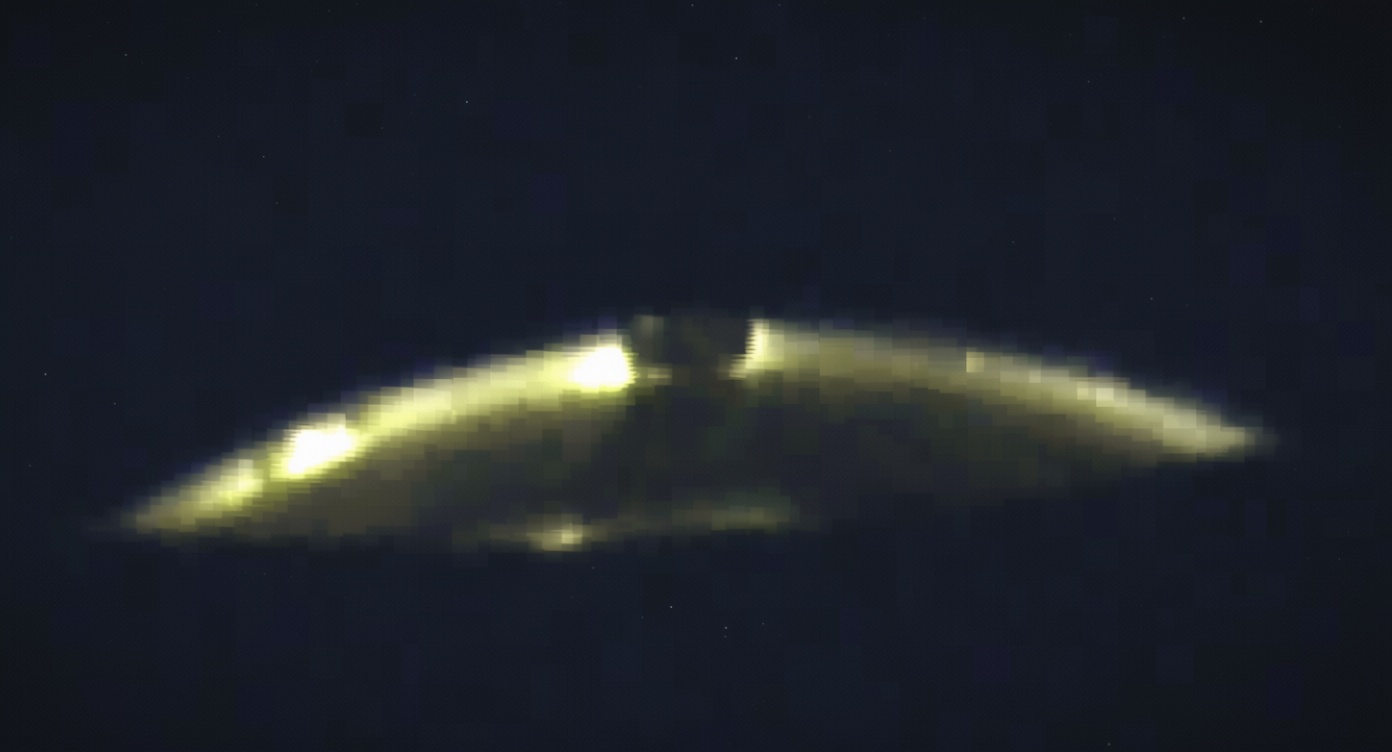
The piece begins with the author describing a “classic” UFO‑watching itinerary: a rented van, a portable telescope, and a checklist of local reports ranging from “lights in formation” to “odd disc‑shaped silhouettes.” The writer notes that interest in unidentified aerial phenomena has surged since the U.S. government released its 2021 “Preliminary Assessment,” a move that has legitimized what was once fringe speculation. “I was hoping to catch a glimpse of something that would make headlines beyond the usual ‘lights over cornfields’ narrative,” the author writes, underscoring the blend of curiosity and skepticism that characterizes modern UFO investigations.
Unexpected Discovery: The Trump Library
While scouting a remote field that locals claimed was a hotspot for “strange lights,” the author instead encountered a bustling construction crew erecting a concrete foundation. The site, according to a nearby plaque and a local news release, marks the future home of the Donald J. Trump Presidential Library and Museum, slated to open in the next few years. The library, still in the planning stages, has already ignited debate over how presidential archives are curated and who gets to shape the narrative of a president’s legacy. “Finding a foundation for a Trump library where I expected a landing pad for aliens was the most anticlimactic extraterrestrial encounter of my life,” the writer quips.
Cultural Contrast
The essay leverages the contrast between the speculative allure of UFOs and the concrete reality of a presidential archive to comment on contemporary American discourse. While the UFO community grapples with questions of secrecy, scientific rigor, and public fascination, the Trump library symbolizes a different kind of public intrigue—one rooted in political identity and historical memory. The author observes that both phenomena attract “devotees who see themselves as guardians of truth,” yet they occupy opposite ends of the credibility spectrum: “One is chased by scientists and skeptics alike; the other is chased by journalists and historians.” This juxtaposition serves as a subtle critique of how media and public attention can elevate disparate narratives.
Broader Implications
Beyond the humor, the article highlights two broader trends. First, the mainstreaming of UFO research, now overseen by the U.S. Office of the Director of National Intelligence, reflects a growing willingness to examine anomalous aerial events without immediate dismissal. Second, the move to establish a Trump presidential library—still awaiting congressional approval for funding—signals an ongoing effort to institutionalize the former president’s legacy amid a highly polarized political climate. The writer’s accidental discovery underscores how cultural investigations can intersect, revealing that the search for meaning—whether in the skies or in history—often leads to unexpected, terrestrial destinations.
Conclusion
In a piece that blends personal anecdote with cultural observation, the Good Men Project author transforms a night of sky‑watching into a commentary on America’s dual fascination with the unknown and the politically charged. While no alien craft was found, the encounter with the Trump Presidential Library offers a grounded reminder that the stories we chase—whether about extraterrestrials or former leaders—are ultimately reflections of our collective curiosity and the narratives we choose to preserve.