Overview
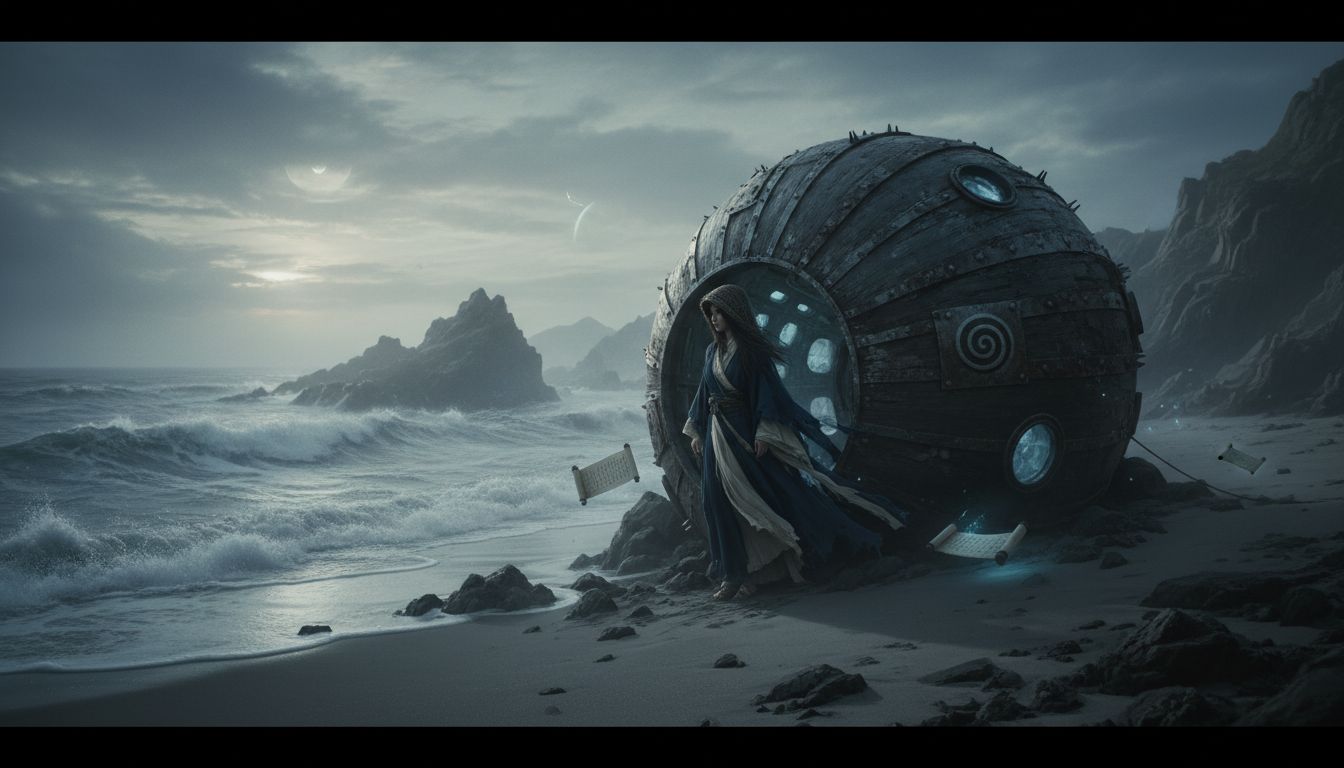
A recent Boing Boing post has revived interest in one of Japan’s best-known anomalous legends: the Utsuro-bune, or “hollow boat,” said to have washed ashore in 1803 on the eastern coast of Japan in Hitachi province. The story centers on a young woman, estimated to be between 18 and 20 years old, who allegedly arrived in a strange round vessel and could not communicate with the fishermen who encountered her. According to the retelling, locals briefly brought her inland before returning both the woman and her craft to sea, where they drifted away.
The article does not present the account as settled fact. Instead, it frames the episode as part of a broader tradition of Japanese folklore, maritime mystery, and modern UFO/UAP interpretation, pointing readers toward related research and historical references. That balance matters: while the tale has become a staple of speculative discussions, historians generally treat it as an enduring folk narrative rather than a documented historical event.
What the legend describes
The most detailed version of the Utsuro-bune account describes an unusual craft measuring 3.30 meters high and 5.45 meters wide, with a shape that reportedly reminded observers of a kōro, or Japanese incense burner. Its upper portion was said to be made of red-lacquered rosewood, while its windows were described as being made of glass or crystal—materials that, if accurately reported, would have stood out sharply in an early 19th-century coastal setting. The interior of the vessel was also said to contain text written in an unknown language, adding to the legend’s enduring aura of strangeness.
What makes the story especially notable is not simply the craft’s description, but the way it has persisted. The legend survives in four texts written between 1815 and 1844, suggesting that the account circulated within a relatively narrow historical window before later generations elevated it into a cultural curiosity. That textual survival has made the story a frequent reference point for scholars of folklore and for enthusiasts who interpret older mysteries through a contemporary lens.
Folklore, history, and UFO interpretations
Historians such as Kazuo Tanaka and Yanagita Kunio have treated the Utsuro-bune story as part of Japan’s wider folklore tradition. In that reading, the tale reflects the kinds of narrative motifs common to shipwrecks, foreign arrivals, and unexplained maritime encounters. At the same time, certain ufologists have argued that the story may describe a close encounter with extraterrestrial life, citing the craft’s unusual shape, its sealed construction, and the woman’s inability to communicate as suggestive details.
The Boing Boing piece places the legend alongside more contemporary anomalous stories, including other UFO/UAP accounts and personal narratives that have taken on the character of modern folklore. That framing underscores how older legends can be repeatedly reinterpreted as new cultural concerns emerge. In the case of Utsuro-bune, the story has moved well beyond its original context, becoming a touchstone for debates about how societies remember the unexplained.
Why the story still resonates
Part of the legend’s longevity comes from its ambiguity. The Utsuro-bune is detailed enough to invite analysis, but unresolved enough to sustain speculation. For some readers, it is a window into early 19th-century Japanese storytelling; for others, it is a candidate for one of history’s earliest “alien” encounters. The Boing Boing article encourages both curiosity and caution, reminding readers that extraordinary claims often survive because they sit at the intersection of history, myth, and interpretation.