Overview
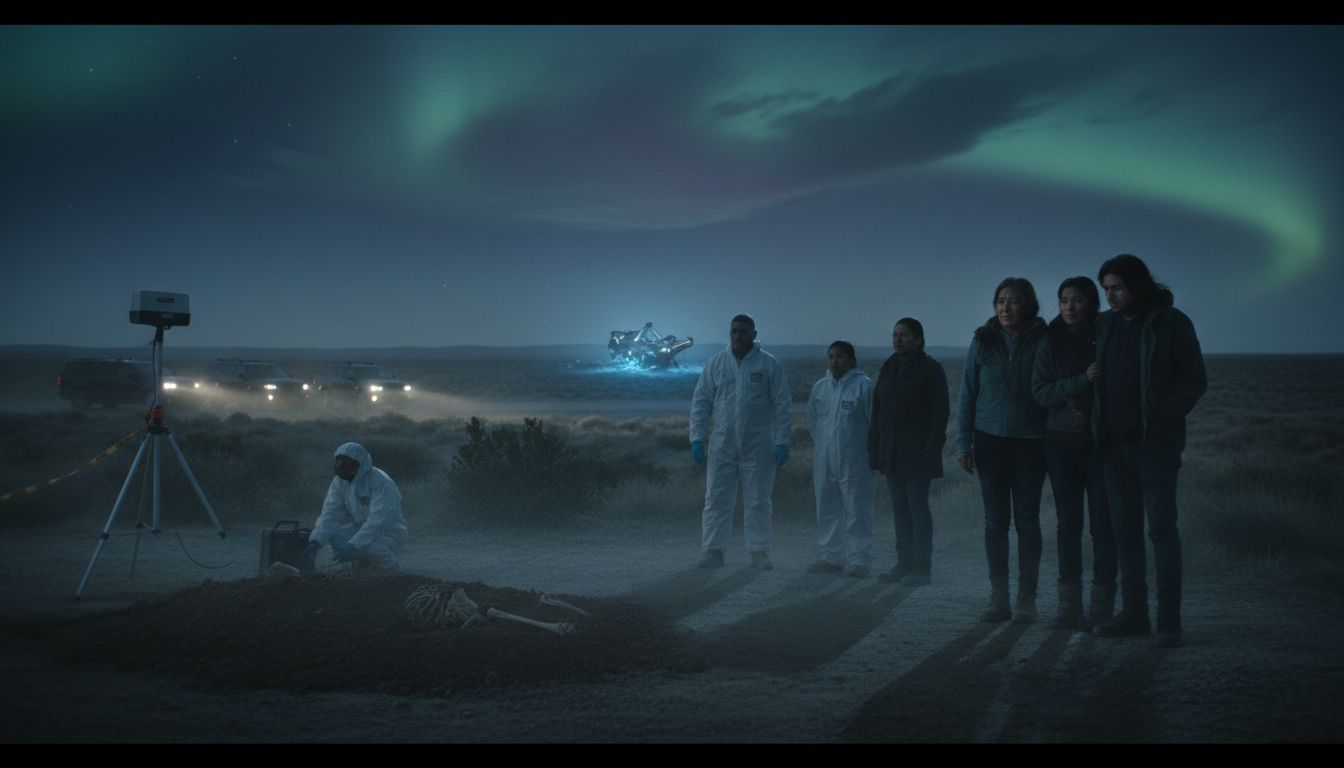
The remains of Melissa Casias, a 34‑year‑old New Mexico resident who had been linked to a series of high‑profile disappearances of scientists, were recovered on June 1, 2026, near Los Alamos. The discovery, confirmed by the Los Alamos County Sheriff’s Office, brings closure to a family that has endured months of uncertainty. While investigators are reviewing potential stressors that may have contributed to her death, officials stress that there is no evidence connecting her case to a broader conspiracy surrounding the so‑called “missing scientist” phenomenon.
Background
Since early 2024, a loosely defined “missing scientist epidemic” has captured public attention. Over a dozen researchers affiliated with national laboratories and university research centers across the United States have either vanished without trace or been found dead under ambiguous circumstances. The pattern has spurred speculation ranging from workplace stress and mental‑health crises to more sensational theories involving classified projects. Casias, a former laboratory technician at Los Alamos National Laboratory (LANL), was mentioned in several media reports because she was the only known female staff member whose disappearance coincided with a cluster of similar cases in the Southwest.
Investigation
Law enforcement officials opened a homicide investigation after the partial skeletal remains were located in a remote canyon outside the town of Los Alamos. Forensic analysis conducted by the New Mexico Office of the State Medical Examiner indicated that the cause of death was blunt‑force trauma, with no signs of foul play such as defensive wounds or foreign DNA. “At this stage, the evidence points to an isolated incident rather than an organized effort,” said Sheriff Carlos Mendoza during a press briefing. The investigation is also examining whether Casias experienced acute stressors—such as recent job restructuring at LANL and a documented history of anxiety—that may have contributed to a tragic outcome.
Family Response
Casias’s sister, Ana Rivera, expressed a mixture of relief and sorrow after the identification of the remains. “We finally have answers, but it’s heartbreaking to know she’s gone,” Rivera told the Albuquerque Journal. The family has requested privacy while they arrange a private burial. They also urged the scientific community to prioritize mental‑health resources, noting that “the pressure to produce results in high‑security environments can be overwhelming.” Mental‑health advocates have echoed this sentiment, calling for more transparent support systems within federal research facilities.
Outlook
The case underscores the importance of distinguishing between genuine investigative leads and unfounded conspiracy narratives. While the “missing scientist” label continues to circulate on social media, experts caution that each incident must be examined on its own merits. Dr. Laura Chen, a sociologist at the University of New Mexico who studies occupational stress in scientific fields, remarked, “We need to focus on systemic issues—workload, isolation, and access to counseling—rather than jumping to sensational conclusions.” As authorities continue to piece together the circumstances surrounding Casias’s death, the broader conversation about researcher well‑being is likely to gain renewed urgency.