Overview
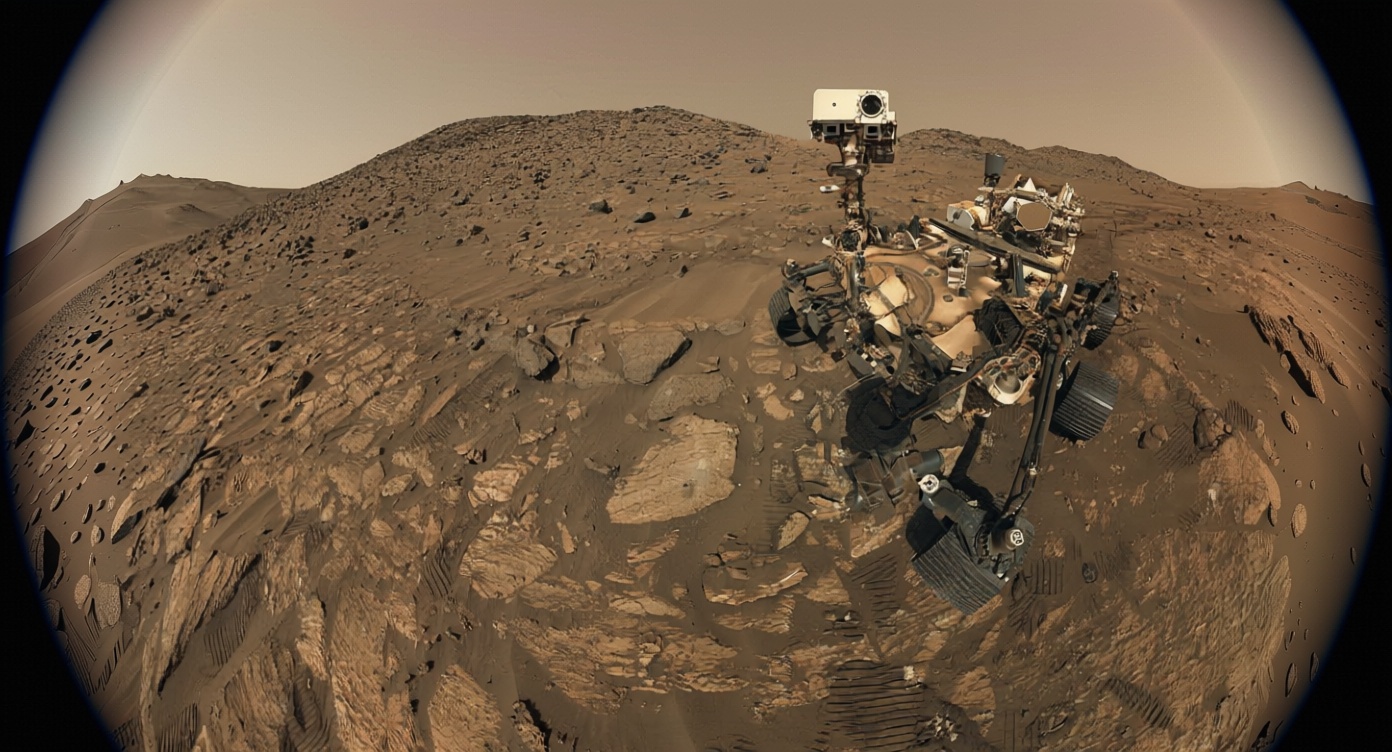
NASA’s Perseverance rover has identified complex carbon compounds in a Martian rock formation that scientists say could strengthen the case that Mars once hosted conditions favorable to life — though the finding remains tentative and far from proof. The discovery comes from the Bright Angel outcrop in Jezero crater, a site already considered one of the most promising on Mars because it appears to preserve an ancient river and lake environment. The rocks there also showed distinctive spotted markings — nicknamed “leopard spots” and “poppy seeds” — that have drawn attention because they resemble textures on Earth linked to microbial activity.
Key Findings
Using Perseverance’s SHERLOC instrument, which analyzes rocks with ultraviolet laser light, researchers detected macromolecular carbon — large, complex carbon-bearing molecules — on the surface of the spotted rocks and in another rock roughly 100 metres away in the same formation. According to Ashley Murphy of the Planetary Science Institute, such carbon compounds can be highly significant when found in ancient rocks on Earth. “On Earth, macromolecular carbon is often found in extremely old rocks and, in some cases, it is the only organic evidence of past microbial life,” she said. But she cautioned that on Mars, the same chemistry does not automatically imply biology.
That caution is important because macromolecular carbon is not unique to living systems. As Lewis Dartnell of the University of Westminster noted, similar compounds can also occur in lifeless environments, including meteorites. Even so, the new measurements add an important layer of context: the carbon compounds were found alongside carbonate and sulphate minerals, which tend to form in water-rich environments. That matters because liquid water remains one of the key ingredients scientists look for when assessing whether a planet could have supported life.
Scientific Context
The Bright Angel rocks had already been flagged as especially intriguing because their dark, circular markings resemble features on Earth that are sometimes linked to microbial processes. Researchers have not ruled out non-biological explanations, but the combination of unusual textures, ancient watery geology, and now complex carbon makes the site one of the strongest candidates yet in the search for signs of past life on Mars. Murphy said that identifying these molecules helps scientists evaluate “whether the necessary chemical ingredients and environmental conditions to support life have ever existed there.”
At the same time, the result does not mean Perseverance has found fossilized organisms or a clear biosignature. Jezero crater was already known to have been water-rich in Mars’ distant past, so the presence of carbon compounds there is not, by itself, surprising. What is notable, according to mission scientists, is that macromolecular carbon has never been seen on the surface of a rock like this on Mars, which may indicate that the material is unusually resistant or chemically distinct from previously identified carbon-bearing compounds.
What Comes Next
For now, the finding adds to a growing body of evidence that Mars may once have offered environments capable of sustaining life, even if scientists still cannot say whether life actually emerged there. The work underscores both the promise and the limits of rover-based exploration: Perseverance can gather increasingly sophisticated chemical clues, but definitive answers may require sample return missions and more advanced laboratory analysis on Earth. Until then, the Bright Angel results remain an important but preliminary step in one of planetary science’s most enduring questions — whether Mars was ever alive.