Overview
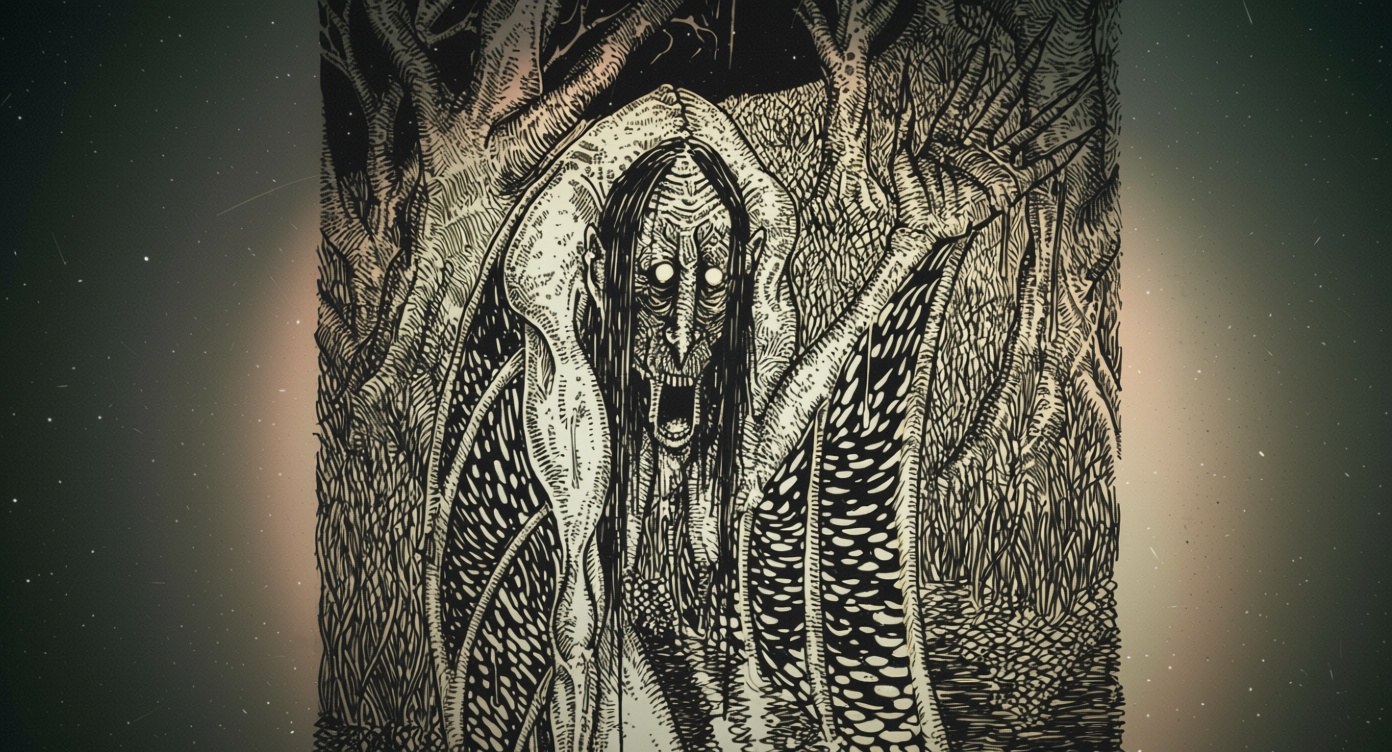
The Mandurugo is one of the most distinctive vampiric figures in Philippine folklore: a beautiful woman who hides in plain sight, marries unsuspecting men, and survives by secretly draining their blood. According to the source material, the creature is not presented as a classic undead revenant but as a living or supernatural being with an uncanny ability to pass as an ordinary member of the community by day. The name itself reflects its reputation. Derived from dugo, the word for “blood” in several Philippine languages, mandurugo roughly translates to “one who deals in blood,” underscoring the creature’s central role in local fear narratives.
A Bride Who Feeds at Night
Folkloric descriptions portray the Mandurugo as a woman of striking beauty, especially dangerous because she blends so seamlessly into human society. Her preferred victims are usually young men, whom she marries and then feeds upon at night while lying beside them as they sleep. The creature is said to use a pointed tongue to prick her husband’s body and suck his blood and life force, leaving behind illness, weakness, or death. Some traditions also describe her as capable of shapeshifting into a harpy-like form, complete with wings, allowing her to fly and hunt after dark. In local storytelling, unexplained sickness in a household or the sudden decline of livestock could prompt whispers that a Mandurugo had been near.
Folklore, Region, and Protection
The Mandurugo is often grouped with the broader category of aswang, a term used across Philippine folklore for a wide range of malevolent shapeshifters, including vampires, witches, ghouls, and other hybrid creatures. Spanish colonial observers in the 16th century reportedly considered the aswang among the most feared beings in the archipelago, and those accounts helped shape how later generations understood such figures through a Christian and demonological lens. The strongest associations for Mandurugo stories appear in Tagalog and Bicol lore, with references particularly tied to Capiz, Panay Island. To guard against the creature, some traditions prescribe an offering made from duhat (Java plum), ginger, manzanitas bark, yantok, blood, and makahiya leaves, intended to keep the household safe from attack.
Changing Meanings Over Time
The source material suggests that the Mandurugo’s image may have changed significantly over time. In pre-colonial Philippines, related beliefs appear to have been linked not only to danger but also to protective rituals during vulnerable life stages such as childbirth. The text also raises the possibility that the Mandurugo may once have been connected to the kinnara or kinnari, winged, humanlike beings described in oral traditions as gentle and beautiful. If so, later colonial reinterpretations may have transformed a more nuanced supernatural figure into a darker, blood-drinking monster. That evolution reflects a broader pattern in folklore: stories can be reshaped by conquest, religion, and fear, leaving modern audiences with a version of the legend that may differ sharply from its earliest forms.
A Lasting Figure in Philippine Myth
Today, the Mandurugo remains a compelling part of Philippine mythic tradition because it sits at the intersection of beauty, seduction, danger, and survival. Unlike foreign vampire archetypes, it is deeply rooted in local language, regional belief, and historical change. Whether viewed as a cautionary tale, a colonial-era reinterpretation, or a surviving fragment of older spiritual traditions, the Mandurugo continues to illustrate how folklore preserves community anxieties and cultural memory. Its enduring presence in storytelling shows that even in contemporary discussions, the figure still resonates as more than a monster: it is a reminder of how myths adapt to the societies that tell them.