Overview
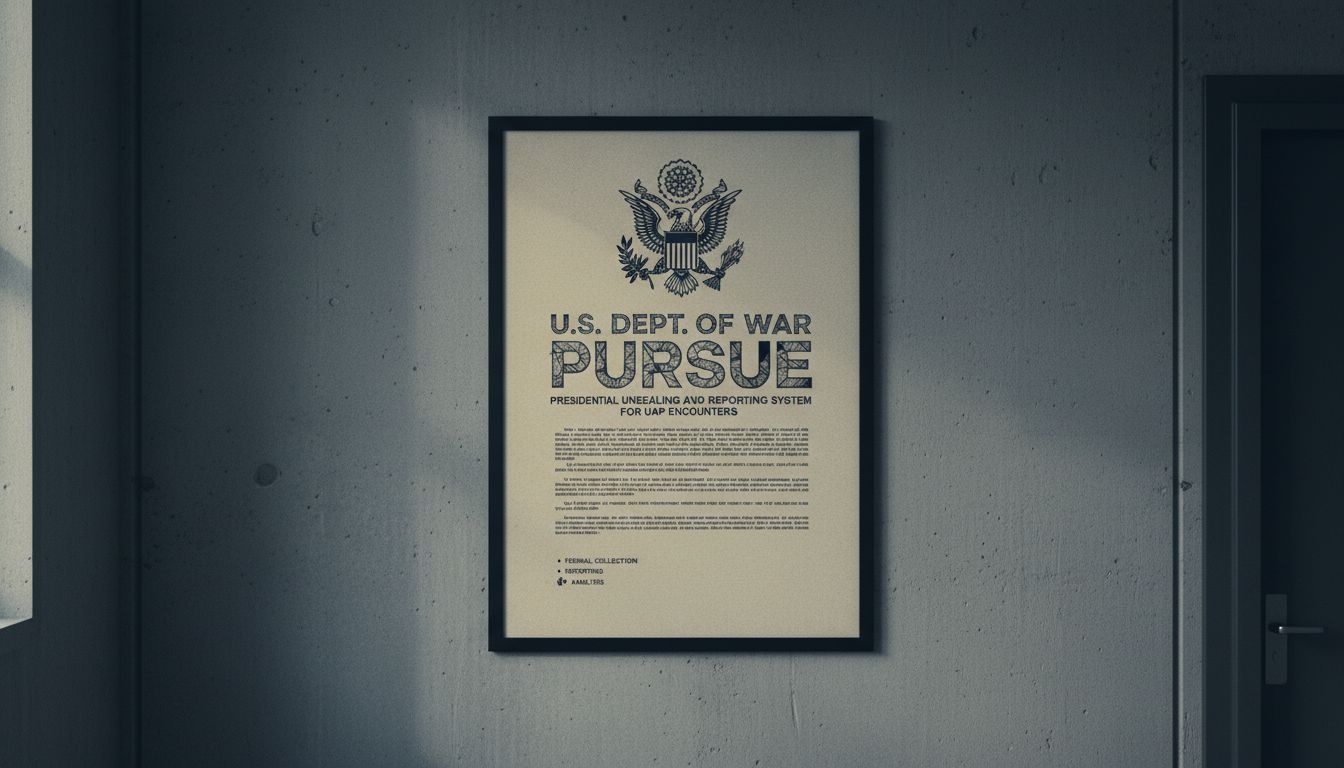
The U.S. Department of War has published a new government web page introducing PURSUE, short for the Presidential Unsealing and Reporting System for UAP Encounters. While the page itself, as presented in the source material, contains limited substantive detail beyond the program name and official site boilerplate, the initiative appears designed to create a formal government channel for collecting, reporting, and potentially unsealing information about UAP sightings.
UAP, or unidentified anomalous phenomena, has become the preferred government term for incidents that do not immediately fit conventional explanations. By attaching an official-sounding framework to the issue, the Department of War is signaling that UAP encounters are being treated not just as isolated curiosities, but as events that may require structured documentation and review.
What the PURSUE page indicates
The title alone suggests a system with two distinct functions: reporting and unsealing. Reporting implies a mechanism for service members, agencies, or perhaps the public to submit information through an official process. Unsealing suggests that some records could eventually move from restricted or classified handling into public view, although the source does not specify the thresholds, oversight, or timelines that would govern such decisions.
The web page is hosted on an official .gov domain and includes the standard government security notices confirming that it is an authenticated federal site. That detail matters in this context because UAP disclosures have often been associated with unofficial leaks, social media speculation, or secondary reporting. A dedicated government page indicates at least an effort to centralize the topic under formal institutional authority.
Why the initiative matters
If PURSUE develops into a functioning program, it could become one of the more important UAP transparency measures to date. A standardized reporting system would potentially improve data consistency, making it easier for officials to compare incidents across branches, locations, and time periods. It could also help separate routine misidentifications—such as balloons, drones, atmospheric effects, or foreign technology—from cases that remain unresolved after review.
Just as importantly, the “unsealing” component suggests a possible pathway for controlled disclosure. That would align with growing public demand for clarity on what the government knows, what it has investigated, and what information can be shared without compromising national security. Still, the source material does not describe whether PURSUE is tied to a specific legal authority, executive directive, or congressional mandate.
Broader UAP context
The announcement arrives amid sustained public and governmental interest in UAPs, especially after years of hearings, intelligence reports, and calls from lawmakers for more transparency. In that environment, even a bare-bones official page can be seen as significant, because it implies that UAP reporting is being treated as an administrative process rather than a purely speculative subject.
At the same time, the limited information currently visible on the page leaves major questions unanswered. It is not yet clear who can file reports, what categories of encounters will qualify, whether submissions will be public or internal, or how the government will distinguish between genuinely anomalous cases and conventional sightings. For now, PURSUE appears less like a finished public portal than the opening frame of a broader disclosure architecture.
Outlook
For researchers, journalists, and UAP advocates, the next step will be watching for additional documentation, guidance, or release materials that explain how PURSUE will operate. If the program is expanded, it could become a meaningful repository for structured UAP data and a potential mechanism for selective declassification. If it remains only a placeholder, it may still reflect a notable shift: the government is continuing to formalize how it receives, categorizes, and possibly releases information about UAP encounters.